Weed
whitetop
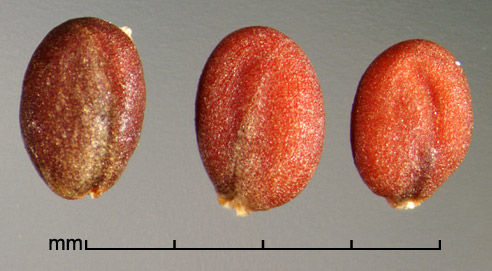
True seedTrue seed:
A mature fertilized ovule consisting of an embryo, with or without and external food reserve (e.g., endosperm) enclosed by the testa.
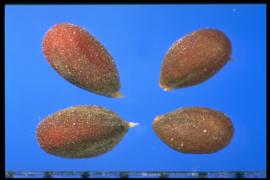
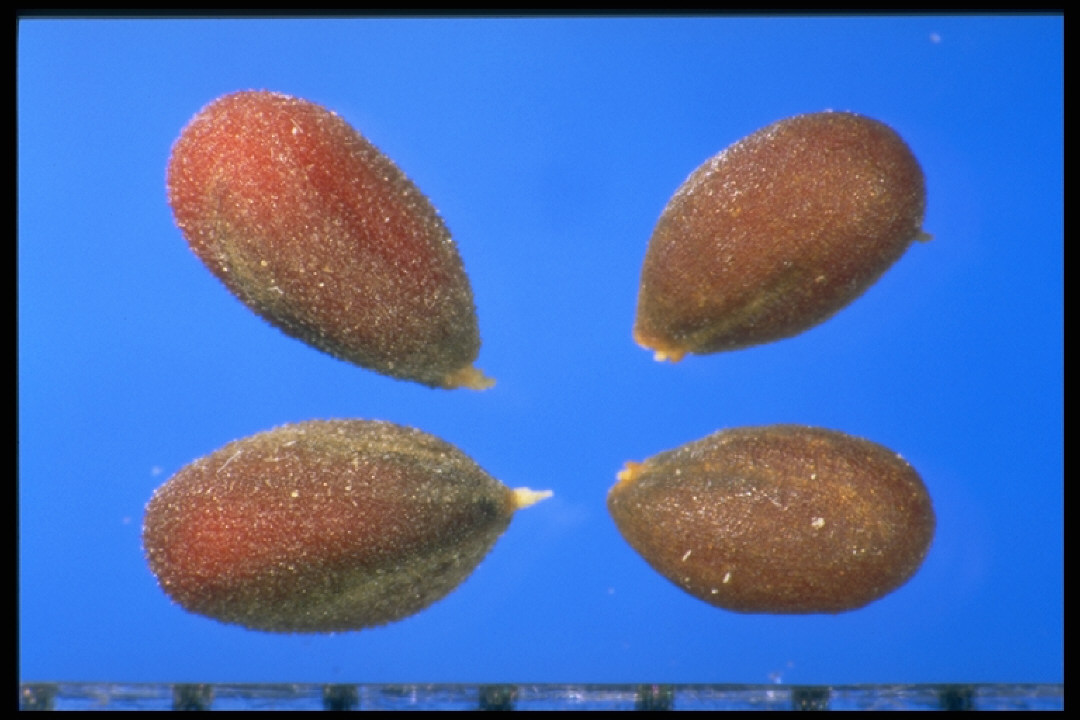
ObovateObovate:
Inverted egg shaped with apical end the broadest.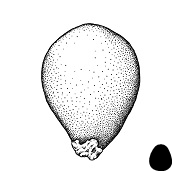
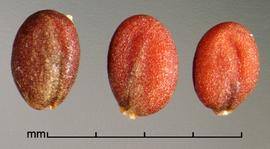
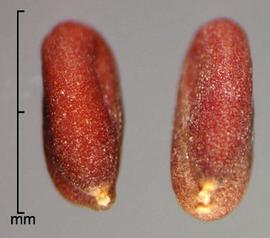
Brown to black, with a white line between lobes
Rough with minute reticulations
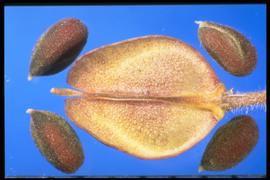
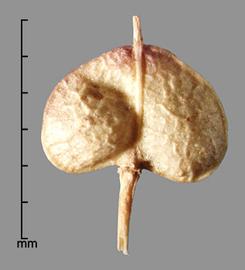
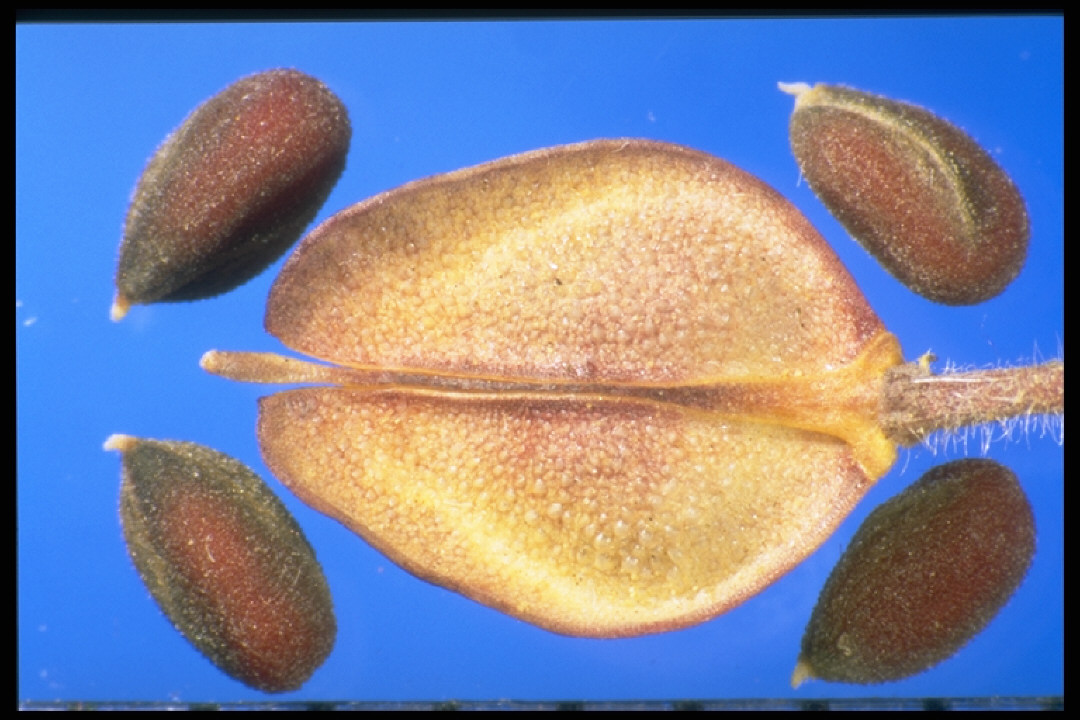
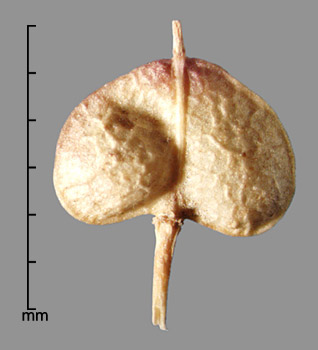
SiliqueSilique:
A fruit usually dehiscing by two lateral valves (having a central septum). The fruits can be long or short in length and round or flat in cross section. Contains more than one seed. Found in Brassicaceae.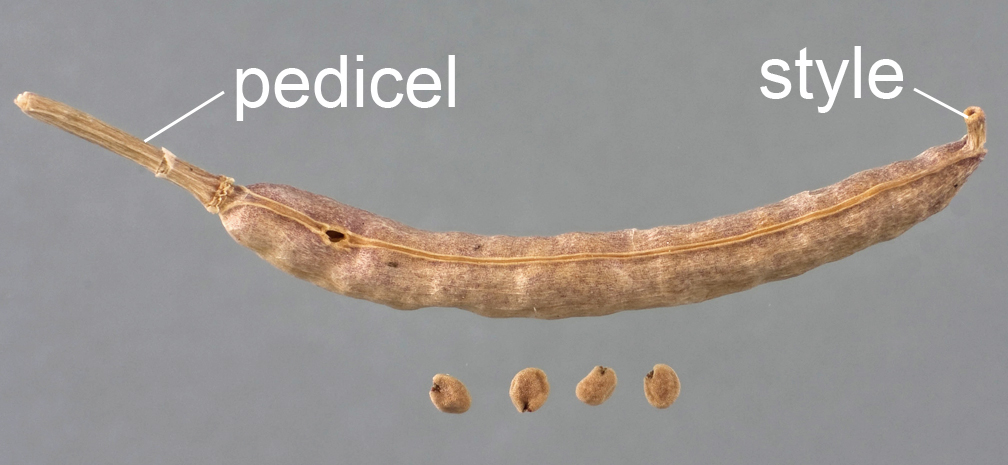 is concave on one side and convex on the other.
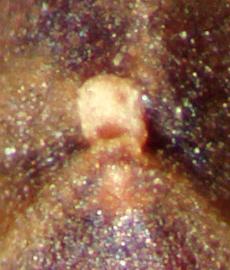
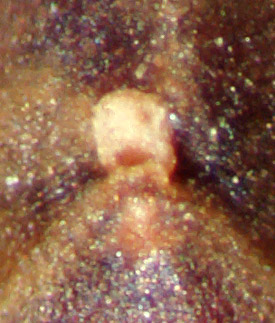
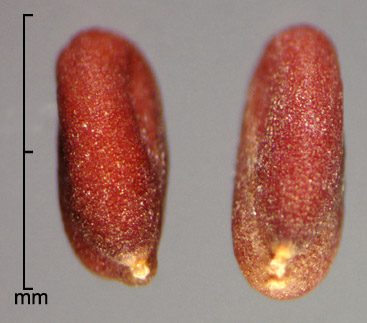
The seed is fairly rounded in cross section. The hilumHilum:
The scar on the seed coat at the place of its detachment from the seed stalk (funiculus).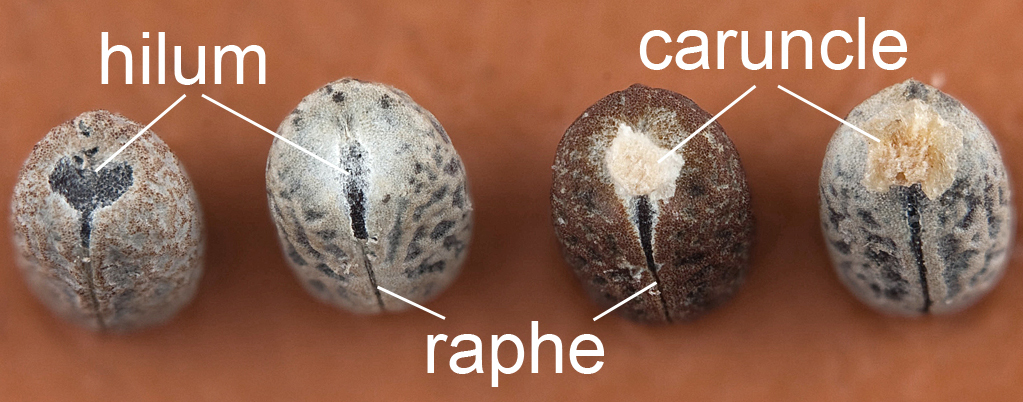 end is more pointed and the apicalApical:
The distal end of the fruit or seed away from the point of attachment or attachment scar.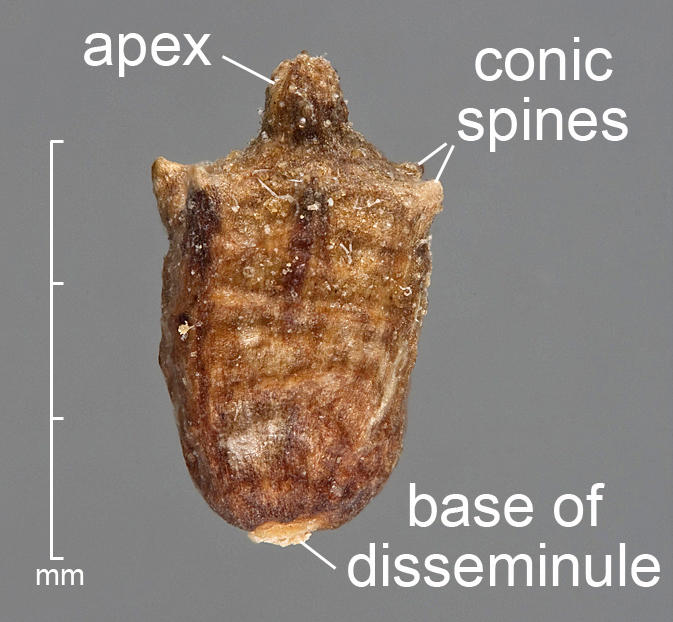 end rounded. The podPod:
A dehiscent fruit produced by leguminous plants (beans, peas). Also known as a legume.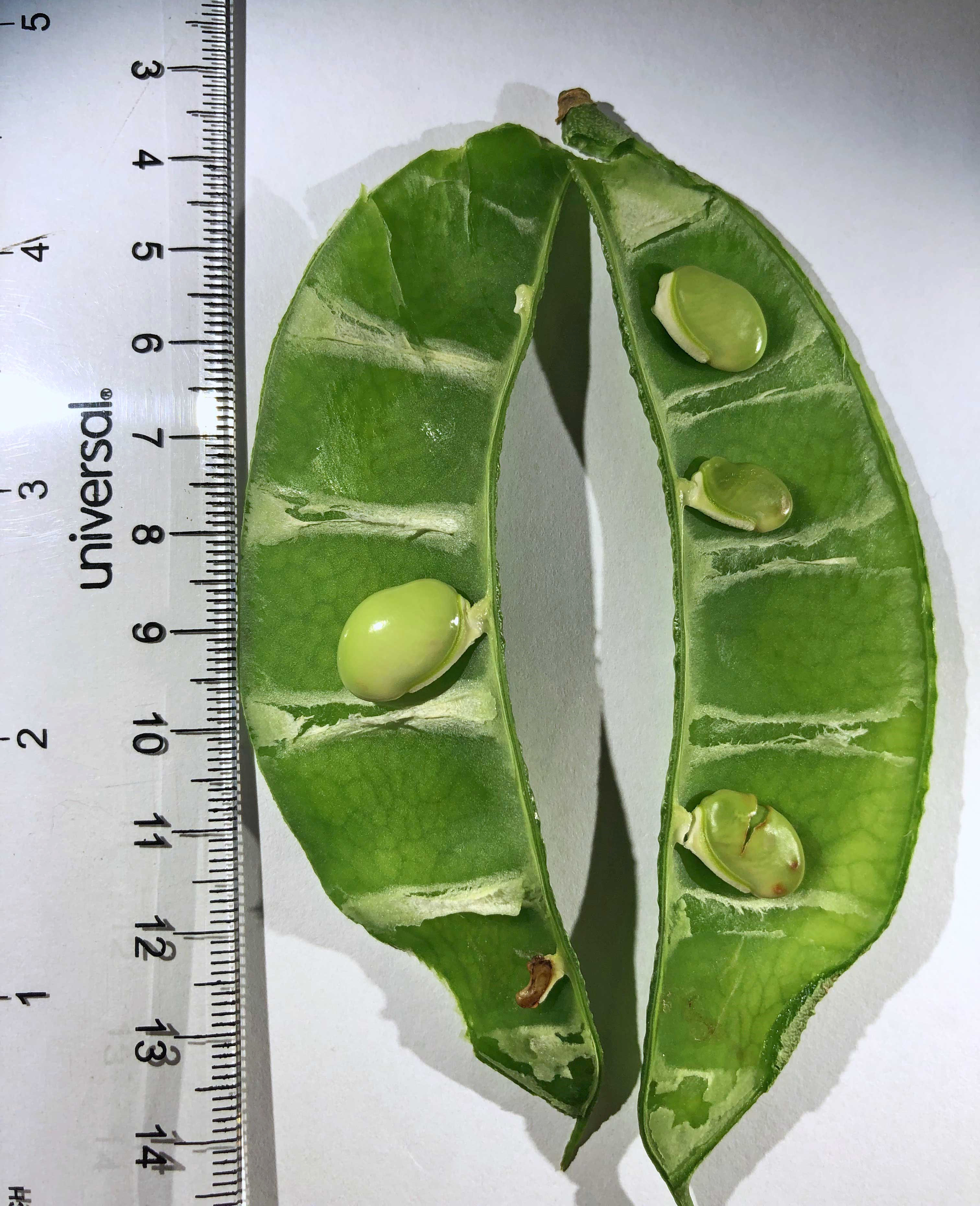 is shaped like an inverted heart.
State Noxious Weed: Alaska, Arizona, California, Colorado, Hawaii, Idaho, Illinois, Iowa, Michigan, Minnesota, Missouri, Montana, Nevada, Ohio, Oklahoma, Oregon, South Dakota, Utah, Washington, Wyoming
Federal: This species is actionable only when found in field or vegetable seed for planting; toleranceTolerance:
The amount by which a second test may differ from a first test without being attributed to an actual difference in seed quality. Tolerances are usually based on normal random variation, or sampling error.
applies, see (7 CFR 361.6(a)(2)).
Learn more on ITP's Federal Noxious Weed Disseminules tool.
Included
Brassicaceae
Cardaria draba (L.) Desv.
Lepidium draba L.
Lepidium draba L. ssp. draba