Vegetable
black mustard
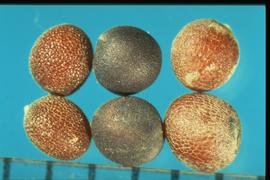
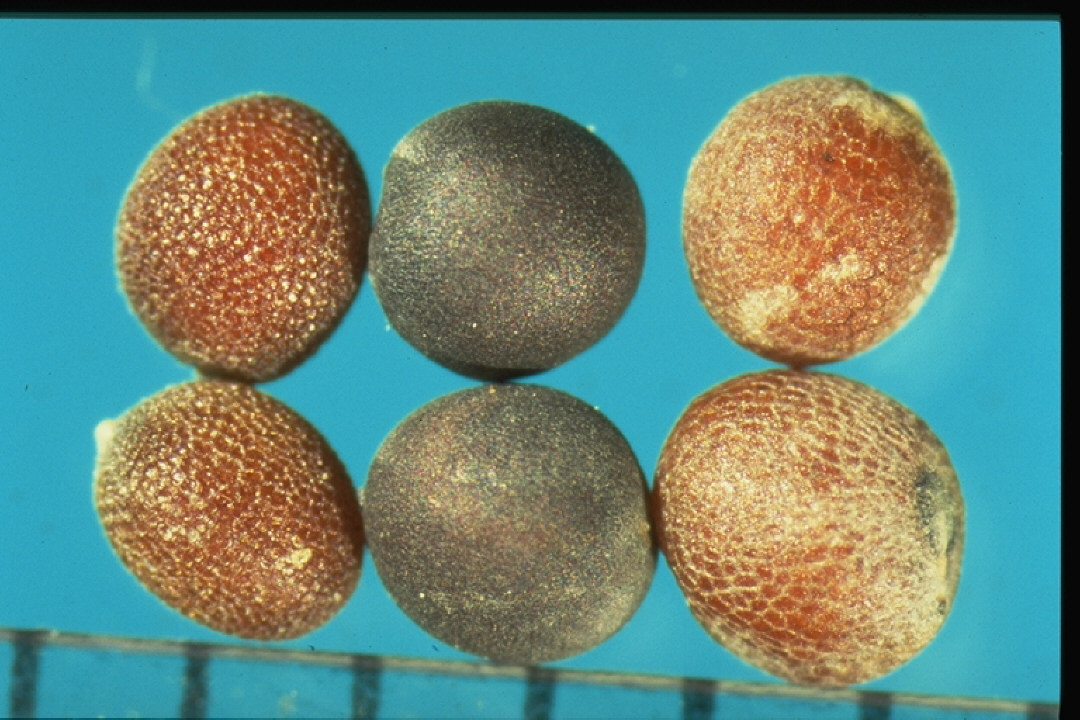
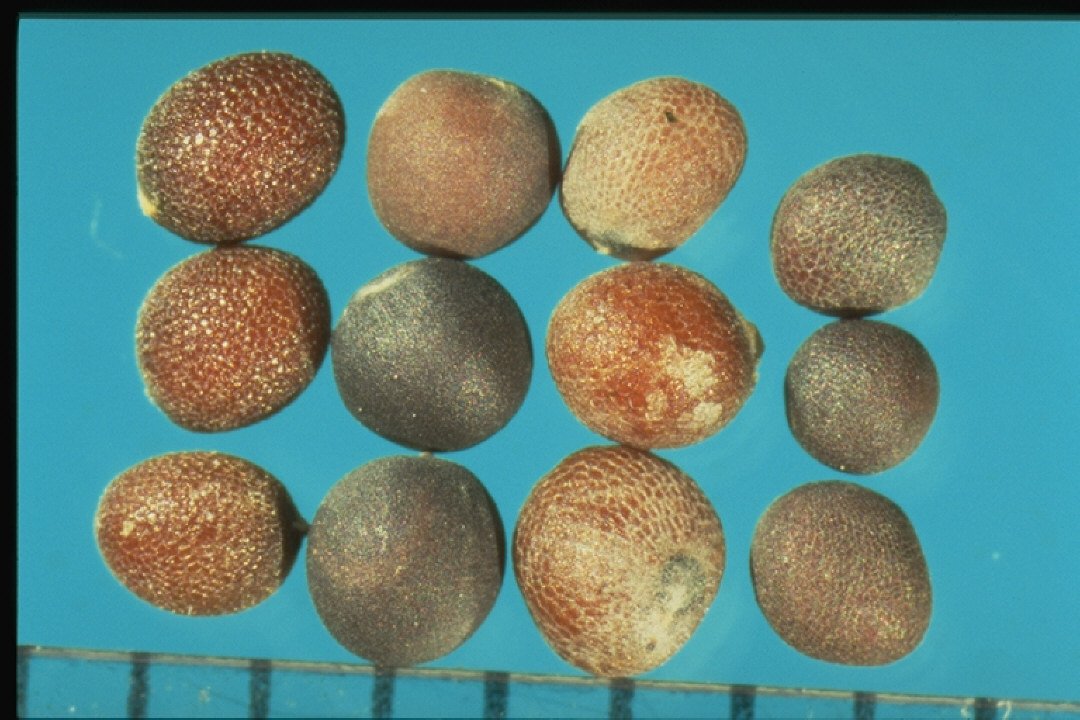
True seedTrue seed:
A mature fertilized ovule consisting of an embryo, with or without and external food reserve (e.g., endosperm) enclosed by the testa.
Globose
Brown
Reticulum is smoother; stipplesStipples:
Numerous small dots or specks.
are small and only on the inner spaces.
HilumHilum:
The scar on the seed coat at the place of its detachment from the seed stalk (funiculus).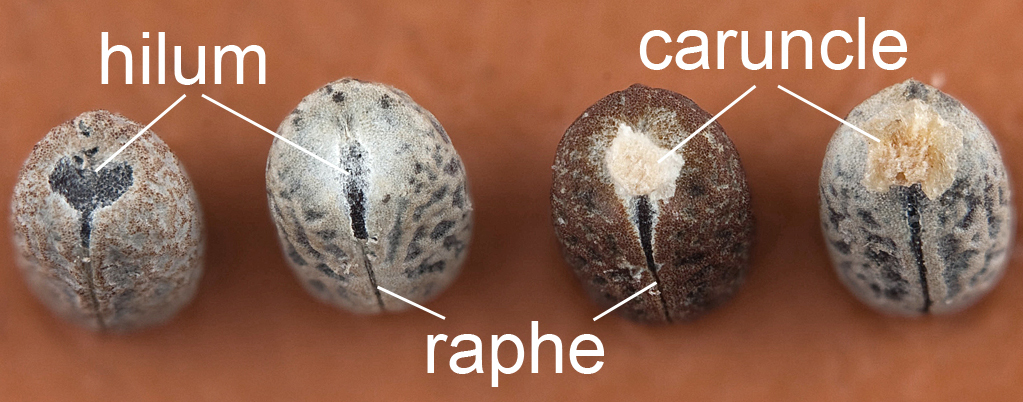 extends slightly above the seed surface.
Seed of this species is considered noxious only as a contaminant. Check individual states for interpretations.
State Noxious Weed: Alabama, Arizona, Colorado, Connecticut, Florida, Georgia, Iowa, Illinois, Kansas, Louisiana, Maine, Massachusetts, Mississippi, Nebraska, New Hampshire, North Carolina, Oklahoma, Pennsylvania, Rhode Island, South Carolina, South Dakota, Tennessee, Texas, Virginia, Vermont, Washington
Included
Brassicaceae
Brassica nigra (L.) W.D.J. Koch
Sinapis nigra L.