Weed
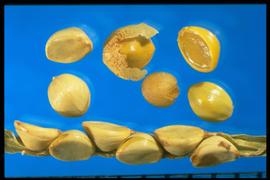
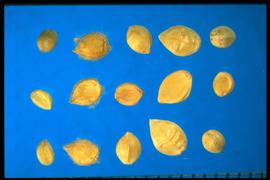
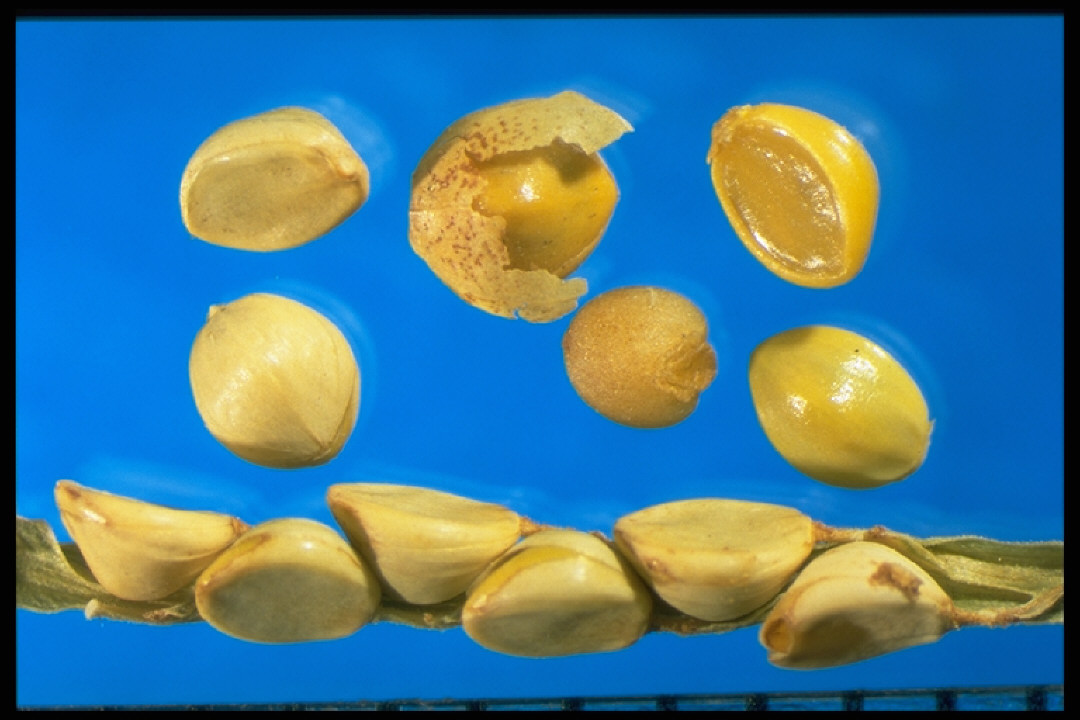
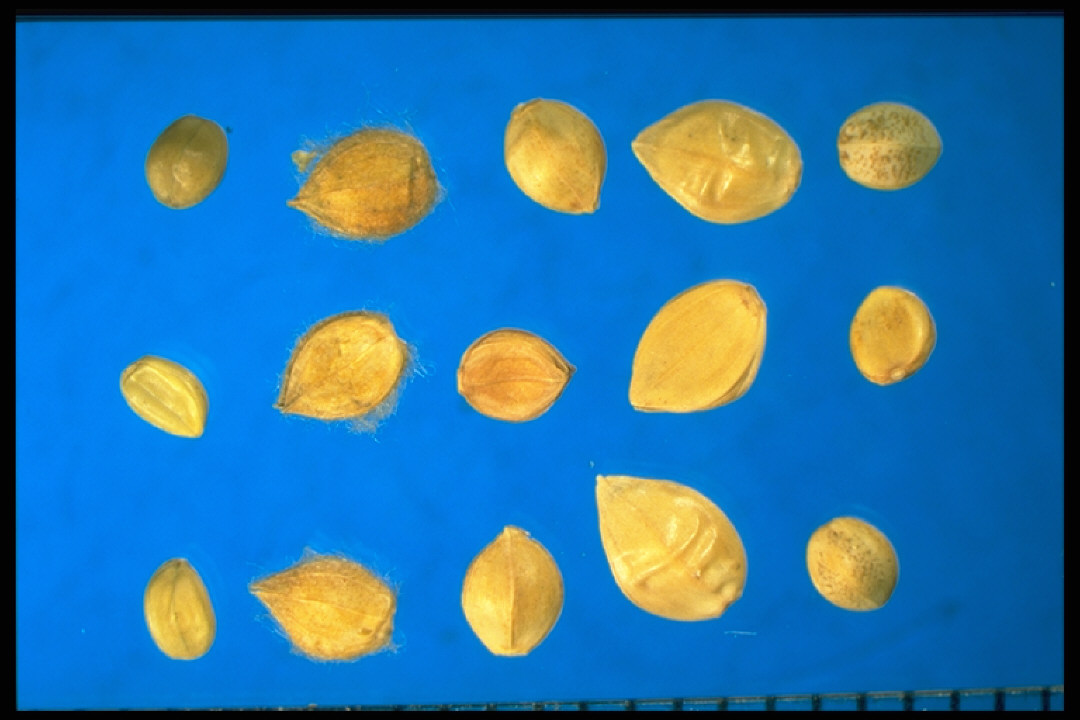
thin paspalum
SpikeletSpikelet:
One or more florets that are subtended by a pair of bracts called glumes. Spikelets are pedicellate if located on a pedicle and sessile if attached directly to the rachis. Often spikelets with single florets have remnants of a second floret, usually a lemma.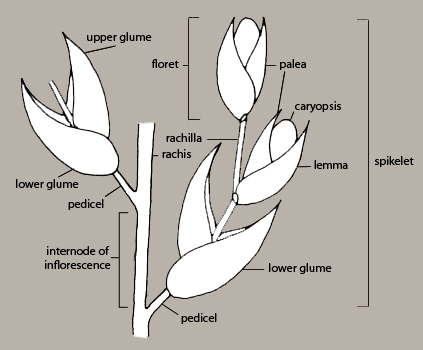
OvalOval:
Broadly elliptic.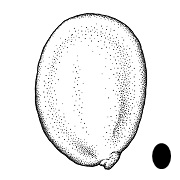
Light brown
Smooth with only a trace of a central nerve
Hard, arched and smooth
Hard, flat and smooth
GlumesGlume:
The pair of chaffy bracts that occur at the base of a grass spikelet, often completely enclosing it.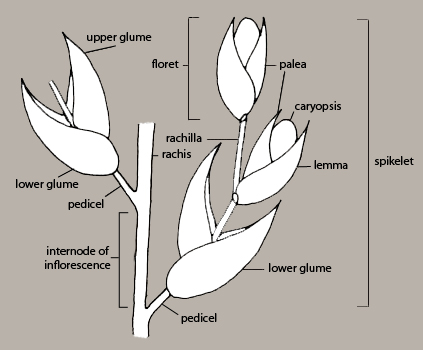 tight fitting and just covering the floretFloret:
A small flower in a clustered inflorescence (e.g., sunflower, grasses). In grasses, a floret consists of the lemma, palea, stamens, and pistil.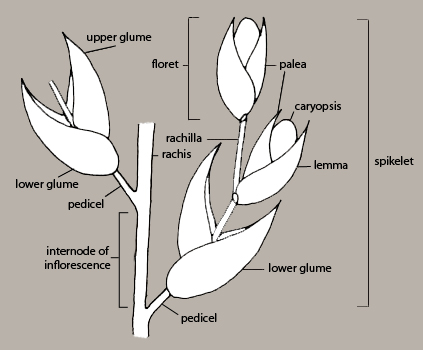 .
.
Unit usually found as a spikeletSpikelet:
One or more florets that are subtended by a pair of bracts called glumes. Spikelets are pedicellate if located on a pedicle and sessile if attached directly to the rachis. Often spikelets with single florets have remnants of a second floret, usually a lemma.. The first glumeGlume:
The pair of chaffy bracts that occur at the base of a grass spikelet, often completely enclosing it. is missing, leaving the second glumeGlume:
The pair of chaffy bracts that occur at the base of a grass spikelet, often completely enclosing it. and the sterile lemmaLemma:
One of two bracts of the grass floret; it is located on the side nearest the embryo and opposite the rachilla.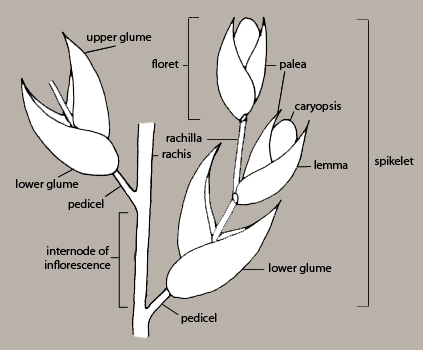 to cover the floretFloret:
A small flower in a clustered inflorescence (e.g., sunflower, grasses). In grasses, a floret consists of the lemma, palea, stamens, and pistil..
Not listed
Not included
Poaceae
Paspalum setaceum Michx.
Paspalum bushii Nash
Paspalum ciliatifolium Michx.
Paspalum ciliatifolium Michx. var. muehlenbergii (Nash) Fernald
Paspalum ciliatifolium Michx. var. stramineum (Nash) Fernald
Paspalum debile Michx.
Paspalum longepedunculatum Leconte
Paspalum muehlenbergii Nash
Paspalum propinquum Nash
Paspalum psammophilum Nash
Paspalum pubescens Muhl. ex Willd.
Paspalum rigidifolium Nash
Paspalum separatum Shinners
Paspalum setaceum Michx. var. calvescens Fernald
Paspalum setaceum Michx. var. ciliatifolium (Michx.) Vasey
Paspalum setaceum Michx. var. longepedunculatum (Leconte) Alph. Wood
Paspalum setaceum Michx. var. muehlenbergii (Nash) D. Banks
Paspalum setaceum Michx. var. psammophilum (Nash) D. Banks
Paspalum setaceum Michx. var. rigidifolium (Nash) D. Banks
Paspalum setaceum Michx. var. stramineum (Nash) D. Banks
Paspalum setaceum Michx. var. supinum (Bosc ex Poir.) Trin.
Paspalum setaceum Michx. var. villosissimum (Nash) D. Banks
Paspalum stramineum Nash
Paspalum supinum Bosc ex Poir.