March 2026: Since the original publication of this tool, one new species of Tybalmia Thomson, 1868Thomson, 1868:
Thomson J. 1868. Révision du groupe des oncidérites (Lamites, cérambycides, coléoptères). Physis Recueil d'Histoire Naturelle. 2(5):41–92. was described (Vlasák and Santos-Silva 2023Vlasák and Santos-Silva 2023:
Vlasák J, Santos-Silva A. 2023. New descriptions, synonymies and records in South American Lamiinae (Coleoptera, Cerambycidae). ZooTaxa. 5284(1):153-166.); Vlasák and Santos-Silva (2023)Vlasák and Santos-Silva (2023):
Vlasák J, Santos-Silva A. 2023. New descriptions, synonymies and records in South American Lamiinae (Coleoptera, Cerambycidae). ZooTaxa. 5284(1):153-166. also synonymized T. tetrops Bates, 1872 with T. mydas (Lucas, 1859) and T. orbis Monné and Giesbert, 1994 with T. pupillata (Pascoe, 1859Pascoe, 1859:
Pascoe FP. 1859. On new genera and species of longicorn Coleoptera. Part IV. Transactions of the Entomological Society of London. 5(2):12–69.). These taxonomic changes are incorporated in "Included Species", but other sections of this fact sheet have not been edited to account for the current species composition.
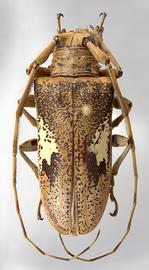
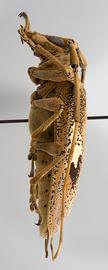
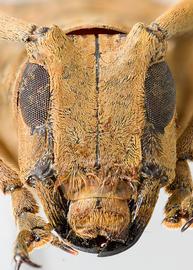
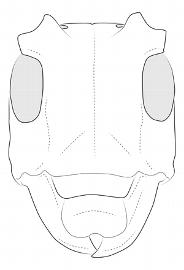
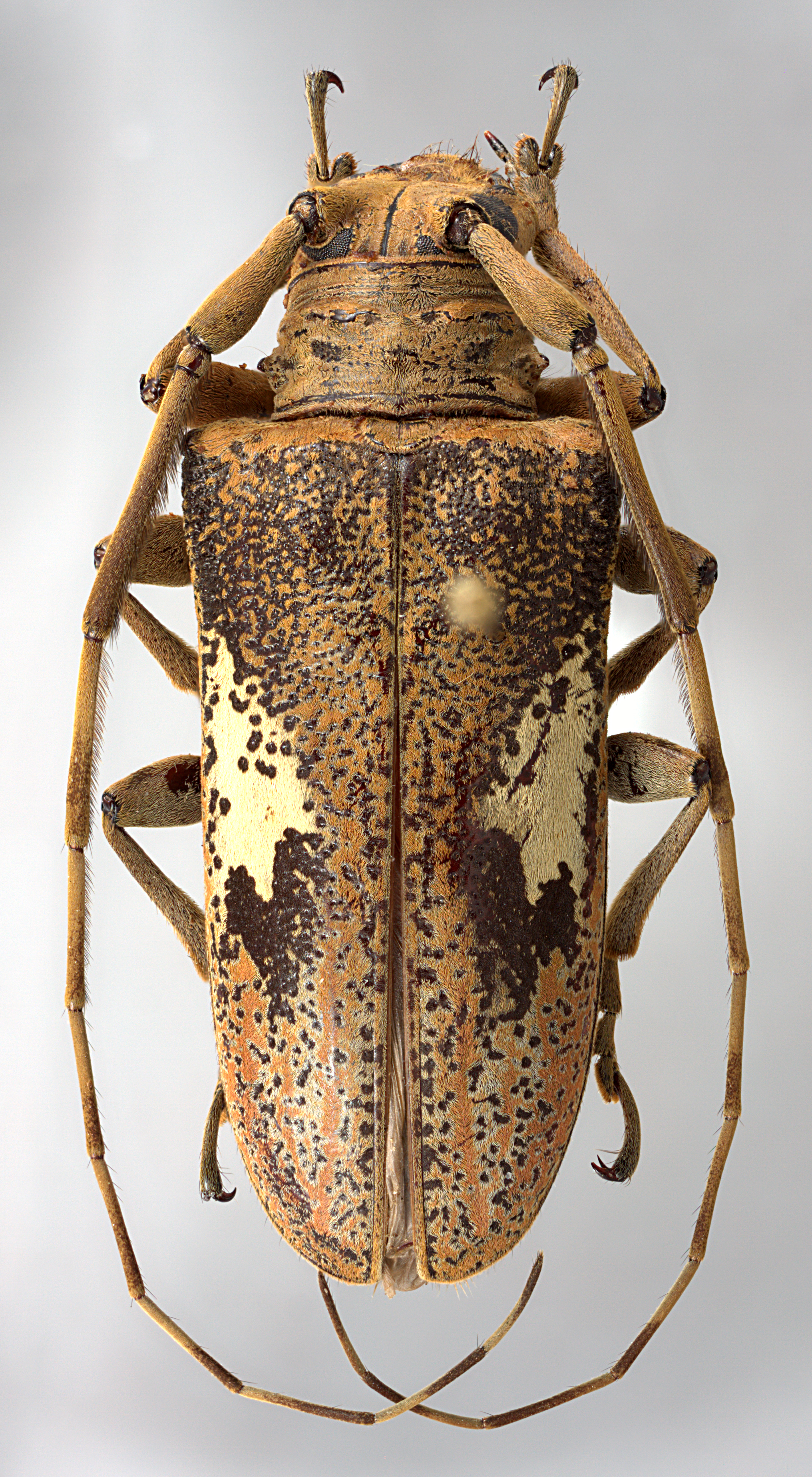
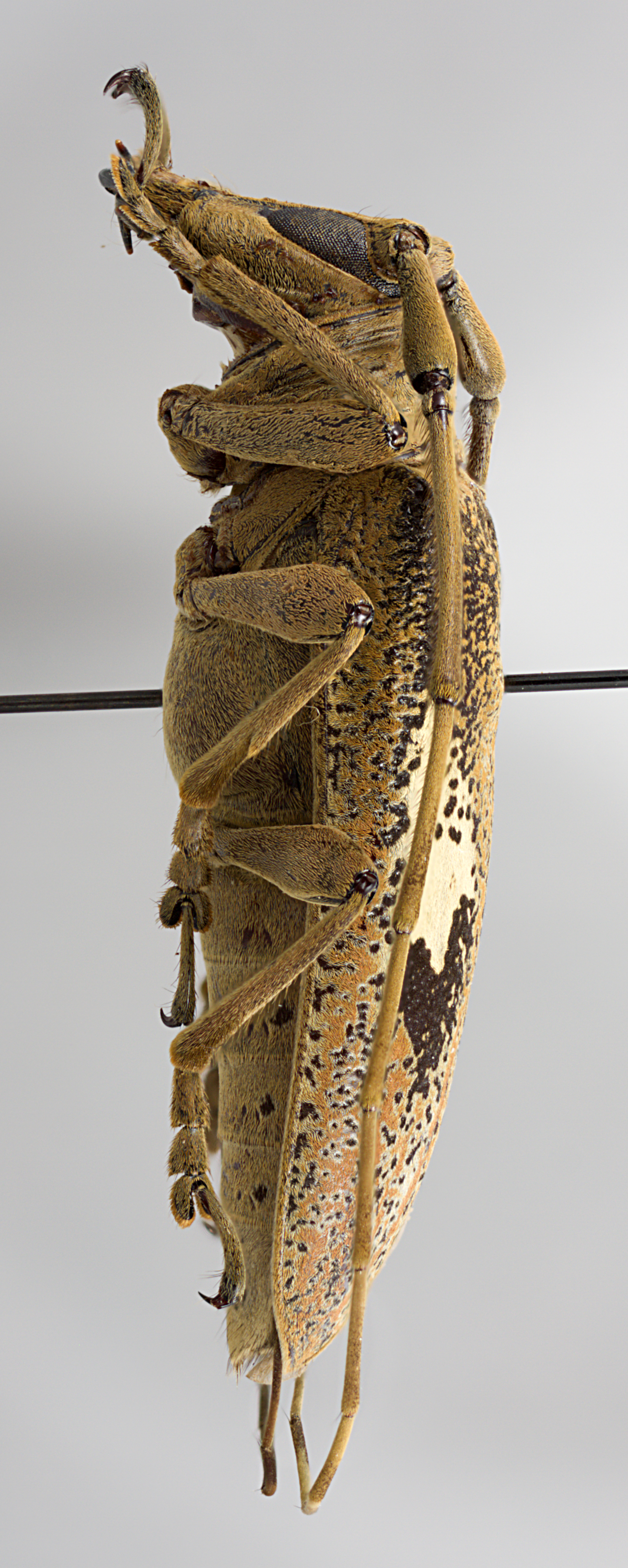
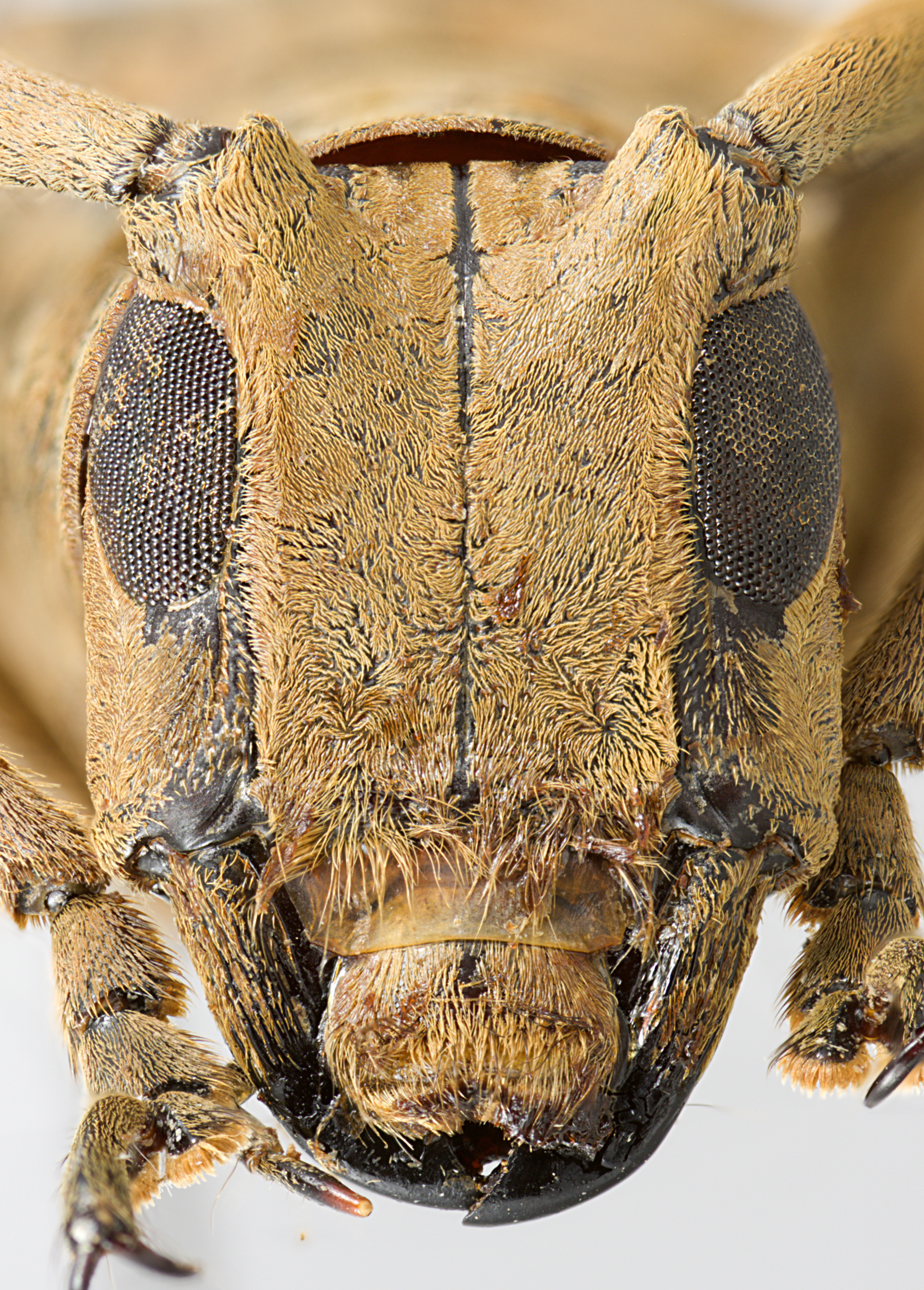
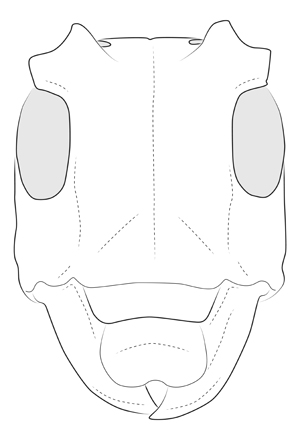
Elongate-oblong, robust, moderate to large-sized, ranging from about 16–27 mm in length. Head with frons subquadrate to elongate, about as wide as width of two lower eye lobes. Eyes with lower lobes ovate-oblong. Genae elongate, distinctly shorter than lower eye lobes. Antennal tubercles prominent, widely separated; tubercles not armed at apex or armed with a small projection, or a short, blunt horn, or with a moderately long, acute horn. Antennae distinctly longer than overall body length, as much as 3 times as long; scape clavate, about as long or shorter than antennomere IV; antennomere III variable in shape, from nearly straight to curved to sinuate, longer than scape and antennomere IV; antennomere XI shorter than X (females) or longer than X (males). Pronotum transverse, roughly cylindrical to conical, distinctly wider at base, with lateral tubercles. Elytra with sides roughly parallel; elytral apices individually or jointly rounded; elytra generally uniform in coloration or speckled, or with distinct maculae; base of elytra with two distinct obtuse tubercles at humeri, or with four small, prominent, blunt tubercles. Basal 1/3 of elytra with moderate to dense punctation, surface finely punctate, coarsely punctate, or granulate-punctate. Procoxae without projection or with an obtuse tubercle, small acute projection, or with curved hook (males). Mesosternal process with apex feebly to deeply emarginate. Metafemora moderate to short in length, about 1/3-1/4 as long as elytra.
The combination of the following characters will help to distinguish this genus: antennae distinctly longer than overall body length, as much as 3 times as long; strongly transverse pronotum, with lateral tubercles; and elytra with sides roughly parallel.
Superficially resembles Ischiomaeocles and Lochmaeocles.
Central America (Guatemala, Mexico, Nicaragua to Panama); South America (Bolivia, Brazil, Colombia, Ecuador, French Guiana, Guyana, Peru)
Fabaceae (Lonchocarpus sp.)
Unknown
The genus Tybalmia currently contains eight species: T. breuningi Dillon and Dillon, 1952; T. caeca Bates, 1872; T. diffusa Vlasák and Santos-Silva, 2023Vlasák and Santos-Silva, 2023:
Vlasák J, Santos-Silva A. 2023. New descriptions, synonymies and records in South American Lamiinae (Coleoptera, Cerambycidae). ZooTaxa. 5284(1):153-166.; T. funeraria Bates, 1880; T. ianthe Dillon and Dillon, 1945Dillon and Dillon, 1945:
Dillon LS, Dillon ES. 1945. The tribe Onciderini (Coleoptera: Cerambycidae) Part I. Reading, Scientific Publications, Reading Public Museum and Art Gallery, Number 5. 186 pp.; T. mydas (Lucas, 1857); T. pixe Dillon and Dillon, 1945Dillon and Dillon, 1945:
Dillon LS, Dillon ES. 1945. The tribe Onciderini (Coleoptera: Cerambycidae) Part I. Reading, Scientific Publications, Reading Public Museum and Art Gallery, Number 5. 186 pp.; T. pupillata (Pascoe, 1859Pascoe, 1859:
Pascoe FP. 1859. On new genera and species of longicorn Coleoptera. Part IV. Transactions of the Entomological Society of London. 5(2):12–69.).
More species images are available in the Gallery.
Tybalmia Thomson, 1868Thomson, 1868:
Thomson J. 1868. Révision du groupe des oncidérites (Lamites, cérambycides, coléoptères). Physis Recueil d'Histoire Naturelle. 2(5):41–92.
subtribe: Onciderina
type species: Hypselomus pupillatus Pascoe, 1859Pascoe, 1859:
Pascoe FP. 1859. On new genera and species of longicorn Coleoptera. Part IV. Transactions of the Entomological Society of London. 5(2):12–69.
Bates (1880–1886), Bezark and Monné (2013)Bezark and Monné (2013):
Bezark LG, Monné MA. 2013. Checklist of the Oxypeltidae, Vesperidae, Disteniidae and Cerambycidae, (Coleoptera) of the Western Hemisphere., Dillon and Dillon (1945)Dillon and Dillon (1945):
Dillon LS, Dillon ES. 1945. The tribe Onciderini (Coleoptera: Cerambycidae) Part I. Reading, Scientific Publications, Reading Public Museum and Art Gallery, Number 5. 186 pp., Dillon and Dillon (1952)Dillon and Dillon (1952):
Dillon LS, Dillon ES. 1952. The tribe Onciderini. Supplementary notes. Annals of the Entomological Society of America. 45(1):59–79., Monné (2005)Monné (2005):
Monné MA. 2005. Catalogue of the Cerambycidae (Coleoptera) of the Neotropical Region. Part II. Subfamily Lamiinae. Zootaxa. 1023:1–759., Pascoe (1859)Pascoe (1859):
Pascoe FP. 1859. On new genera and species of longicorn Coleoptera. Part IV. Transactions of the Entomological Society of London. 5(2):12–69., Vlasák and Santos-Silva (2023)Vlasák and Santos-Silva (2023):
Vlasák J, Santos-Silva A. 2023. New descriptions, synonymies and records in South American Lamiinae (Coleoptera, Cerambycidae). ZooTaxa. 5284(1):153-166.