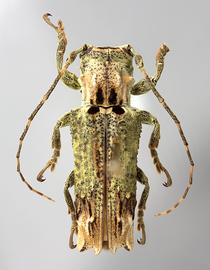
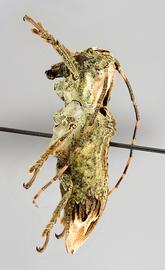
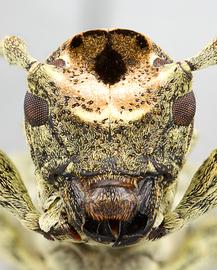
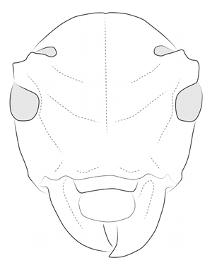
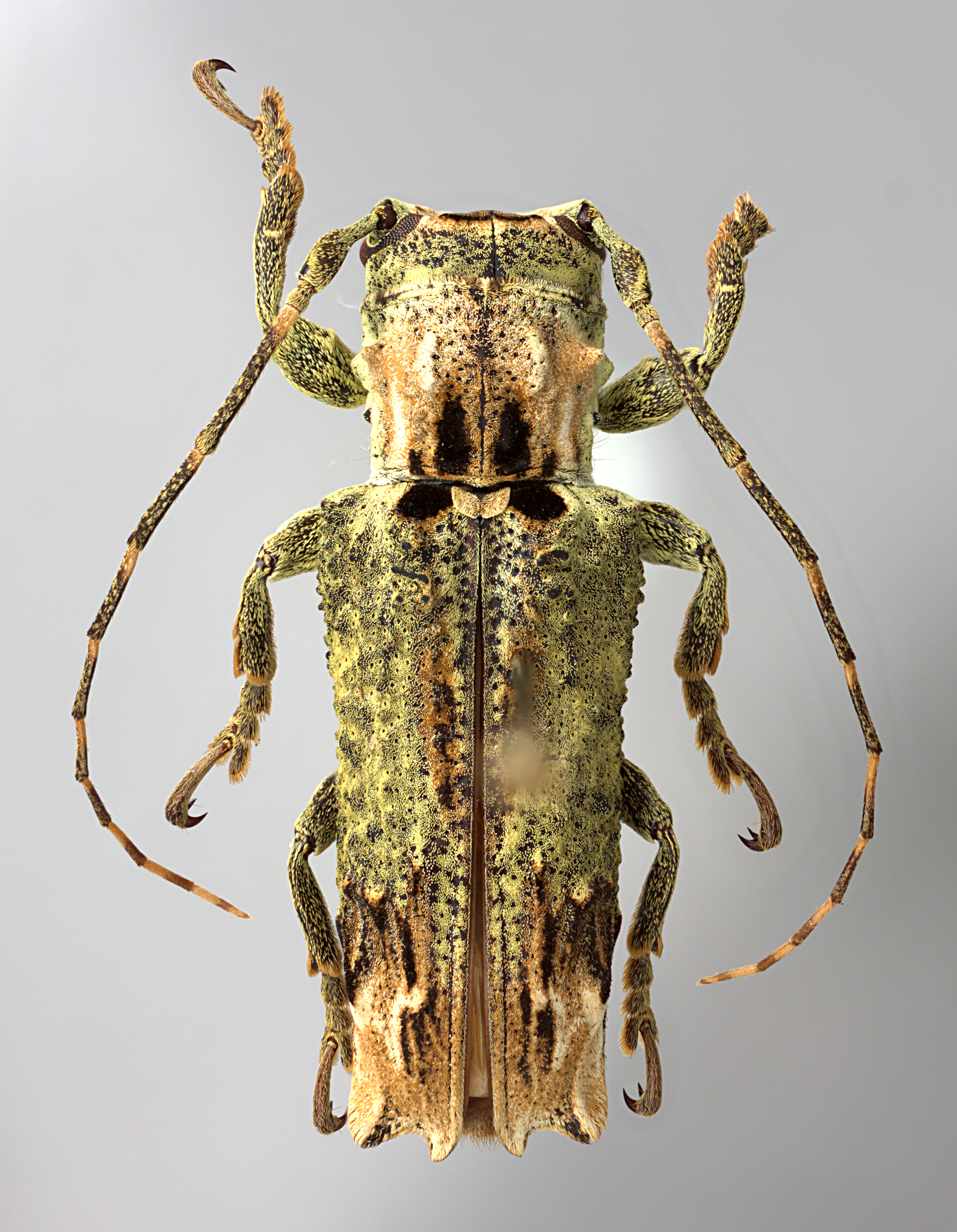
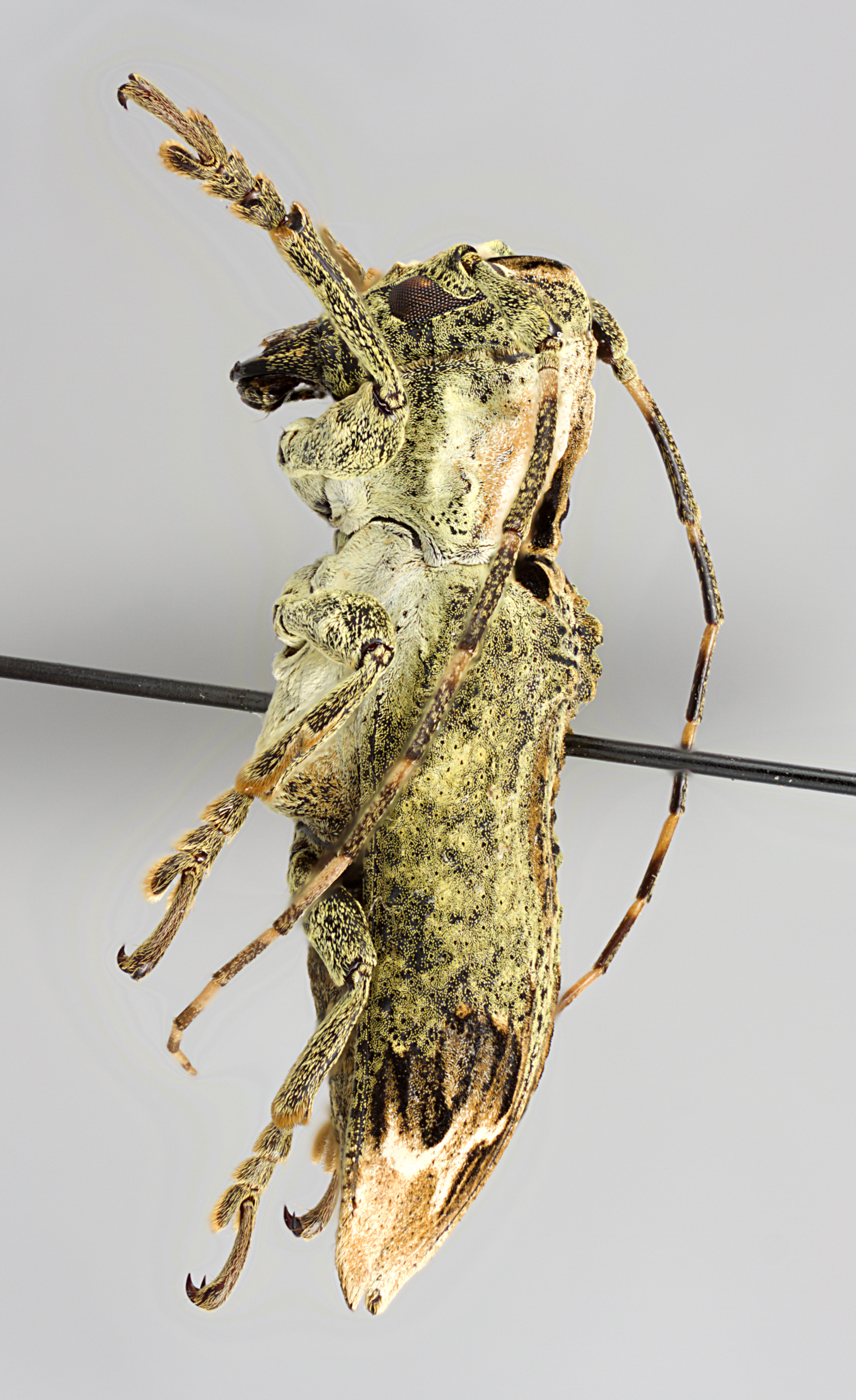
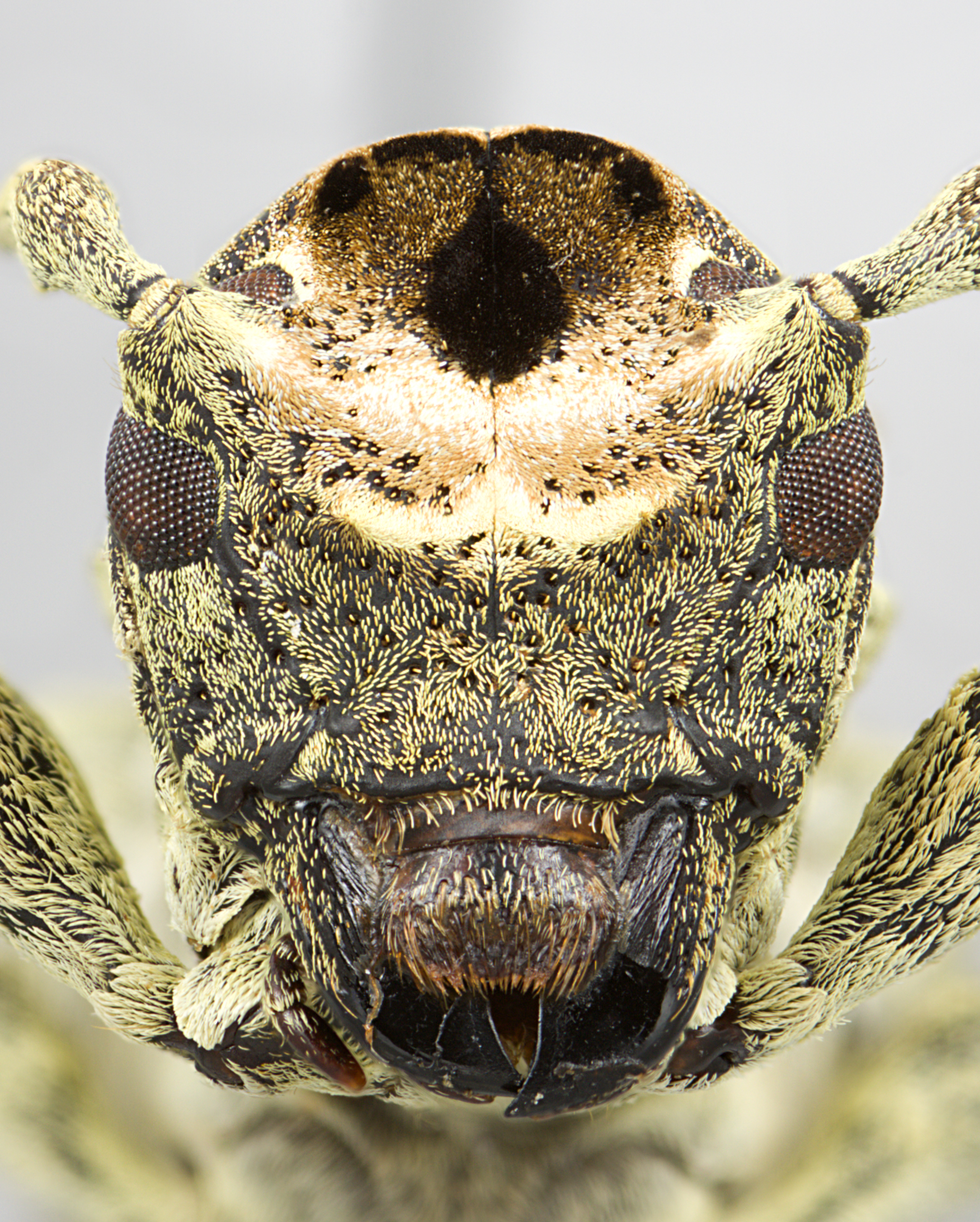
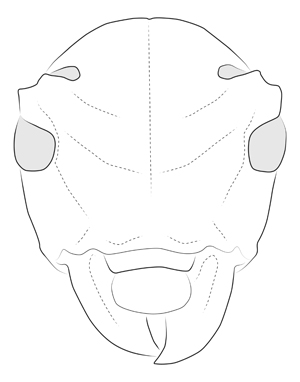
Elongate-oblong, robust, small to large-sized, ranging from about 8–22 mm in length. Integument generally dark brown with whitish, ochraceous, black, and greenish pubescence. Head with frons transverse, narrower below eyes, about as wide as width of four lower eye lobes; frons surface roughly sculptured or not. Entire surface of head often finely punctate, each puncture bearing a fine scale in its center. Eyes with lower lobes small, ovate. Genae elongate, about as tall to distinctly taller than lower eye lobes. Antennal tubercles prominent, widely separated; tubercles not armed at apex (females) or armed with a moderately long, acute horn (males). Antennae about as long as overall body length (females), or as much as 1 1/2 times as long (males); scape clavate, about as long or shorter than antennomere IV; antennomere III nearly straight or curved, longer than scape and antennomere IV. Pronotum transverse, roughly cylindrical, slightly narrower at base, with lateral tubercles. Elytra with sides roughly parallel; elytral apices individually bidentate; elytra generally greenish with distinct areas of contrasting color; base of elytra with several prominent, irregularly shaped, rough, blunt tubercles at humeri. Basal 1/3 of elytra moderate to dense punctation, surface coarsely punctate to granulate-punctate. Procoxae without projection. Mesosternal process with apex subtruncate to feebly emarginate. Metafemora short in length, about 1/4–1/5 as long as elytra.
The combination of the following characters will help to distinguish this genus: distinctly small eyes, widely separated; roughly cylindrical pronotum; elytra with sides roughly parallel; individually bidentate elytral apices; and short metafemora.
This genus is distinct among Onciderini and the only genus with bidentate elytral apices.
Central America (Costa Rica, Panama); South America (Brazil, Ecuador, French Guiana, Guyana, Peru, Suriname, Trinidad & Tobago)
Myrtaceae (Eugenia stipitata); Rubiaceae (Coffea arabica [coffee]); Malvaceae (Theobroma cacao [cocoa])
This species is known to girdle branches (Delgado and Couturier 2004Delgado and Couturier 2004:
Delgado C, Couturier G. 2004. Manejo de insectos plagas en la Amazonía: su aplicacion en camu camu. Lima, IIAP/IRD. 147 pp.) and in Peru is commonly referred to as "serruchador" ["one who saws" or "sawyer"]. Specimens of this genus have been reared from girdled branches.
The genus Ecthoea currently contains one species: E. quadricornis (Olivier, 1792).
More species images are available in the Gallery.
Duffy (1960) described the larva of this species.
Ecthoea Pascoe, 1858
subtribe: Onciderina
type species: Cerambyx quadricornis Olivier, 1792
generic synonymies: Talasius Buquet, 1859Buquet, 1859:
Buquet L. 1859. Notice monographique sur un genre nouveau de coleopteres de la famille des cerambycides (longicornes). Arcana Naturae. 1:45–49.
Bezark and Monné (2013)Bezark and Monné (2013):
Bezark LG, Monné MA. 2013. Checklist of the Oxypeltidae, Vesperidae, Disteniidae and Cerambycidae, (Coleoptera) of the Western Hemisphere., Delgado and Couturier (2004)Delgado and Couturier (2004):
Delgado C, Couturier G. 2004. Manejo de insectos plagas en la Amazonía: su aplicacion en camu camu. Lima, IIAP/IRD. 147 pp., Dillon and Dillon (1945)Dillon and Dillon (1945):
Dillon LS, Dillon ES. 1945. The tribe Onciderini (Coleoptera: Cerambycidae) Part I. Reading, Scientific Publications, Reading Public Museum and Art Gallery, Number 5. 186 pp., Duffy (1960)Duffy (1960):
Duffy EAJ. 1960. A monograph of the immature stages of Neotropical timber beetles (Cerambycidae). London, British Museum (Natural History). 327 pp., Monné (2005)Monné (2005):
Monné MA. 2005. Catalogue of the Cerambycidae (Coleoptera) of the Neotropical Region. Part II. Subfamily Lamiinae. Zootaxa. 1023:1–759.