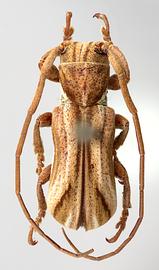
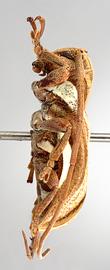
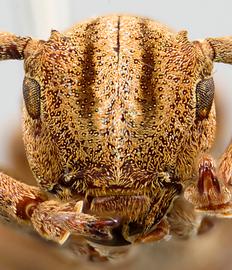
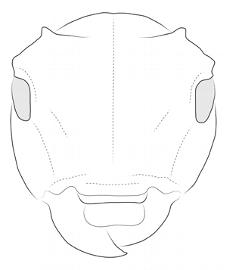
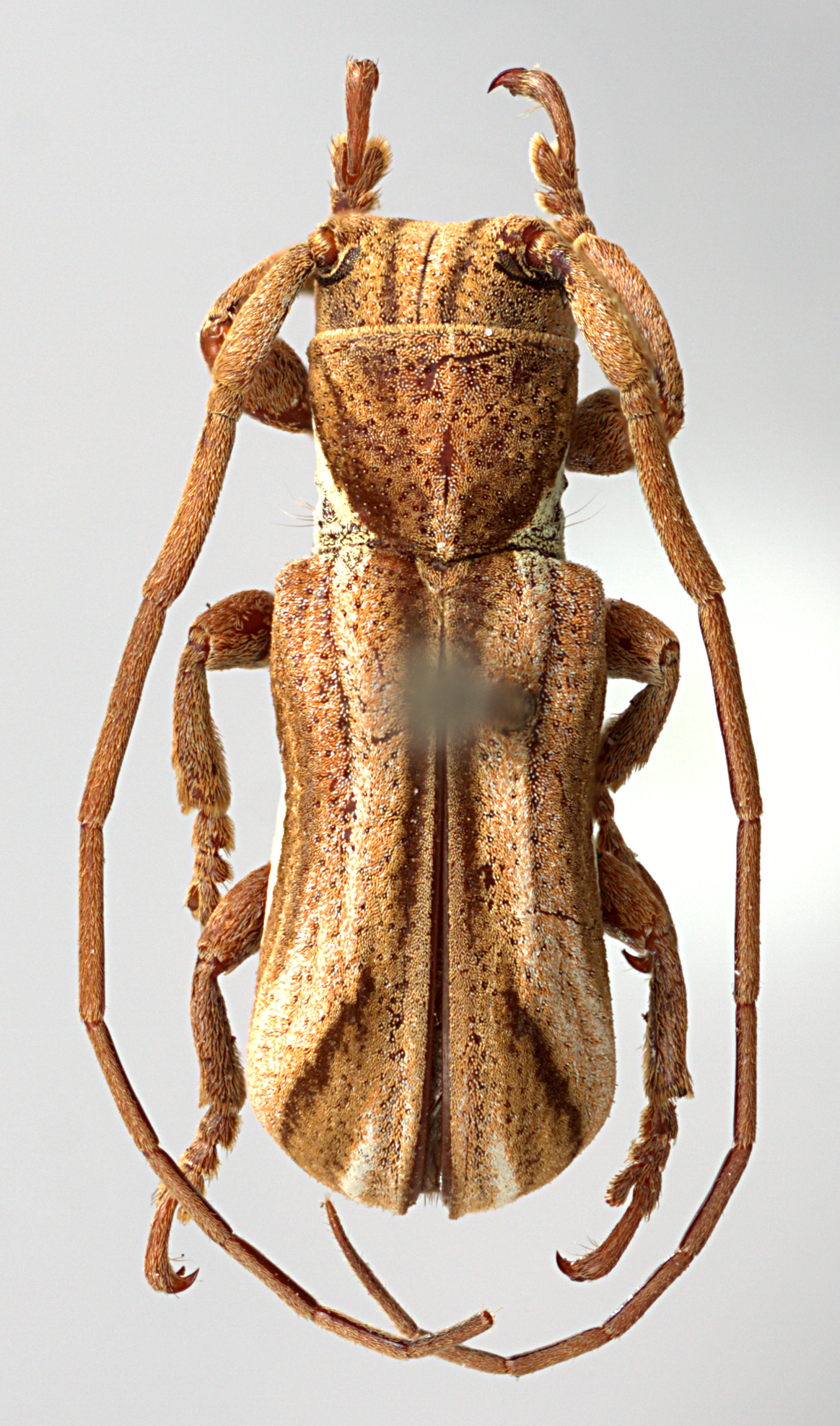
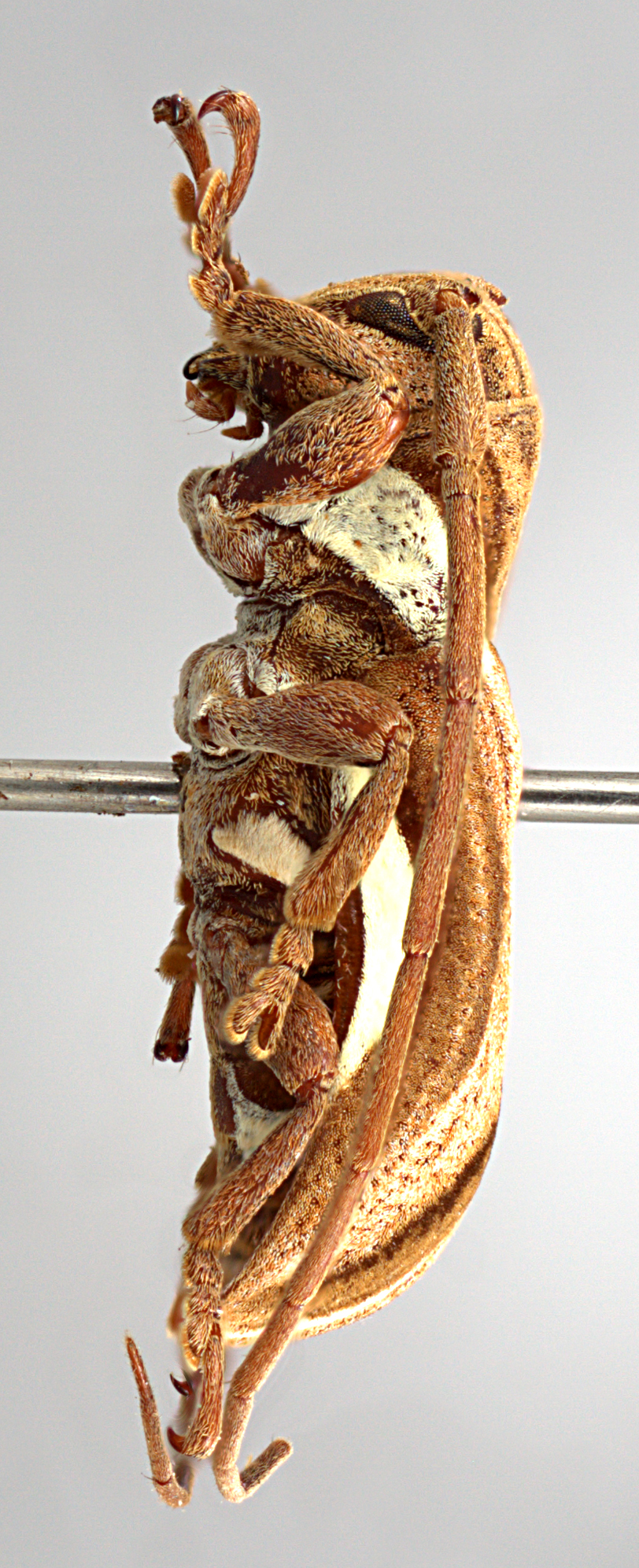
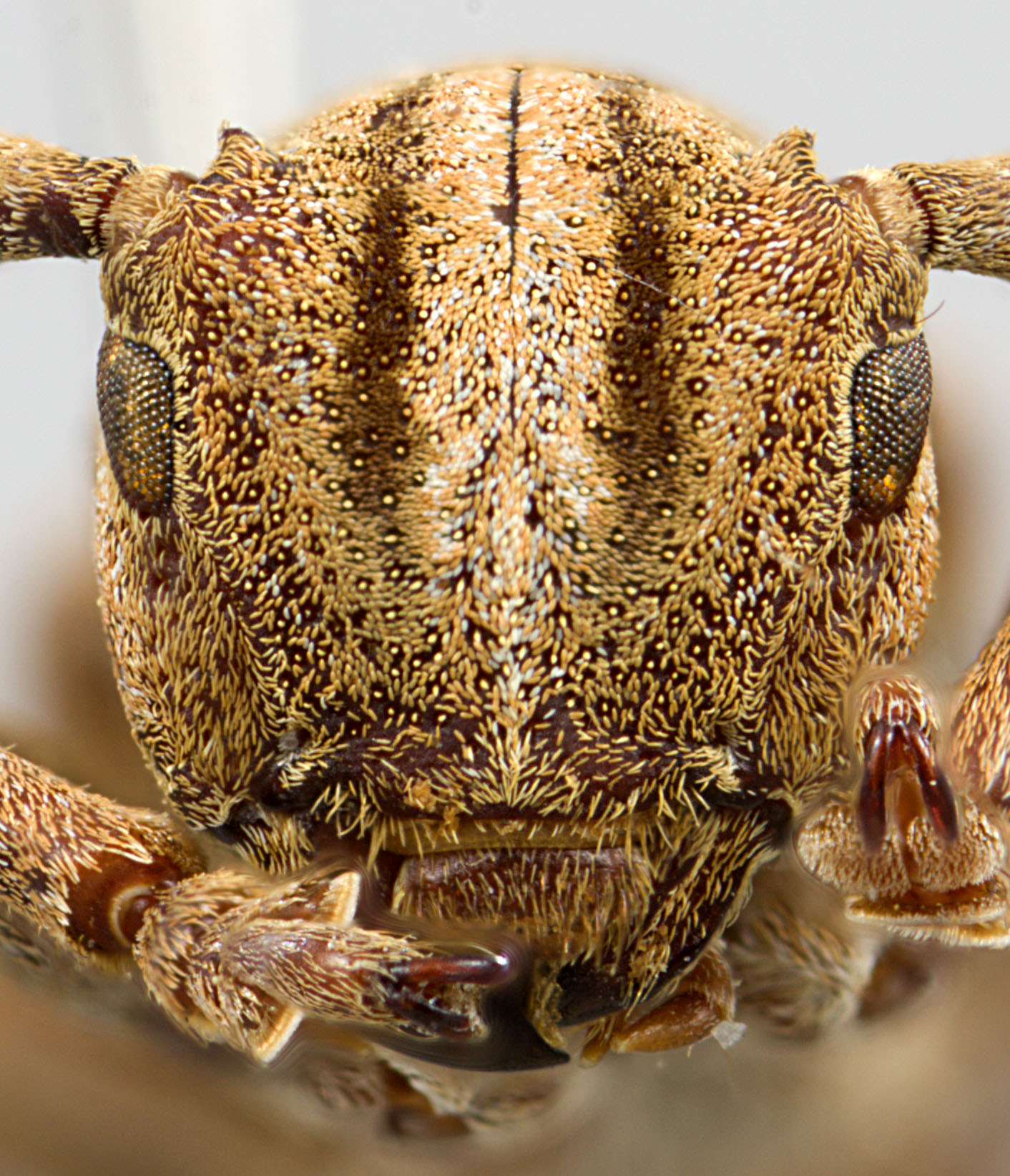
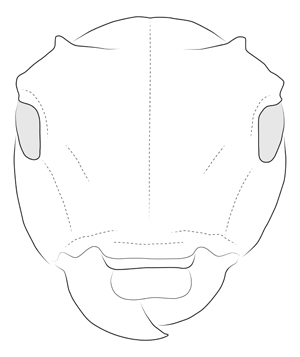
Elongate-oblong, robust, small to moderate-sized, ranging from about 9–12 mm in length. Integument generally ferrugineous with whitish, ferrugineous, and ochraceous pubescence. Head with frons subquadrate to transverse, wider than width of five lower eye lobes; entire surface of head finely punctate, each puncture bearing a fine scale in its center. Eyes with lower lobes small and narrow. Genae elongate, distinctly taller than lower eye lobes. Antennal tubercles prominent, widely separated; tubercles unarmed or armed at apex with small projection (males). Antennae about as long as overall body length or distinctly longer, about 1 1/3 times as long; scape gradually expanded to apex or clavate; antennomere III slightly curved or slightly elliptical (some males), longer than scape and about as long or longer than antennomere IV; antennomere XI shorter than X (females) or longer than X (males). Pronotum subquadrate, roughly cylindrical to slightly conical, slightly narrower at base, with or without small, lateral, blunt tubercles. Prothorax with sides obliquely and broadly chalky-white. Elytra with sides distinctly expanding to apical 1/3; elytral apices individually rounded; elytra with distinct vittae; lateral margins of elytra with chalky-white maculae; base of elytra without prominent tubercles. Basal 1/3 of elytra sparse punctation, surface finely punctate. Procoxae without projection. Mesosternal process with apex nearly rectangular. Metafemora short to distinctly short in length, about 1/4–1/5 as long as elytra.
The combination of the following characters will help to distinguish this genus: distinctly small eyes, widely separated; subquadrate pronotum; sides of prothorax and elytra obliquely and broadly chalky-white; elytra with sides distinctly expanding to apices; and short metafemora.
This distinctive genus is not easily confused with other genera, but superficially resembles Bacuris.
Central America (Costa Rica, Mexico, Panama); South America (Argentina, Bolivia, Brazil, Colombia, French Guiana, Paraguay, Peru)
Unknown
Unknown
The genus Cherentes currently contains one species: C. niveilateris (Thomson, 1868Thomson, 1868:
Thomson J. 1868. Révision du groupe des oncidérites (Lamites, cérambycides, coléoptères). Physis Recueil d'Histoire Naturelle. 2(5):41–92.).
More species images are available in the Gallery.
Cherentes Gounelle, 1906Gounelle, 1906:
Gounelle E. 1906. Note sur deux lamiaires américains placés avec doute dans le genre Eudesmus et description de deux genres nouveaux. Bulletin de la Societe Entomologique de France. 1906:272–275.
subtribe: Onciderina
type species: Eudesmus niveilateris Thomson, 1868Thomson, 1868:
Thomson J. 1868. Révision du groupe des oncidérites (Lamites, cérambycides, coléoptères). Physis Recueil d'Histoire Naturelle. 2(5):41–92.
Bezark and Monné (2013)Bezark and Monné (2013):
Bezark LG, Monné MA. 2013. Checklist of the Oxypeltidae, Vesperidae, Disteniidae and Cerambycidae, (Coleoptera) of the Western Hemisphere., Dillon and Dillon (1946)Dillon and Dillon (1946):
Dillon LS, Dillon ES. 1946. The tribe Onciderini (Coleoptera: Cerambycidae) Part II. Reading, Scientific Publications, Reading Public Museum and Art Gallery, Number 6. 189–413 pp., Gounelle (1906)Gounelle (1906):
Gounelle E. 1906. Note sur deux lamiaires américains placés avec doute dans le genre Eudesmus et description de deux genres nouveaux. Bulletin de la Societe Entomologique de France. 1906:272–275., Monné (2005)Monné (2005):
Monné MA. 2005. Catalogue of the Cerambycidae (Coleoptera) of the Neotropical Region. Part II. Subfamily Lamiinae. Zootaxa. 1023:1–759., Thomson (1868)Thomson (1868):
Thomson J. 1868. Révision du groupe des oncidérites (Lamites, cérambycides, coléoptères). Physis Recueil d'Histoire Naturelle. 2(5):41–92.