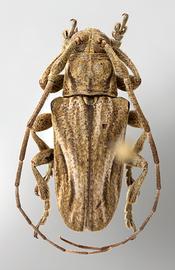
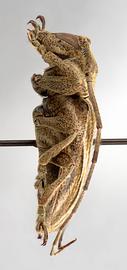
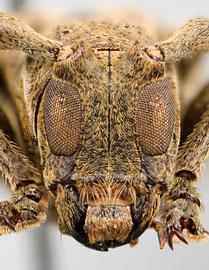
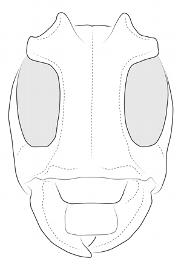
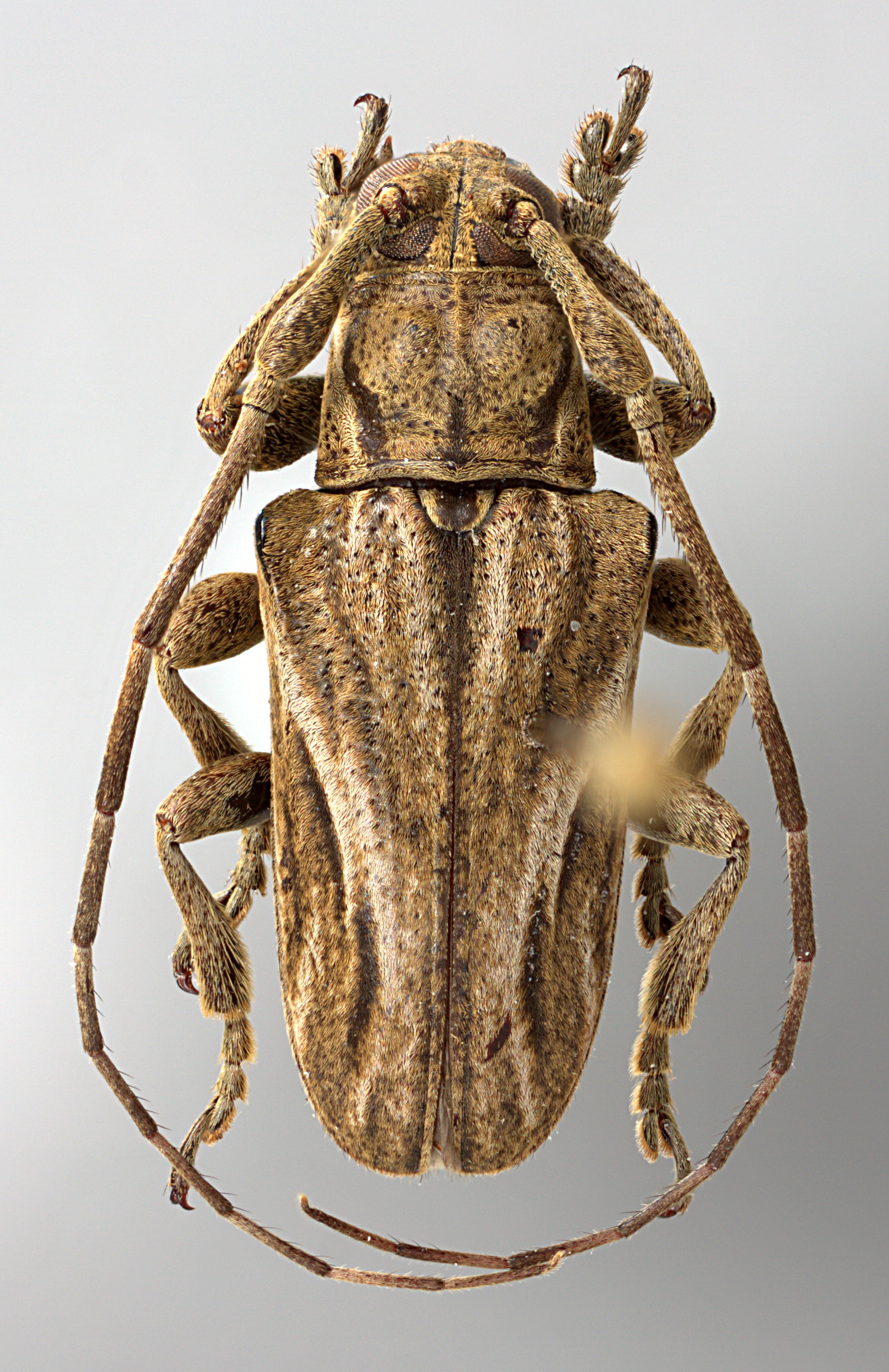
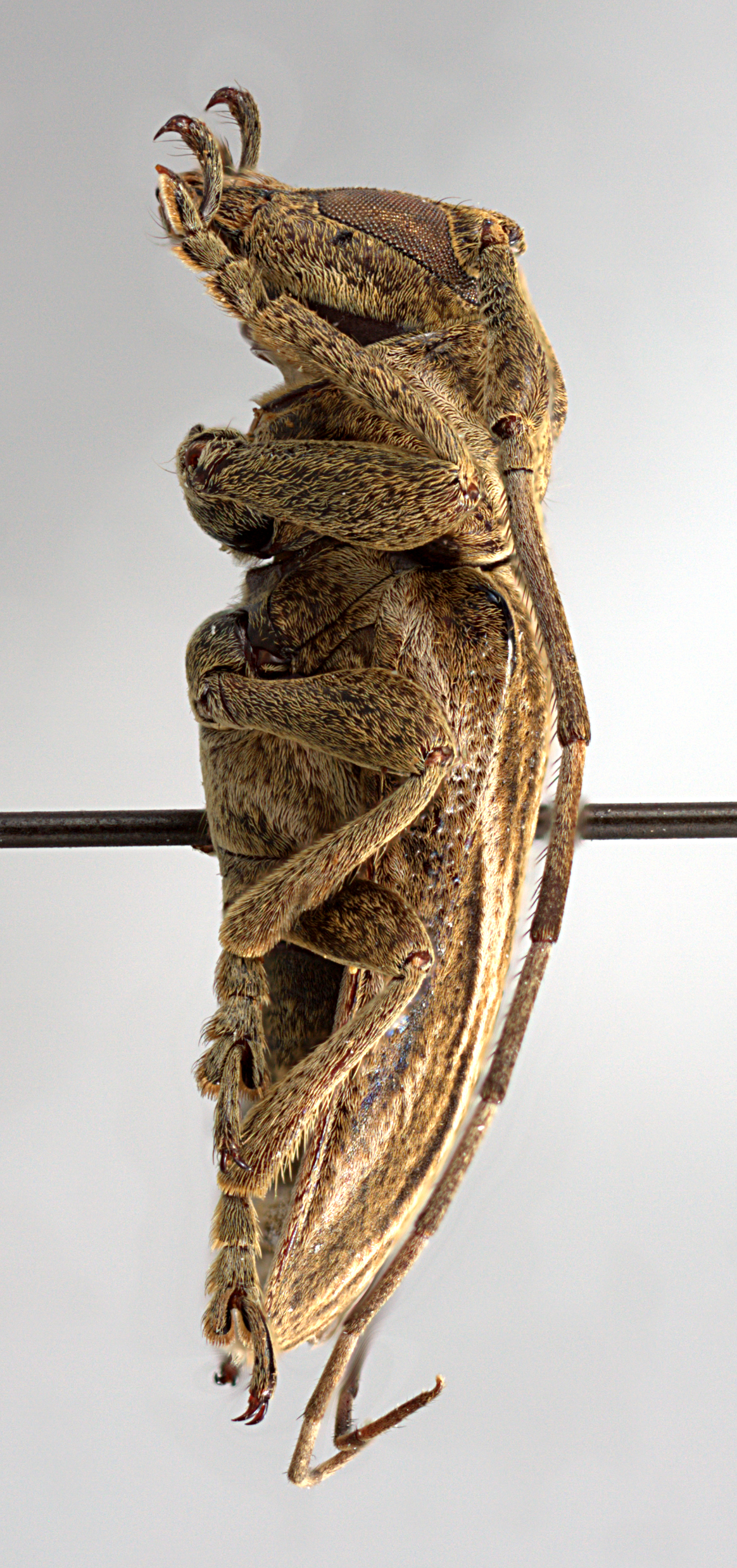
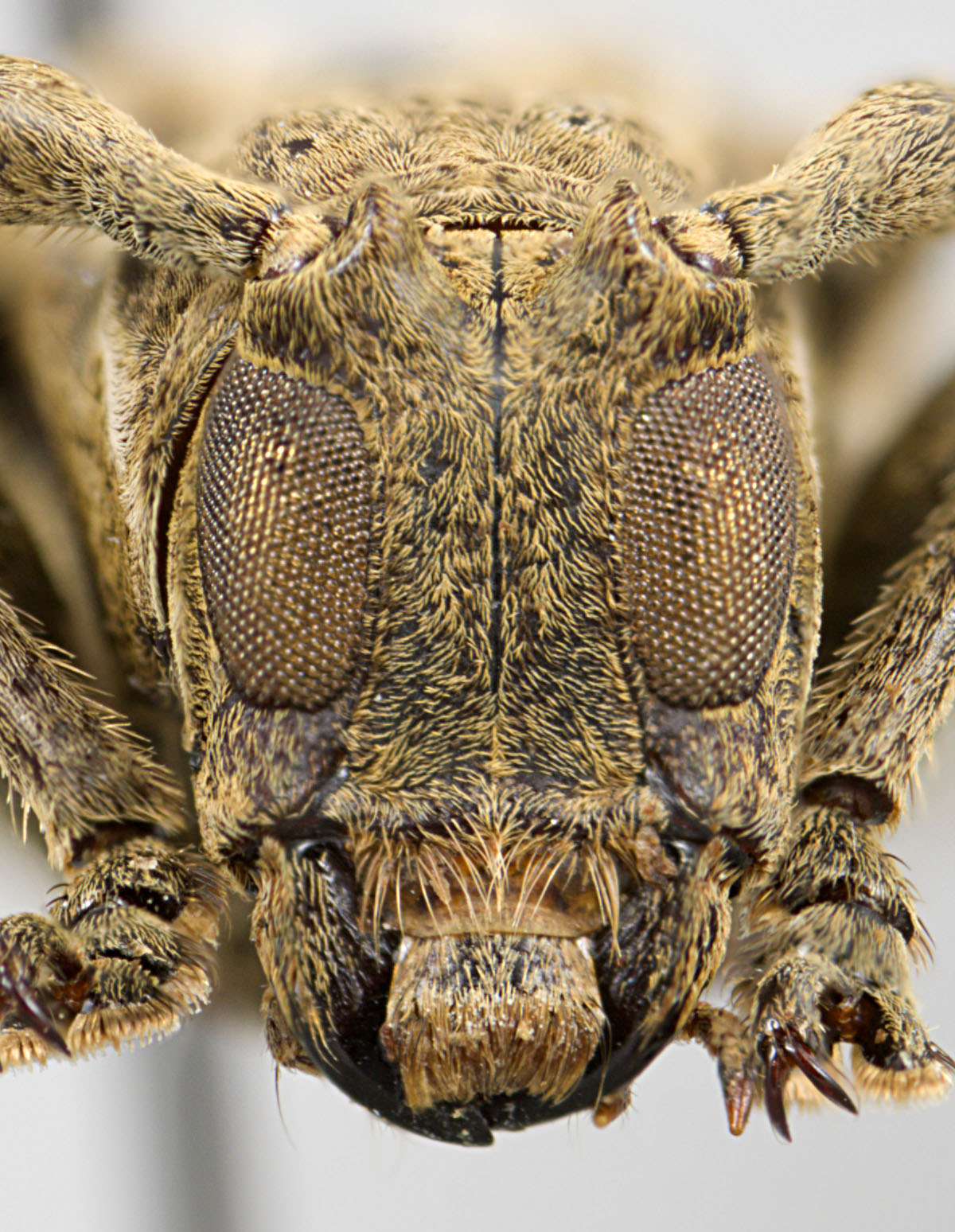
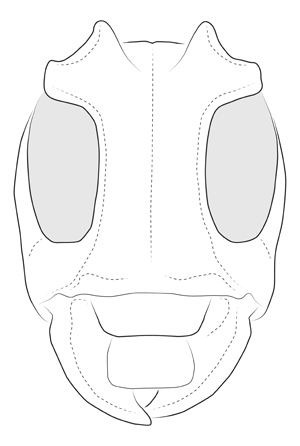
Elongate-oblong, small to moderate-sized, ranging from about 11–17 mm in length. Integument generally dark brown with ochraceous and ferrugineous pubescence. Head with frons elongate, narrow, about as wide as width of one lower eye lobe. Eyes with lower lobes large, oblong. Genae subquadrate to slightly elongate, shorter than lower eye lobes. Antennal tubercles prominent, moderately separated; tubercles armed with a small projection (females) or a with short, blunt horn (males). Antennae about as long (females) to 1 1/2 times as long (males) as overall body length; scape clavate, about as long or longer than antennomere IV; antennomere III feebly sinuate, distinctly longer than scape and IV. Pronotum transverse, roughly conical, slightly wider at base, without lateral tubercles. Elytra with sides nearly straight, roughly parallel, slightly attenuate to apex; elytral apices individually rounded; elytra with vague to distinct lines of contrasting color; base of elytra with two prominent tubercles at humeri; each tubercle followed by a long carina to behind middle of elytron. Basal 1/3 of elytra with moderate punctation, surface finely to coarsely punctate. Procoxae without projection (females) or with obtuse tubercle or distinct curved hook (males). Mesosternal process with apex deeply emarginate. Metafemora moderate in length, about 1/3 as long as elytra.
The combination of the following characters will help to distinguish this genus: distinctly large eyes; slightly conical pronotum; base of elytra with two prominent tubercles at humeri; and elytra with sides nearly parallel.
Strongly resembles Neolampedusa and Venustus; superficially resembles Furona, Plerodia, Tulcoides.
South America (Bolivia, Brazil, Ecuador, French Guiana, Guyana, Peru)
Unknown
Unknown
The genus Alexera currently contains two species: A. barii (Jekel, 1861Jekel, 1861:
Jekel H. 1861. Observations suggérées par les notes de M. Chevrolat sur les cérambycides de M. Thomson. Journal of Entomology. 1:255–262.); A. secunda Martins and Galileo, 2007Martins and Galileo, 2007:
Martins UR, Galileo MHM. 2007. Notas e novas especies de Onciderini (Coleoptera, Cerambycidae, Lamiinae). Papeis Avulsos de Zoologia. 47(9):127–135..
Alexera Dillon and Dillon, 1945Dillon and Dillon, 1945:
Dillon LS, Dillon ES. 1945. The tribe Onciderini (Coleoptera: Cerambycidae) Part I. Reading, Scientific Publications, Reading Public Museum and Art Gallery, Number 5. 186 pp.
subtribe: Onciderina
type species: Hesycha barii Jekel, 1861Jekel, 1861:
Jekel H. 1861. Observations suggérées par les notes de M. Chevrolat sur les cérambycides de M. Thomson. Journal of Entomology. 1:255–262.
Bezark and Monné (2013)Bezark and Monné (2013):
Bezark LG, Monné MA. 2013. Checklist of the Oxypeltidae, Vesperidae, Disteniidae and Cerambycidae, (Coleoptera) of the Western Hemisphere., Dillon and Dillon (1945)Dillon and Dillon (1945):
Dillon LS, Dillon ES. 1945. The tribe Onciderini (Coleoptera: Cerambycidae) Part I. Reading, Scientific Publications, Reading Public Museum and Art Gallery, Number 5. 186 pp., Jekel (1861)Jekel (1861):
Jekel H. 1861. Observations suggérées par les notes de M. Chevrolat sur les cérambycides de M. Thomson. Journal of Entomology. 1:255–262., Martins and Galileo (2007)Martins and Galileo (2007):
Martins UR, Galileo MHM. 2007. Notas e novas especies de Onciderini (Coleoptera, Cerambycidae, Lamiinae). Papeis Avulsos de Zoologia. 47(9):127–135., Monné (2005)Monné (2005):
Monné MA. 2005. Catalogue of the Cerambycidae (Coleoptera) of the Neotropical Region. Part II. Subfamily Lamiinae. Zootaxa. 1023:1–759.