

Family: Megachilidae
Subfamily: Megachilinae
Tribe: Anthidiini
Genus: Indanthidium Michener and Griswold, 1994
Subgenera: none
Common name: none
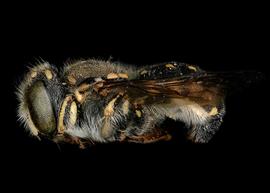
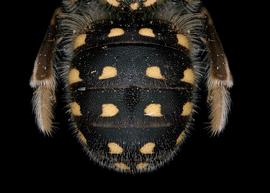
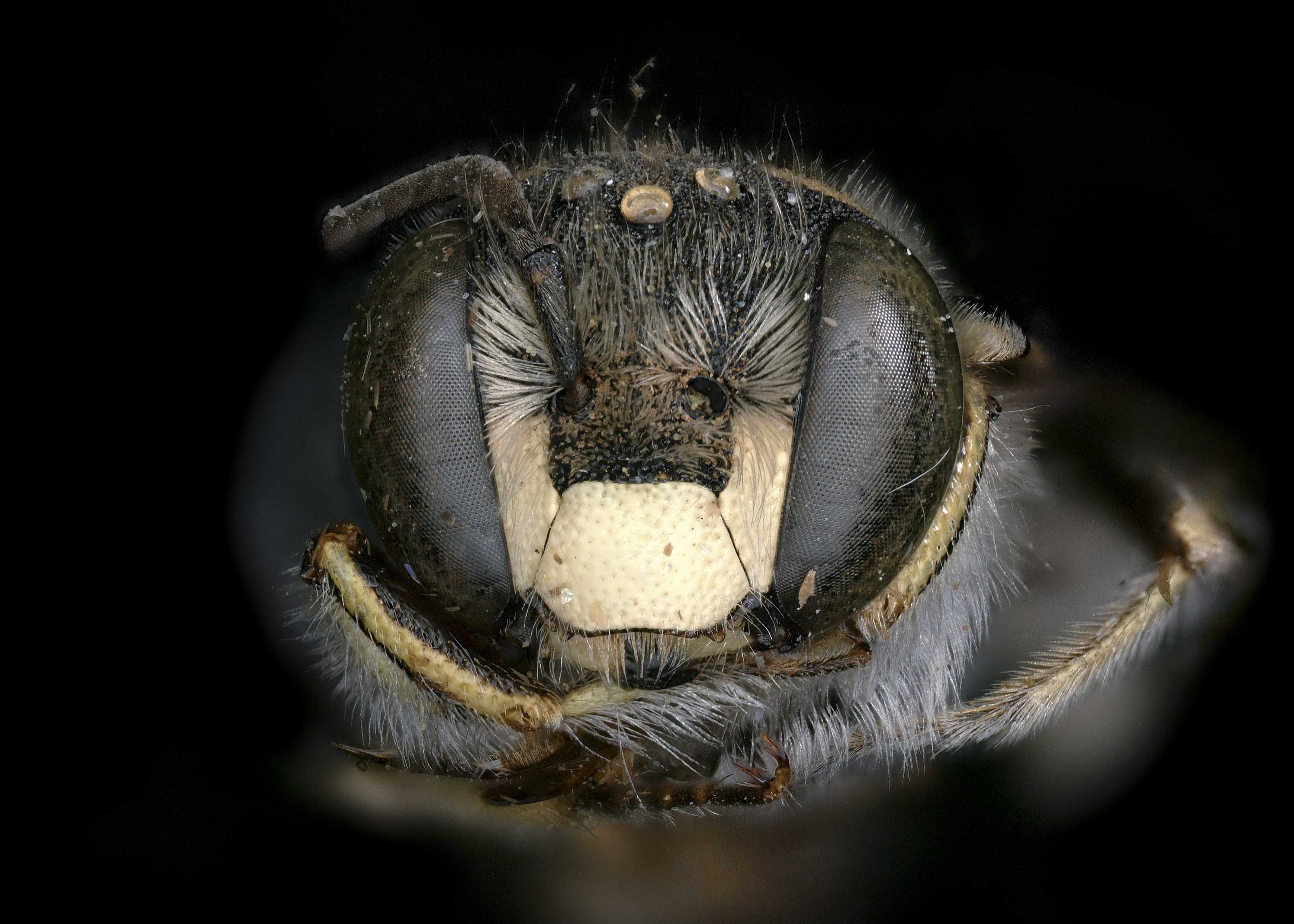
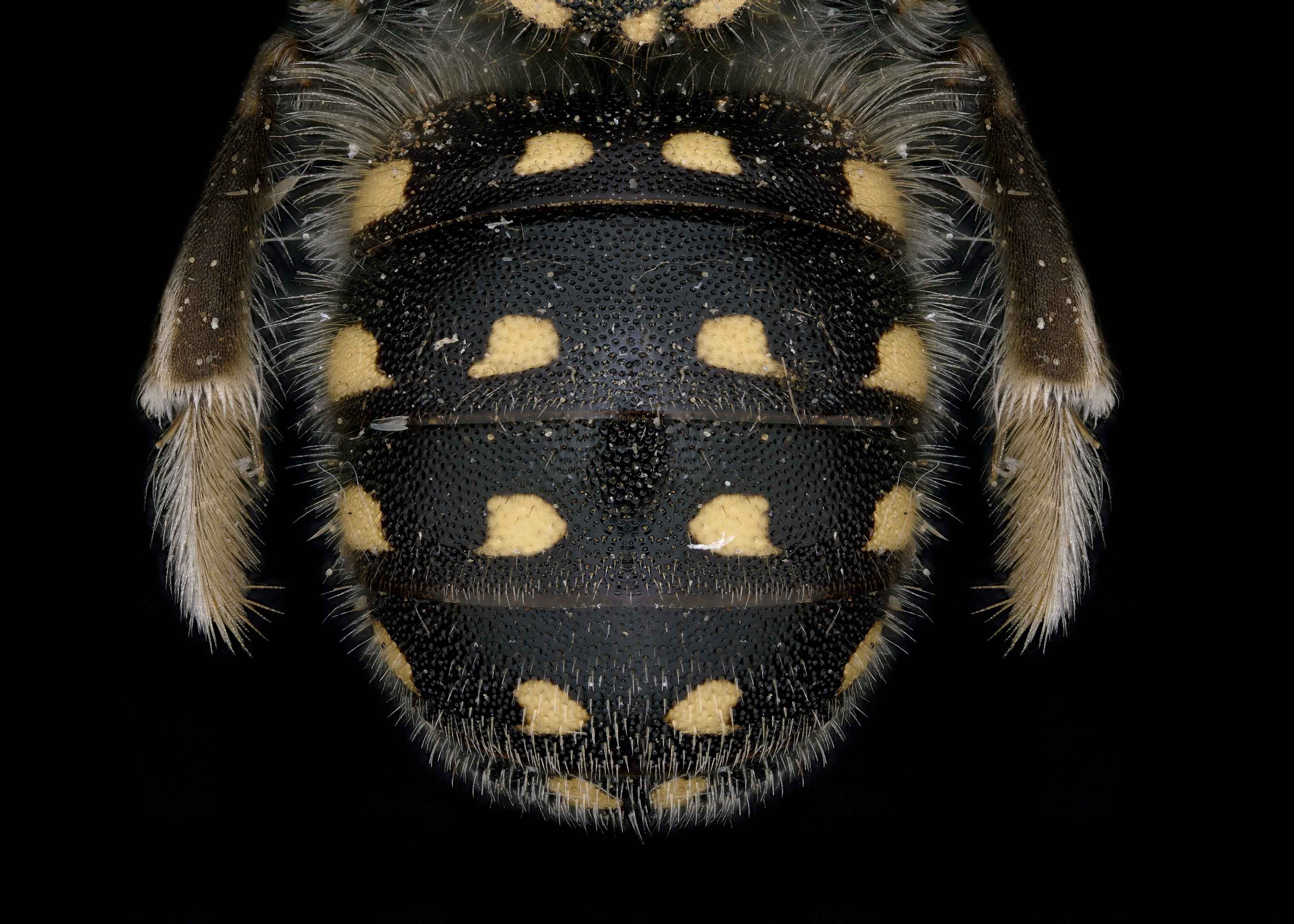
Indanthidium are small bees ranging in length from 6–7.5 mm. They have black integumentintegument:
a tough, protective outer layer
with yellow maculations and abdominal bandsbands:
usually referring to bands of hair or bands of color that traverse across an abdominal segment
, which are divided into four spots on most of their tergaterga:
the segments on the top side of the abdomen, often abbreviated when referring to a specific segment to T1, T2, T3, T4, T5, T6, or T7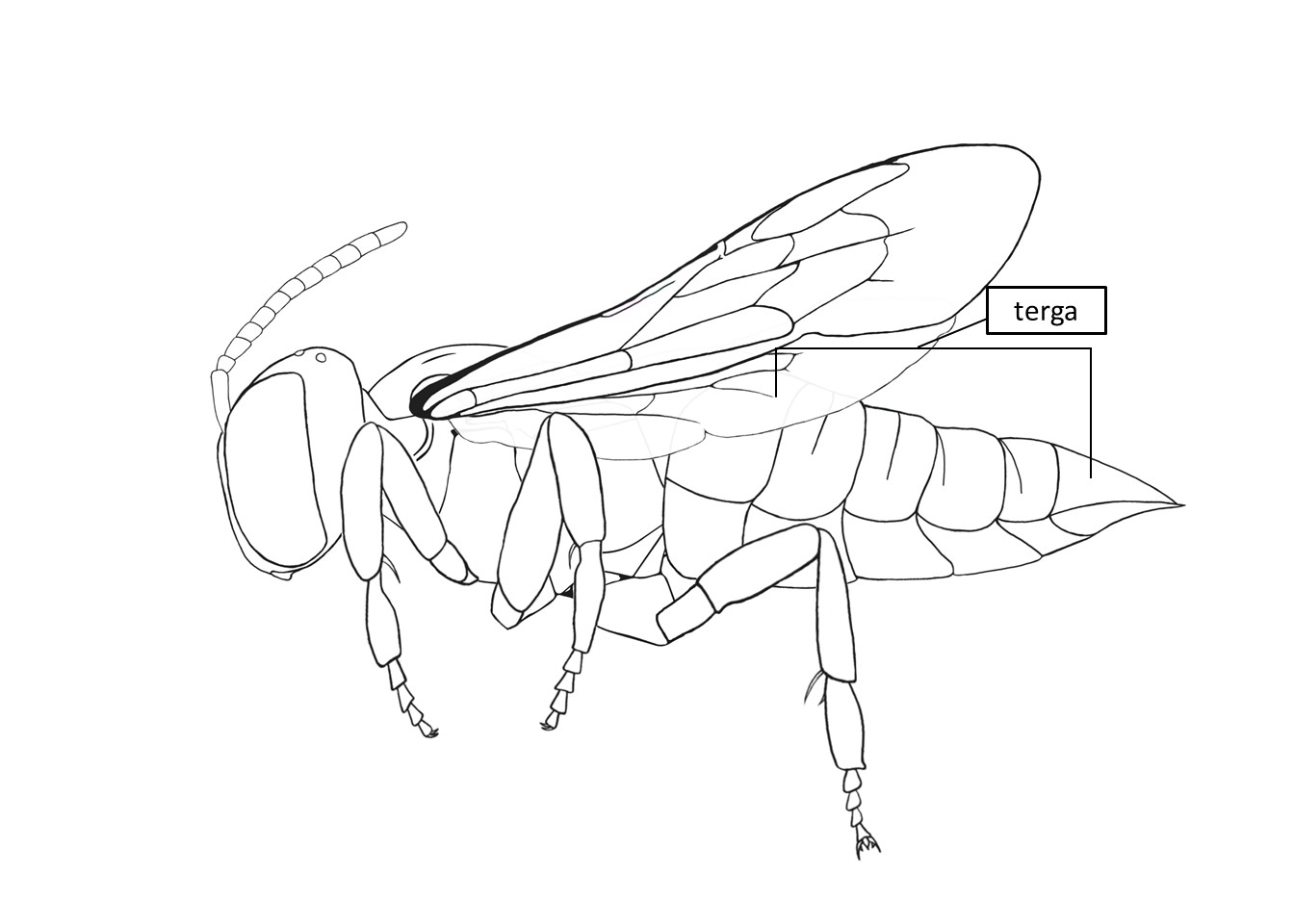 (Michener 2007Michener 2007:
Michener, C.D. 2007. The Bees of the World (2nd ed.). Johns Hopkins University Press, Baltimore and London, 953 pp.).
Indanthidium contains 1 species, I. crenulaticauda (Michener 2007Michener 2007:
Michener, C.D. 2007. The Bees of the World (2nd ed.). Johns Hopkins University Press, Baltimore and London, 953 pp.); none are known to occur in the U.S. or Canada.
(modified from Michener and Griswold 1994Griswold 1994:
Griswold, T.L. 1994. A review of the Ochreriades . Pan-pacific Entomologist 70: 318ndash;321. unless otherwise stated)
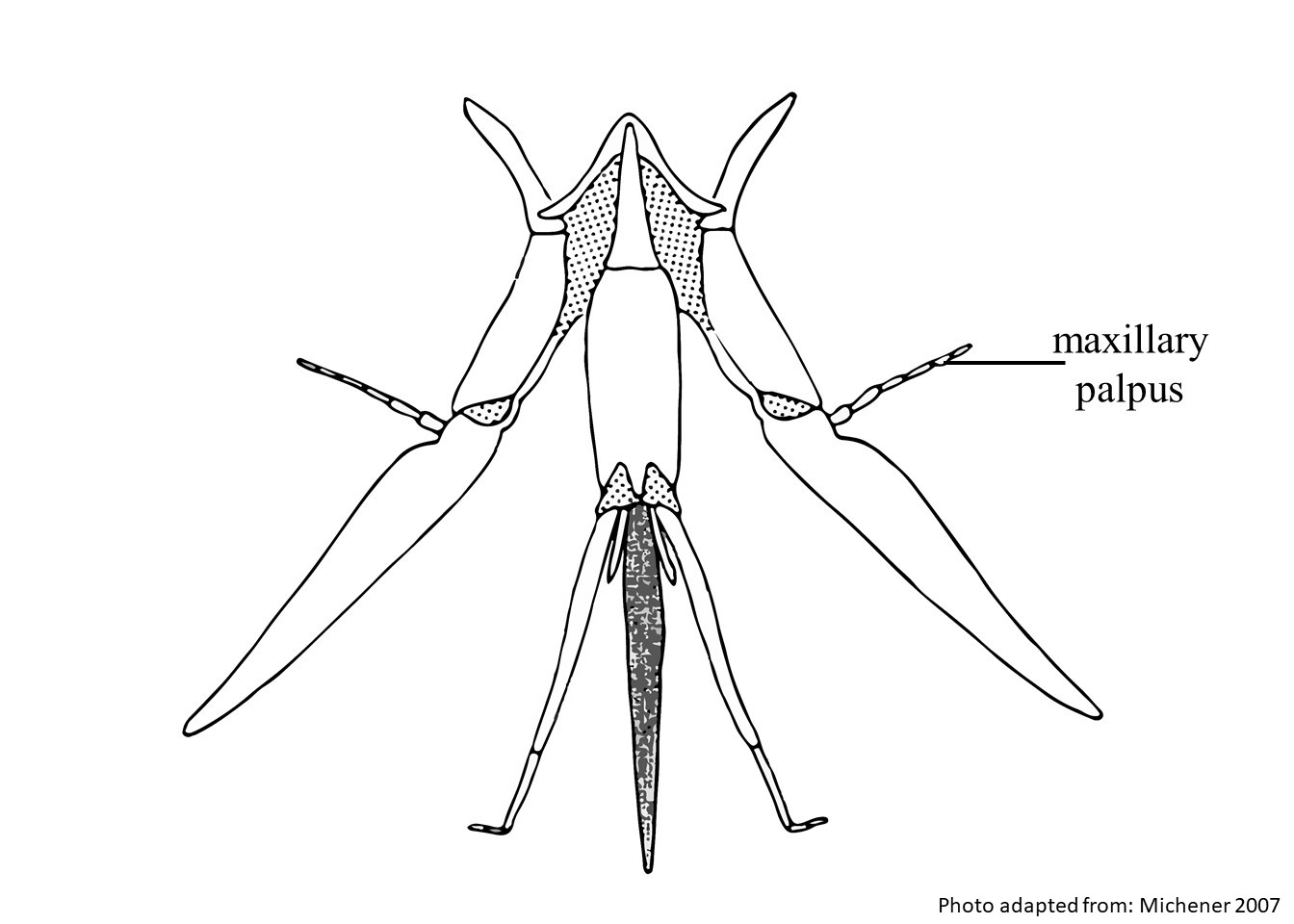 is a single segment (Michener 2007Michener 2007:
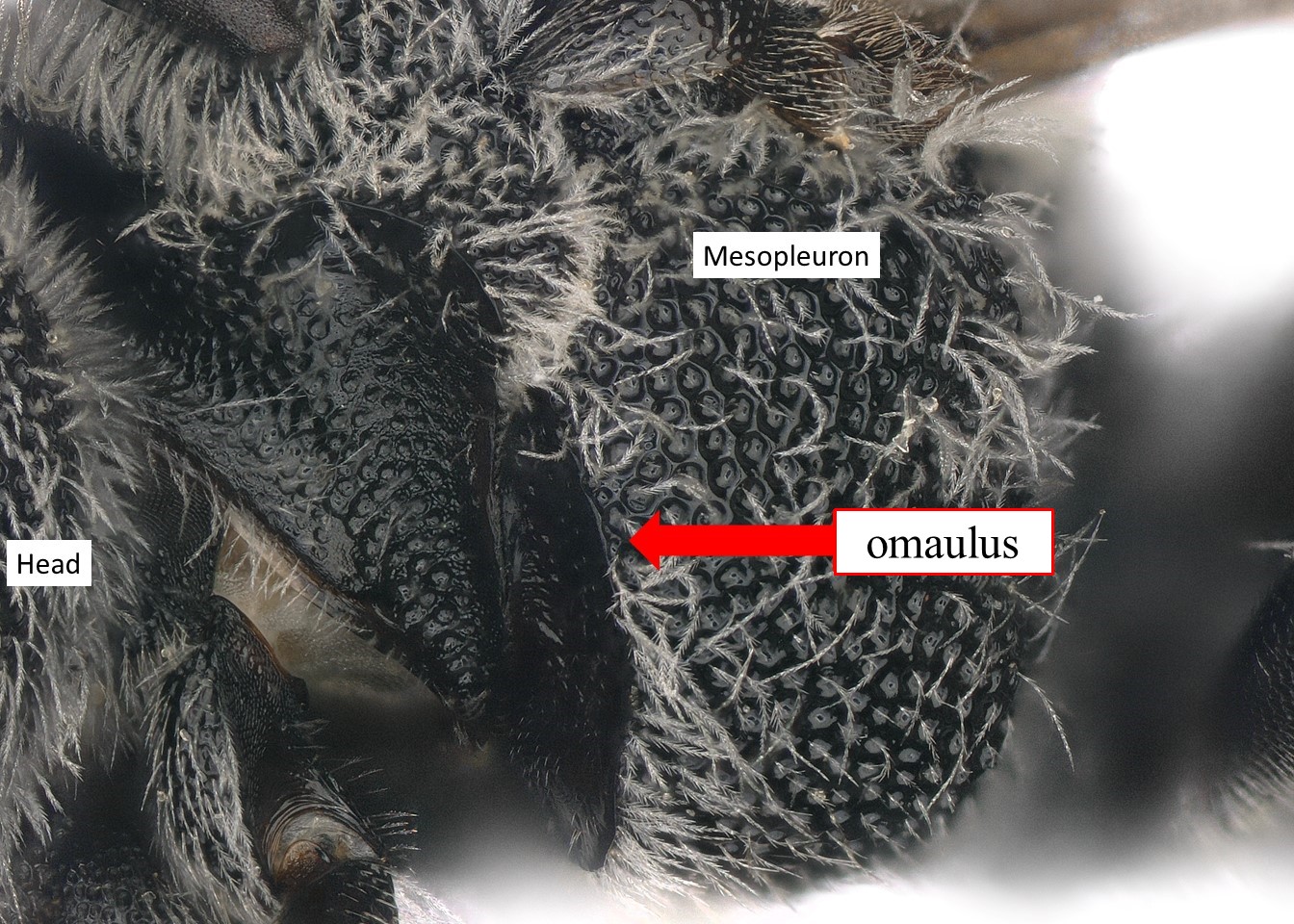 lacking carinacarina:
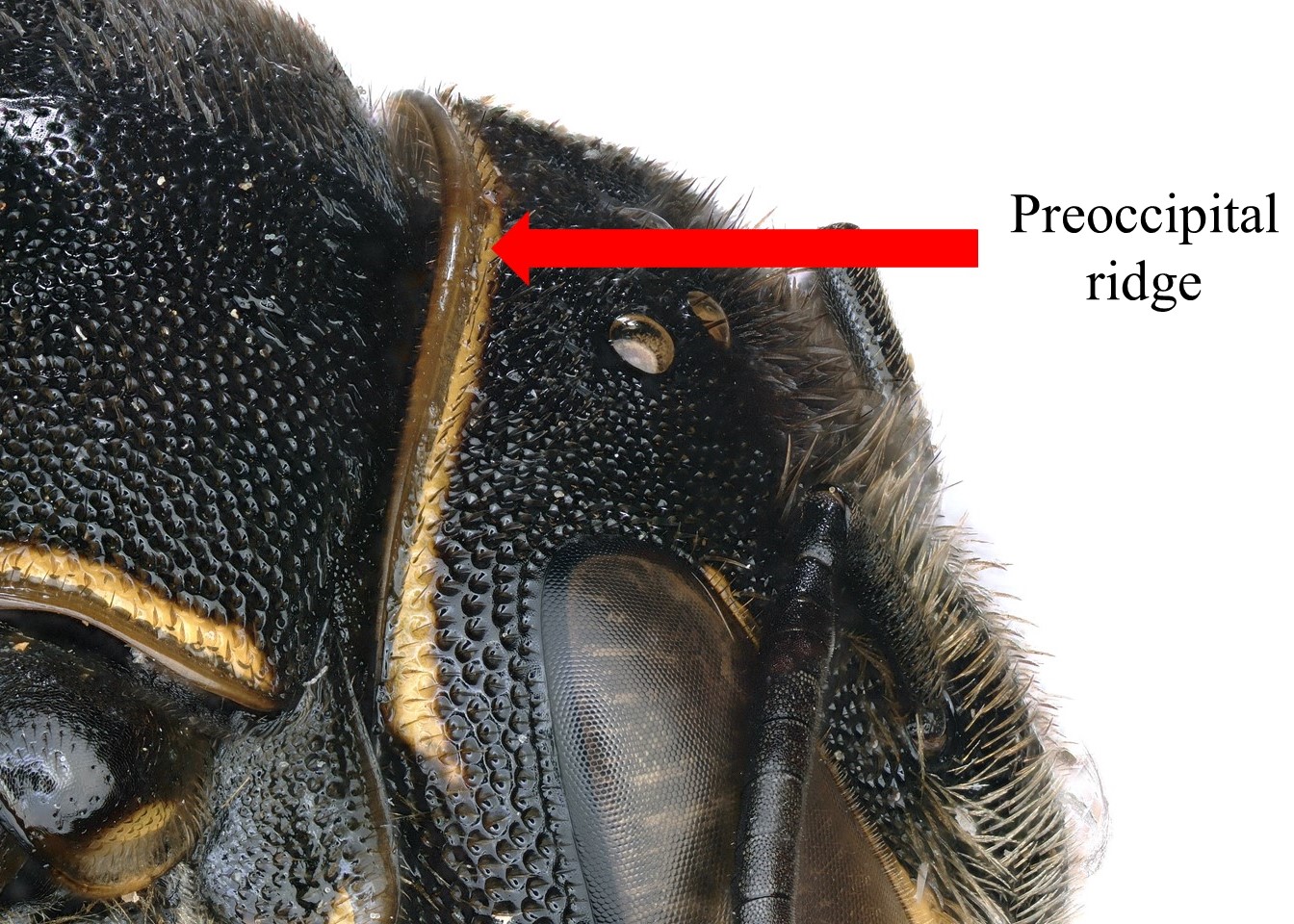 lacking carinacarina:
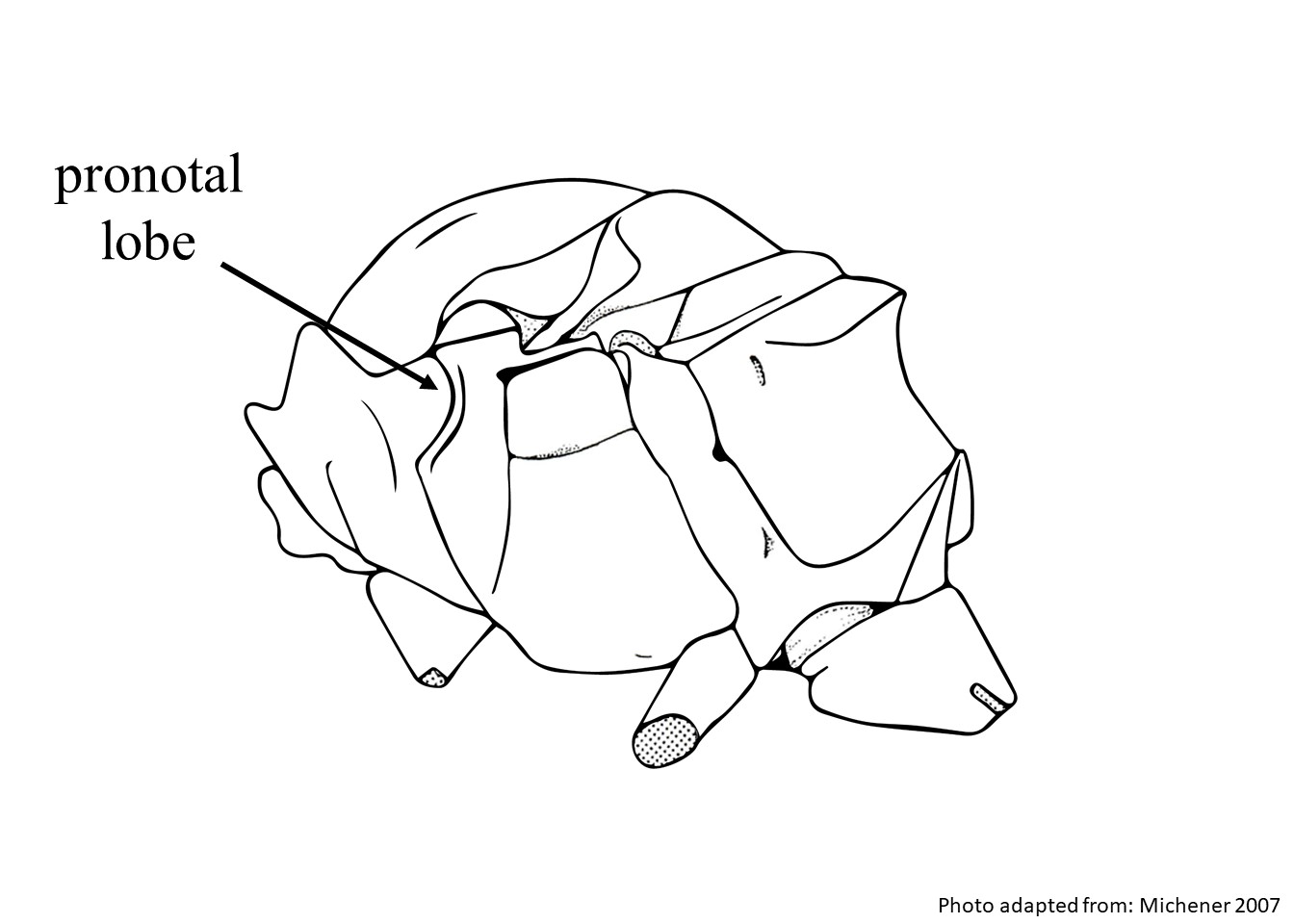 carinatecarinate:
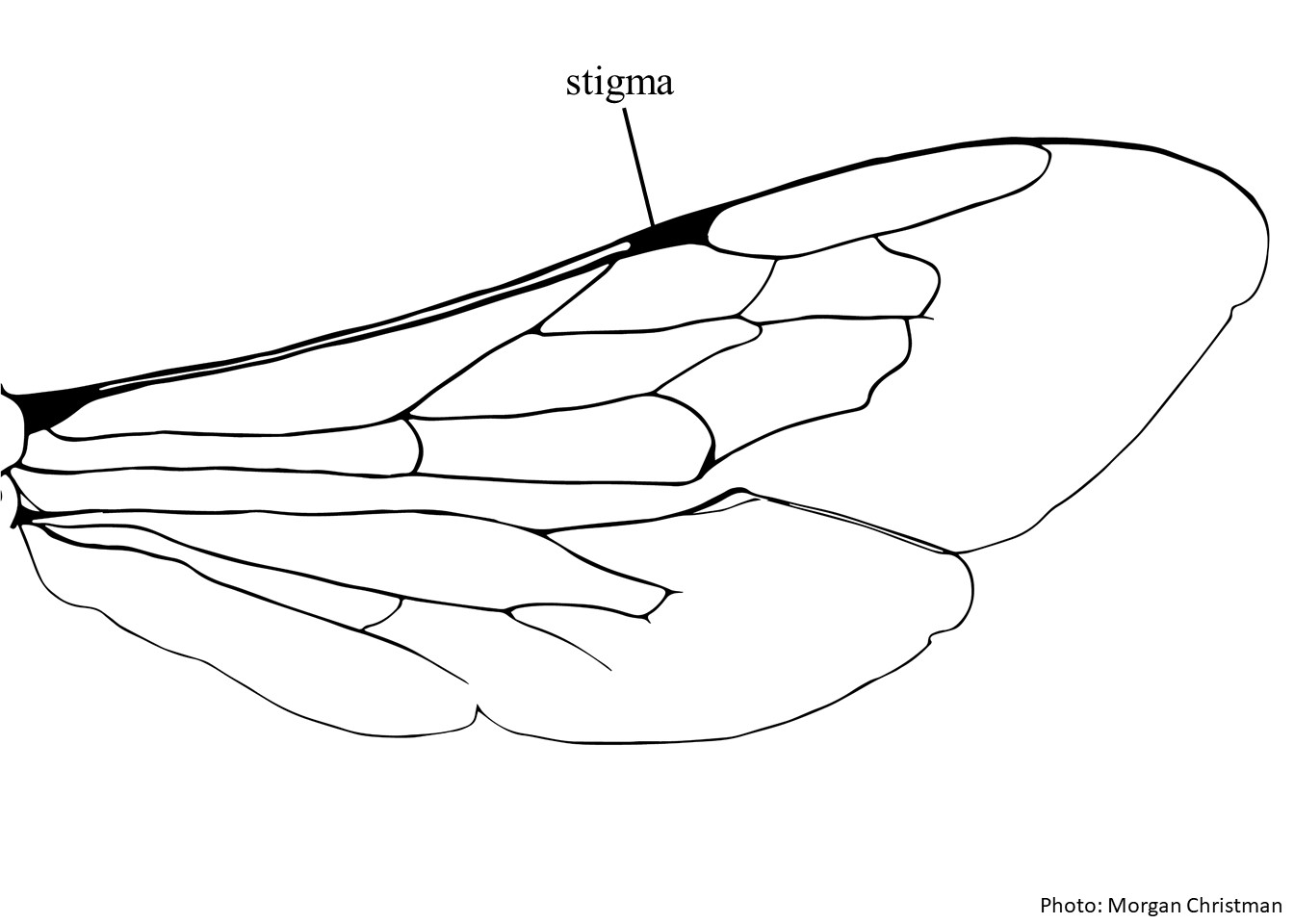 less than twice as broad as long (Michener 2007Michener 2007:
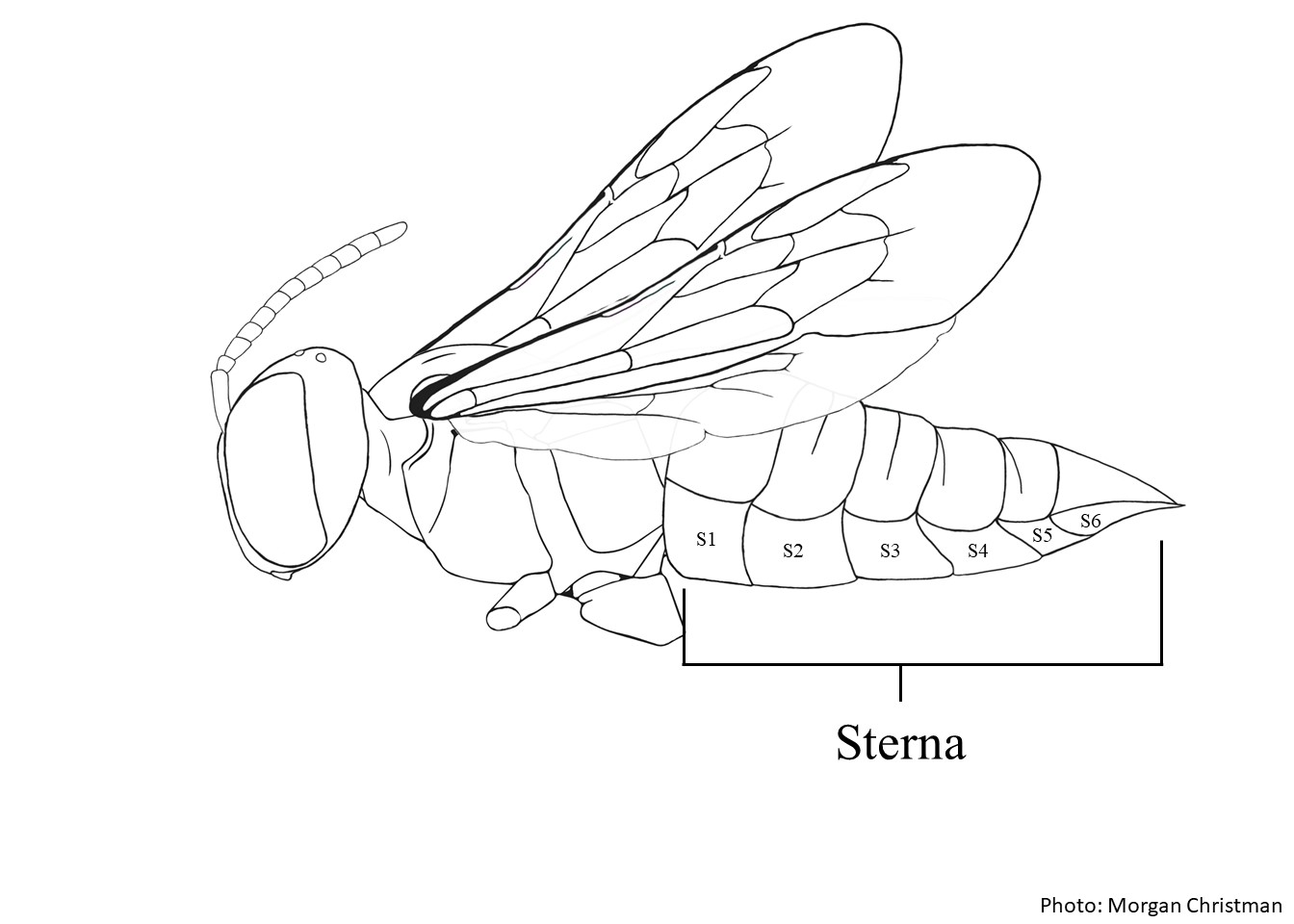 and S6S6: are not modified and lack combs (Michener 2007Michener 2007: is as broad as T6T6:, and has median and laterallateral:
Indanthidium may be confused with Anthidium due to their similar coloration: yellow abdominal bandsbands:
usually referring to bands of hair or bands of color that traverse across an abdominal segment
are divided into four spots in both genera. Indanthidium can be differentiated by the punctured depressed marginal zone of T5T5:
the segments on the top side of the abdomen, often abbreviated when referring to a specific segment to T1, T2, T3, T4, T5, T6, or T7 (Michener 2007Michener 2007:
Michener, C.D. 2007. The Bees of the World (2nd ed.). Johns Hopkins University Press, Baltimore and London, 953 pp.). Indanthidium may also be confused with Pseudoanthidium due to similar arcuatearcuate:
curved like a bow
subantennal sutures; however, they can be differentiated by the characteristics listed above (Michener 2007Michener 2007:
Michener, C.D. 2007. The Bees of the World (2nd ed.). Johns Hopkins University Press, Baltimore and London, 953 pp.).
There are no known invasives.
Indanthidium is only known to occur in southern India.
Distribution map generated by Discover Life -- click on map for details, credits, and terms of use.
Michener, C.D., and T.L. Griswold. 1994. The classification of old worldOld World:
the part of the world that was known before the discovery of the Americas, comprised of Europe, Asia, and Africa; the Eastern Hemisphere
Anthidiini. University of Kansas Science Bulletin 55:299-327.
Michener, C.D. 2007. The Bees of the World. 2nd ed. Johns Hopkins University Press, Baltimore and London, 953 pp.
Authors: S. Burrows, C. Ritner, M. Christman, L. Spears, A. Smith-Pardo, S. Price, R. Ramirez, T. Griswold, A. Redford
Edition 3 - last updated November 2021
tool images at ITP Node
idtools.org

.jpg)

.jpg)