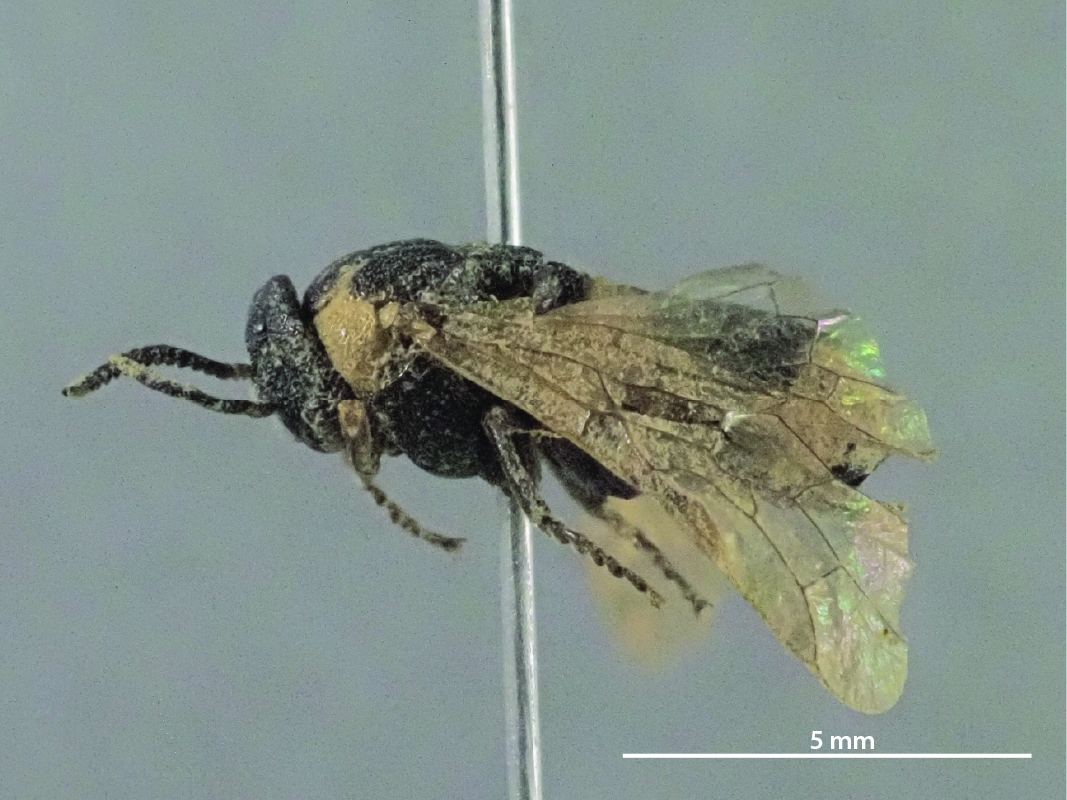
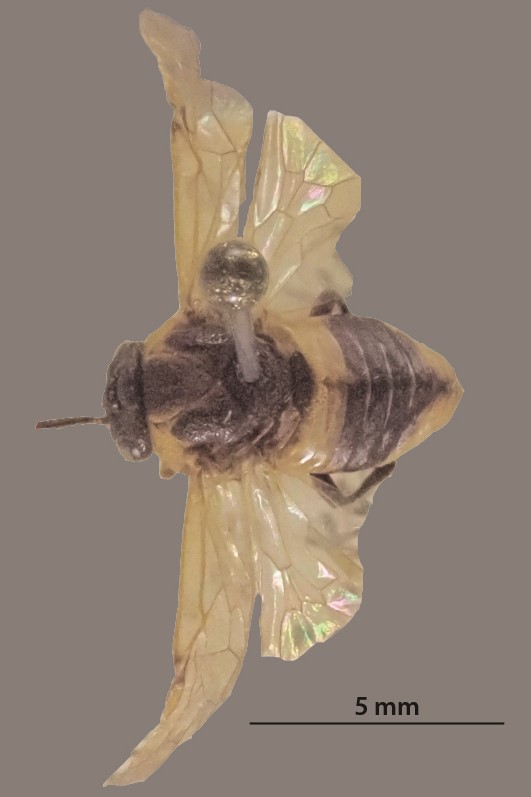
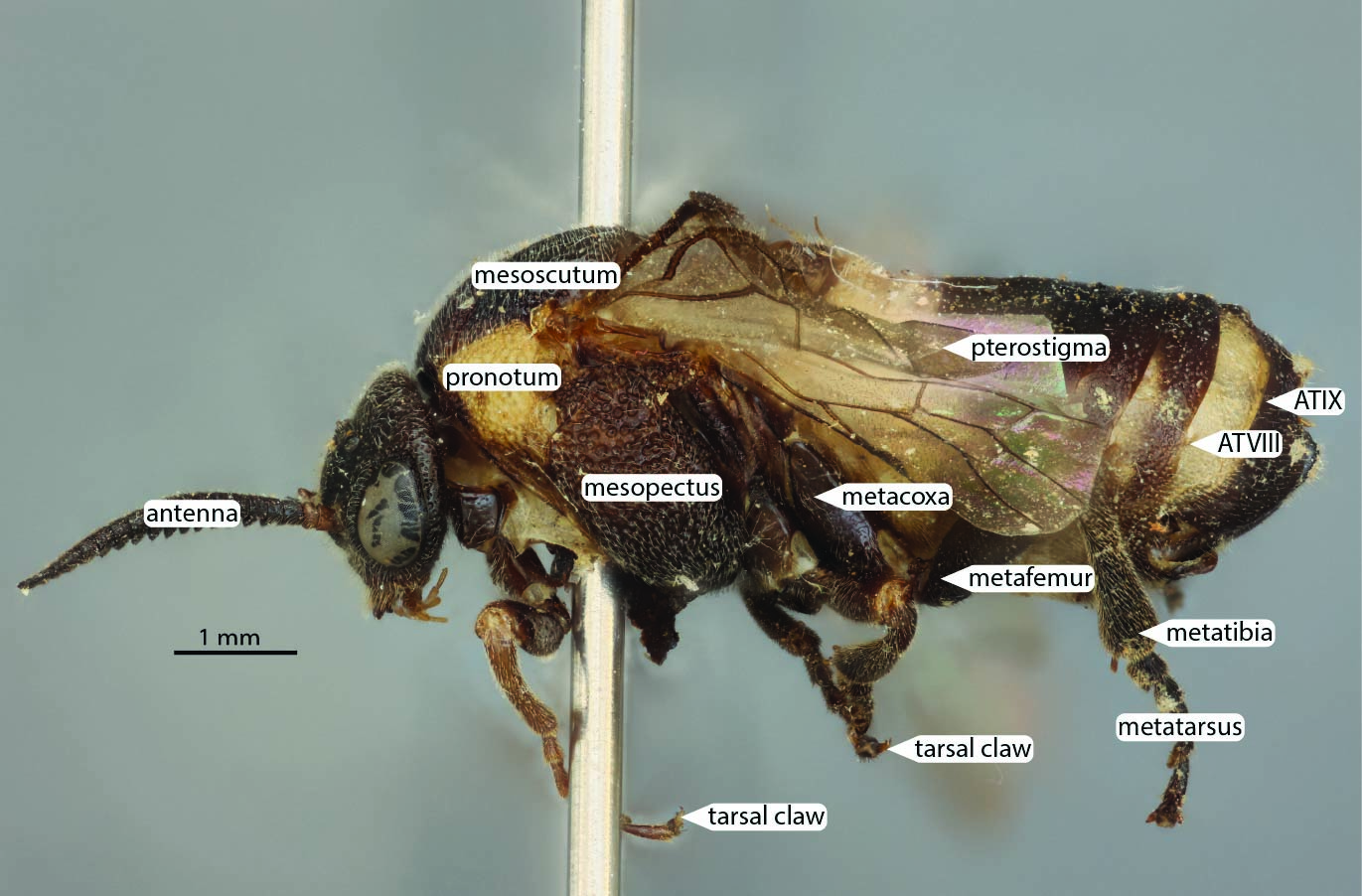
No single character state uniquely identifies the Diprion koreanus female or male.
The female is very similar to that of D. wenshanicus but is reliably distinguished from that species by having 11 annuliannulus:
vertical row of teeth which occurs at regular intervals on both sides of female gonapophysis VIII. In Diprion, there are 9–12 annuli.
. Diprion koreanus also differs from D. wenshanicus in that ATVIIIabdominal tergite VIII:
the dorsal sclerite of abdominal segment VIII.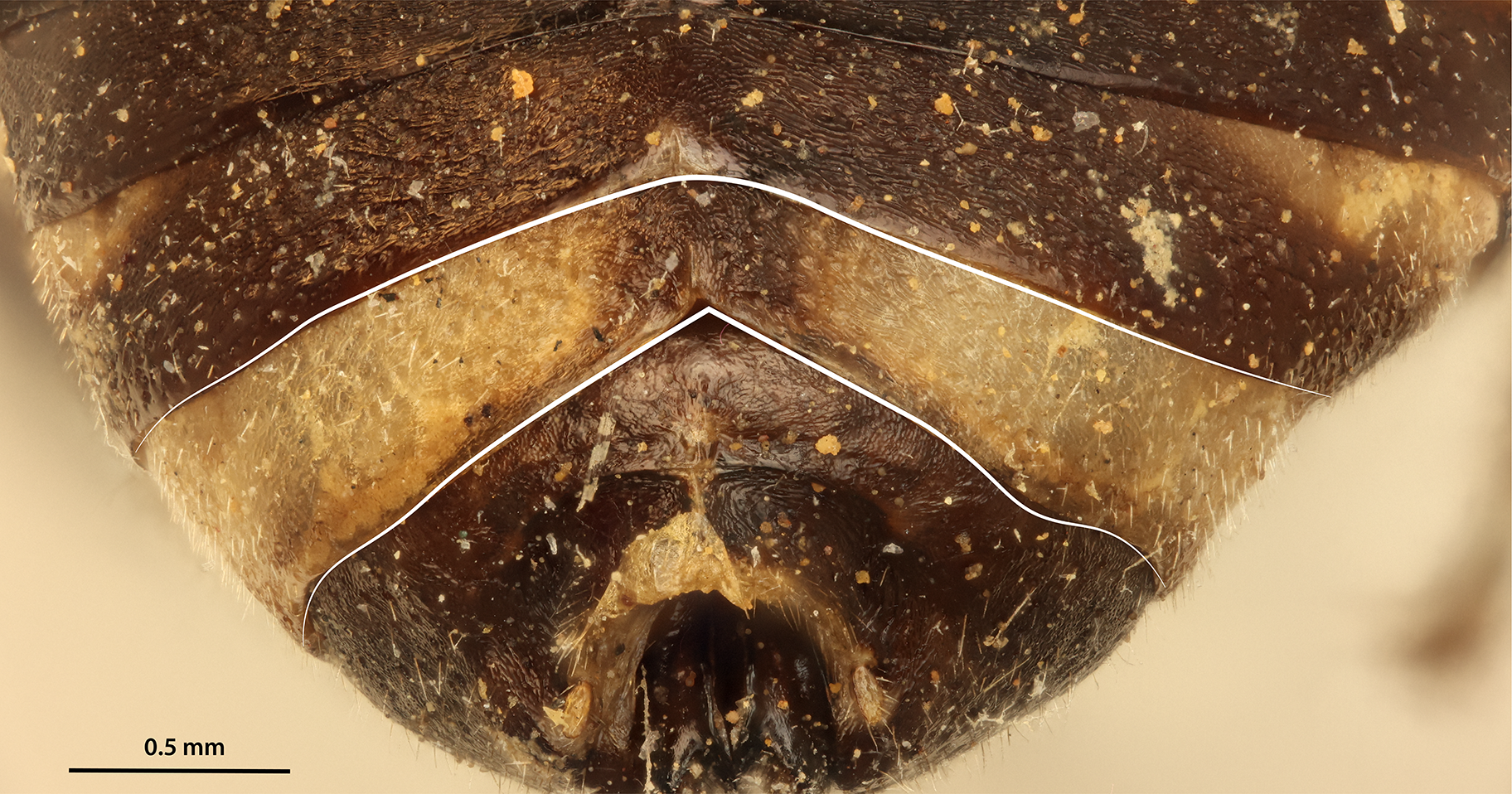 is concolorousconcolorous:
having a single color throughout.
and yellow, and ATIXabdominal tergite IX:
( = ATIX) the dorsal sclerite of abdominal segment IX.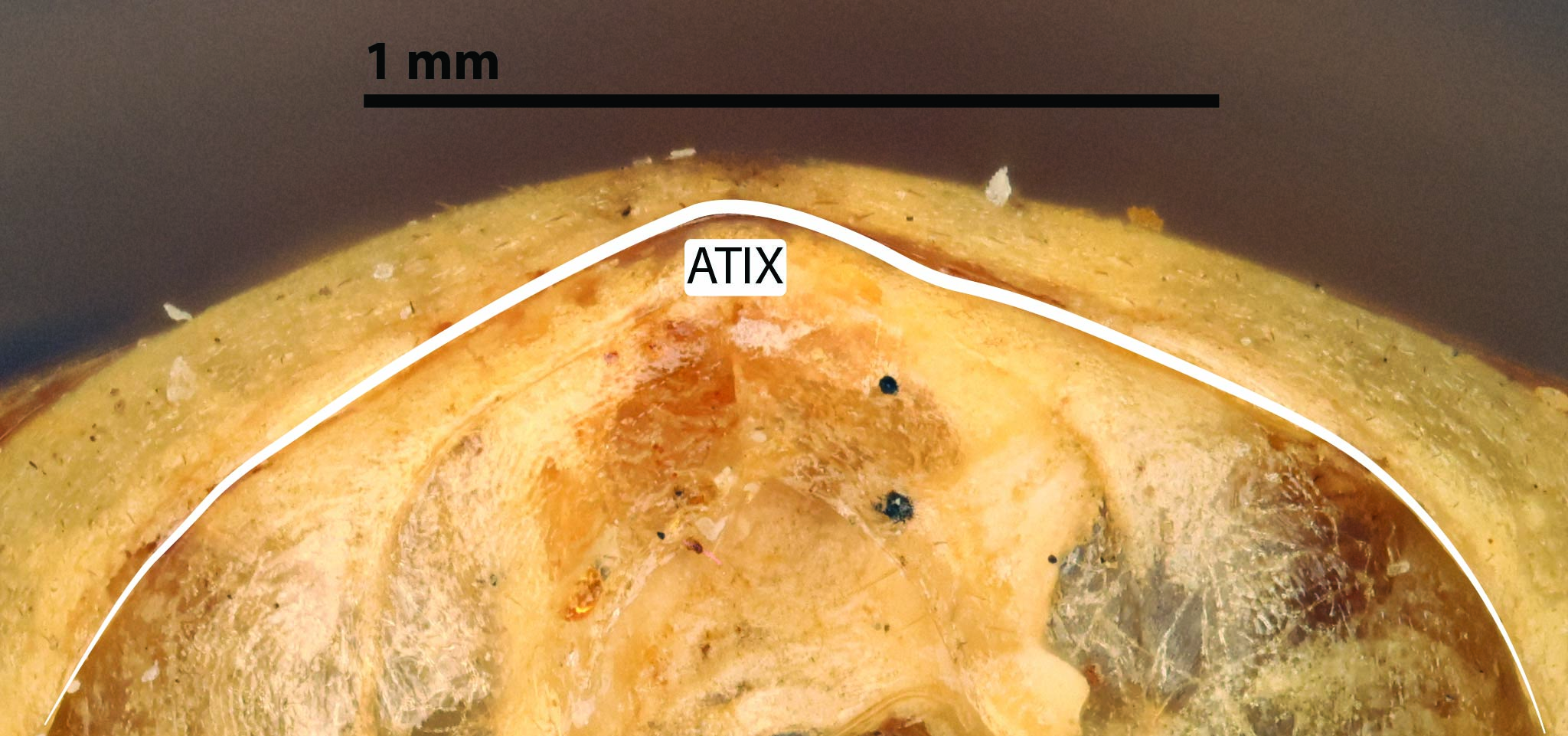 is versi- to bicoloredbicolored:
having two colors, with the change between these colors being abrupt.
. The female differs from D. pini and D. similis in the concolorously black condition of the propleuronpropleuron:
a sclerite of the prothorax ( = front-most thoracic segment) to which the foreleg articulates. Visible in profile and ventral views.
. It differs from D. hani in having a largely concolorousconcolorous:
having a single color throughout.
mesopectus, metacoxa, metafemur, and metatibia.
No male specimens were available for study or imaging, limiting the development of identification tools. Penial condition and mesothoracic vestiturevestiture:
covering of hairs on a surface. In the attached image, that surface is the mesoscutum in profile view.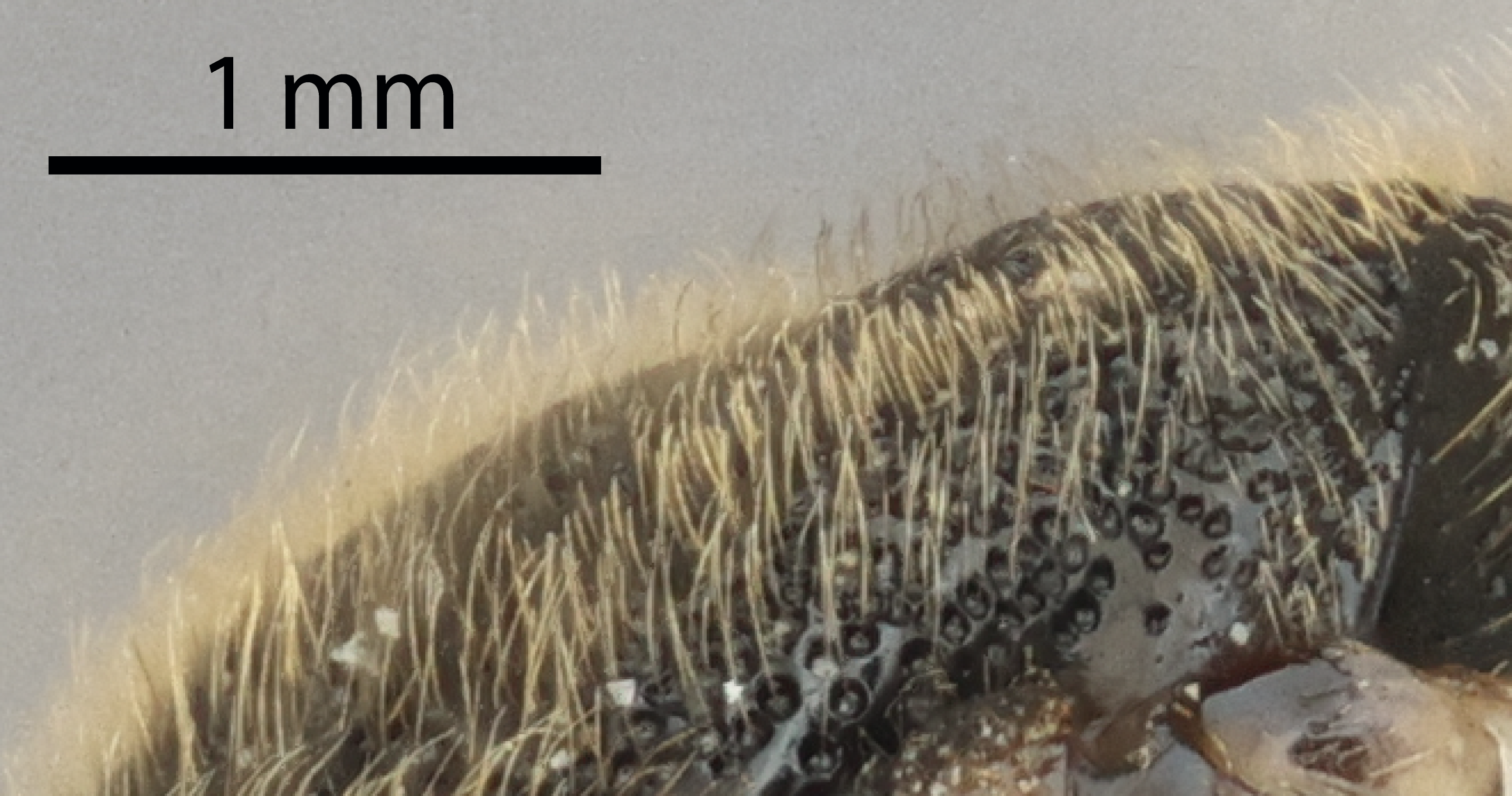 could not be assessed in this species.
In the final feeding instarinstar:
the stages of the sawfly larva, delimited by moulting events in which the larva sheds its exoskeleton and thus grows larger. The appearance of the larva changes dramatically throughout its growth from hatching to prepupa. The number of instars may differ according to sex.
, the larva of D. koreanus is yellow to yellow-white on the pronotum, sides, and underside of the body. The rest of the body is yellow, or dark gray to black. Host plant can help discriminate from D. nipponicus, which usually feeds on pine rather than larch (Hara, pers. comm.).
There is a dubious record of Japanese larch (Larix kaempferi) (Togashi and Sato 1985Togashi and Sato 1985:
Togashi I. and Sato H. 1985. On the species of Diprion Schrank in Japan (Hymenoptera: Symphyta). Transactions of the Shikoku Entomological Society 17(1/2): 97-101.).
View full screen host table here
Democratic People's Republic of Korea (DPRK) and Russian Federation (Far East) (Lee et al. 2019Lee et al. 2019:
Lee J-W, Choi J-K, Park B. 2019. Synoptic list of Symphyta (Hymenoptera) in Korea. Journal of Species Research 8(1): 1–96.), although only the record from the DPRK is definitive. Togashi and Sato (1985)Togashi and Sato (1985):
Togashi I, Sato H. 1985. On the species of Diprion Schrank in Japan (Hymenoptera: Symphyta). Transactions of the Shikoku Entomological Society 17(1/2): 97–101. report Diprion koreanus from Honshu, Japan, but this record is dubious (H. Hara, pers. comm.).
No natural enemies known.
Basionymbasionym:
the original combination of a species name, consisting of the genus name and a specific epithet.
: Diprion koreana Takagi, 1931Takagi, 1931:
Takagi G. 1931. Studies with control of the larch-sawfly. In Bulletin of the Forestry Experiment Station of the Government-General of Chosen 12: 1–78. Seoul: Government-General of Chosen.
Obsolete or incorrect combinations: Gilpinia koreana, Gilpinia coreana
Since Takagi (1931)Takagi (1931):
Takagi G. 1931. Studies with control of the larch-sawfly. In Bulletin of the Forestry Experiment Station of the Government-General of Chosen 12: 1–78. Seoul: Government-General of Chosen. did not designate any primary types for Diprion koreanus and did not state at which institution he deposited the material he used, the species is poorly defined taxonomically (but does meet all necessary criteria for availability under the International Code of Zoological Nomenclature). Hideho Hara (pers. comm.) will be designating a female lectotype and paralectotypes from a series of specimens that can be reasonably inferred to be those that Takagi consulted.
The male specimens that Takagi (1931)Takagi (1931):
Takagi G. 1931. Studies with control of the larch-sawfly. In Bulletin of the Forestry Experiment Station of the Government-General of Chosen 12: 1–78. Seoul: Government-General of Chosen. referred to are lost, severely limiting our knowledge of identification for the male.
Author: Z. Griebenow
Content last updated January 2026
idtools.org