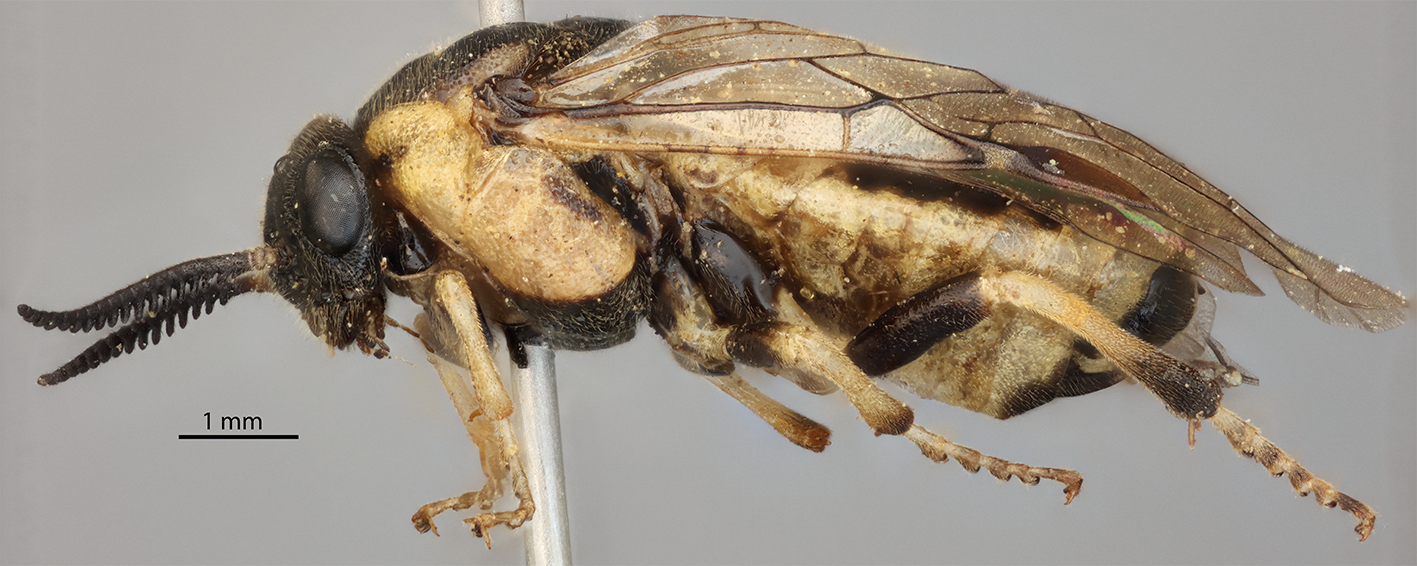
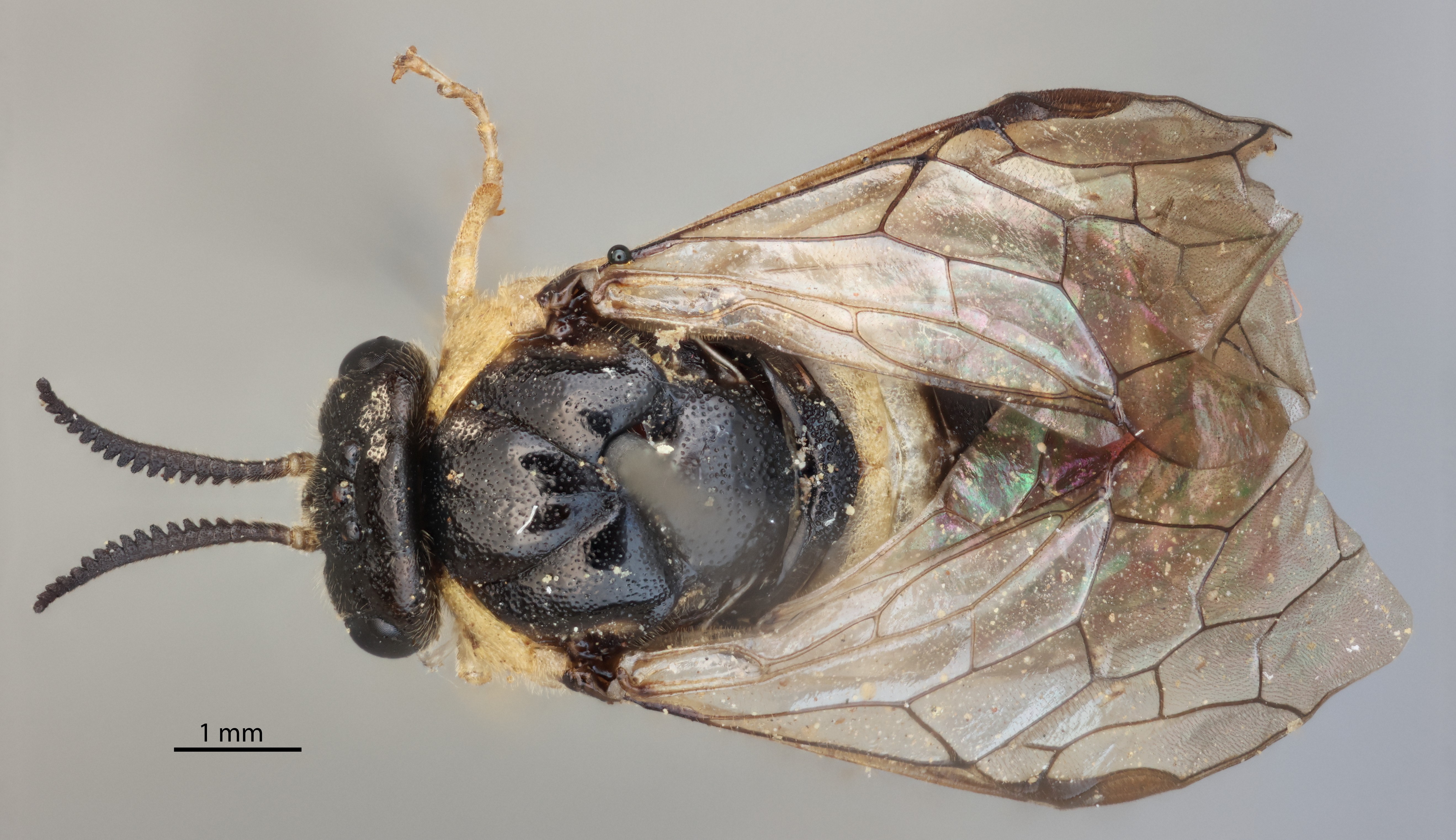
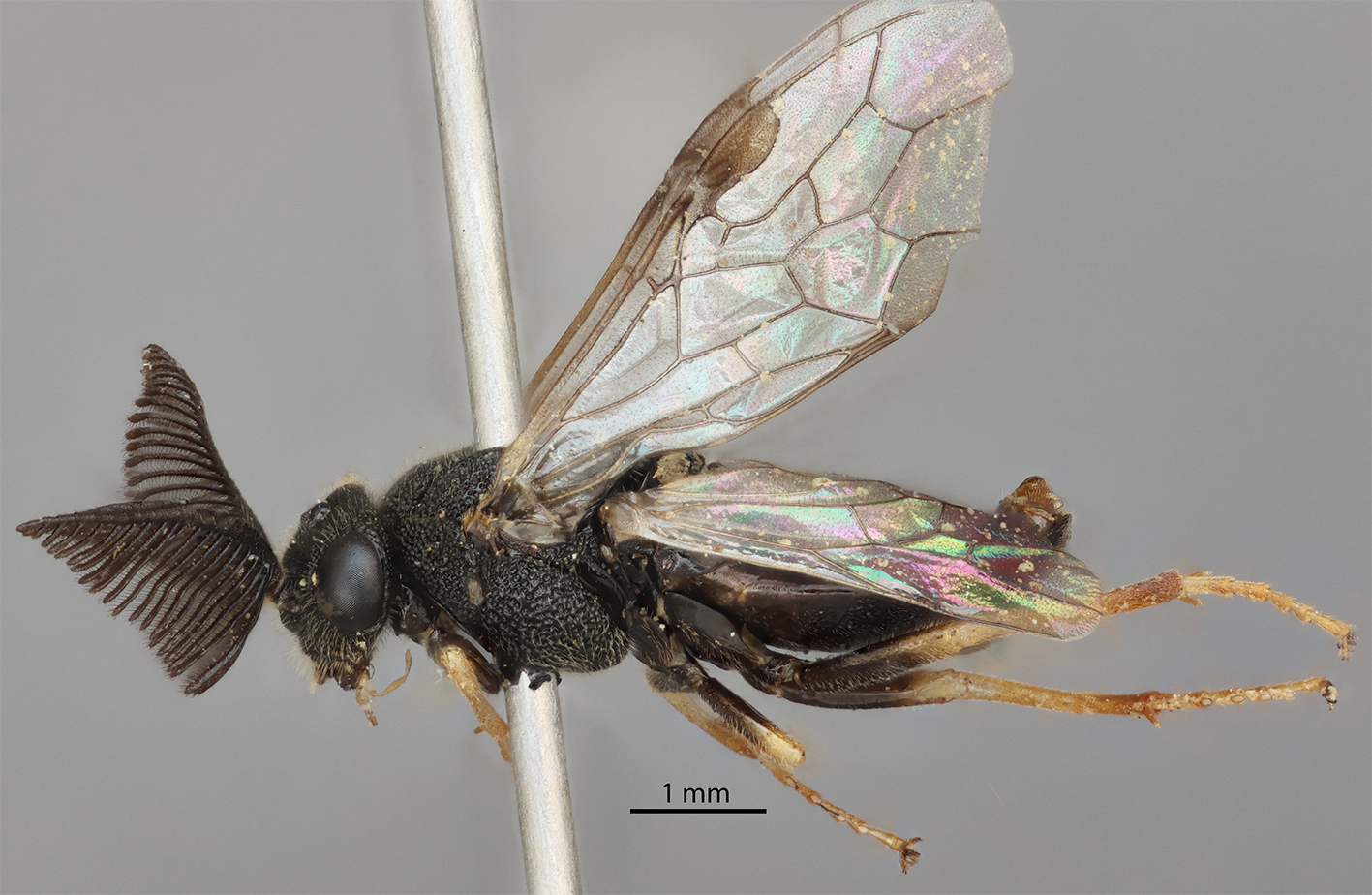
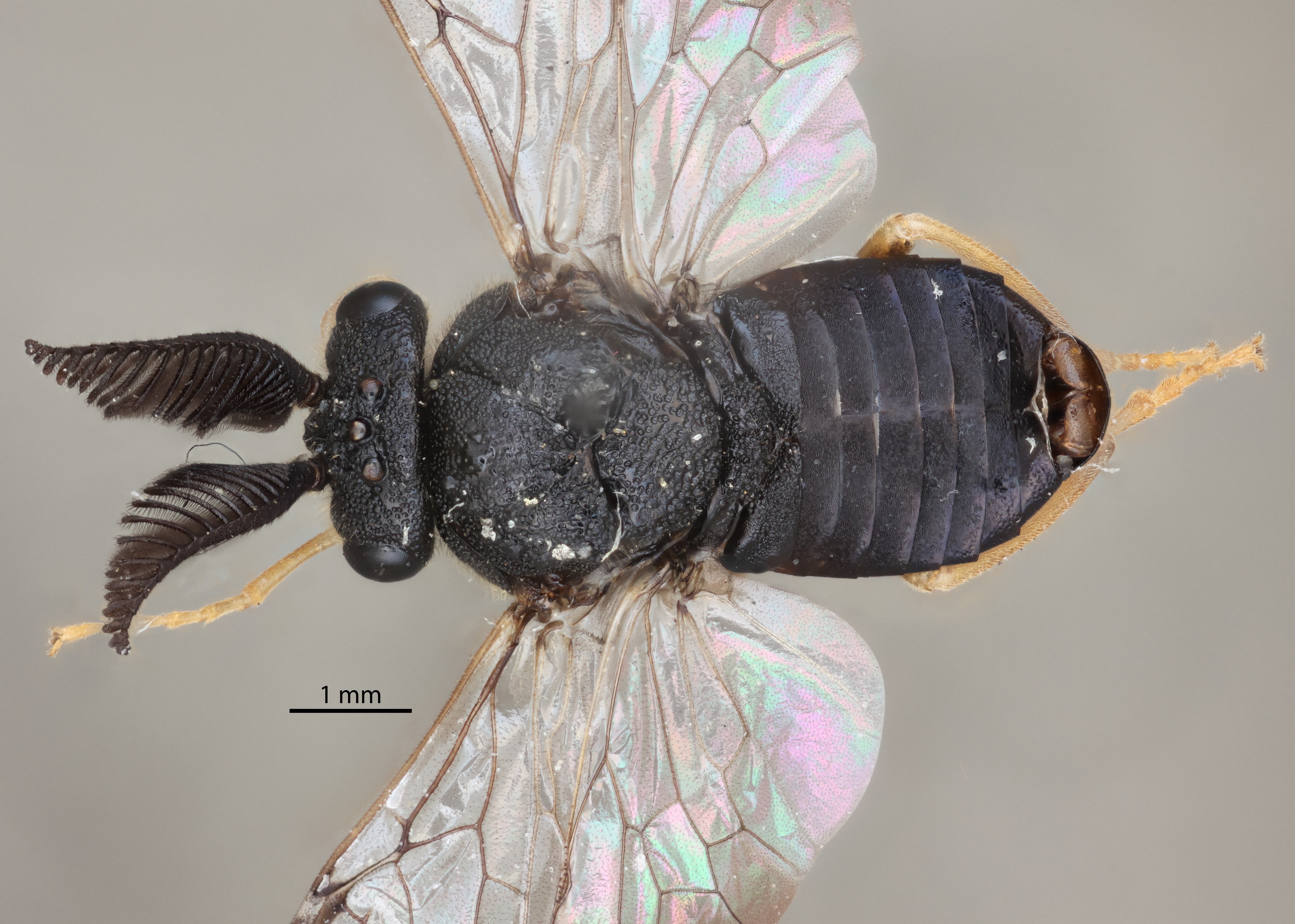
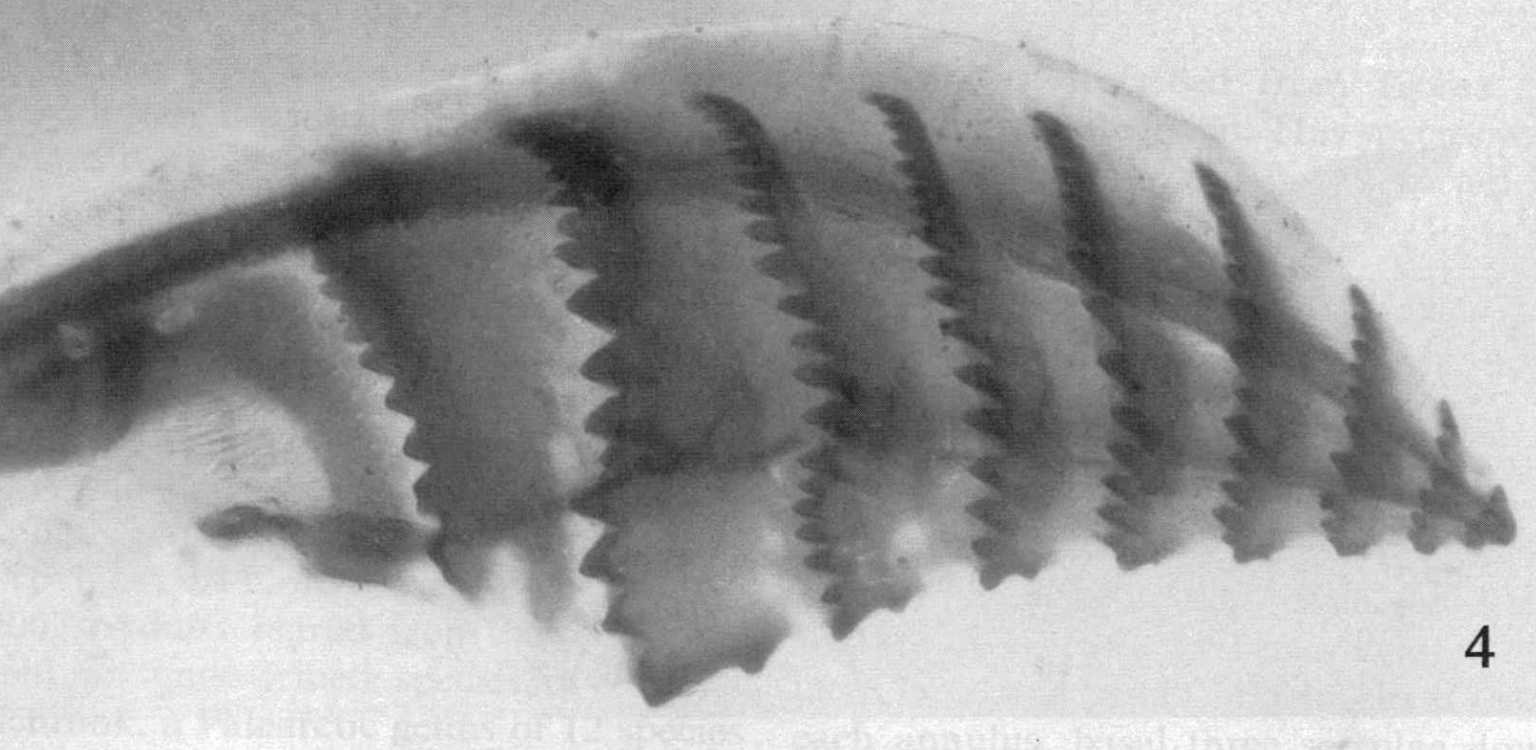
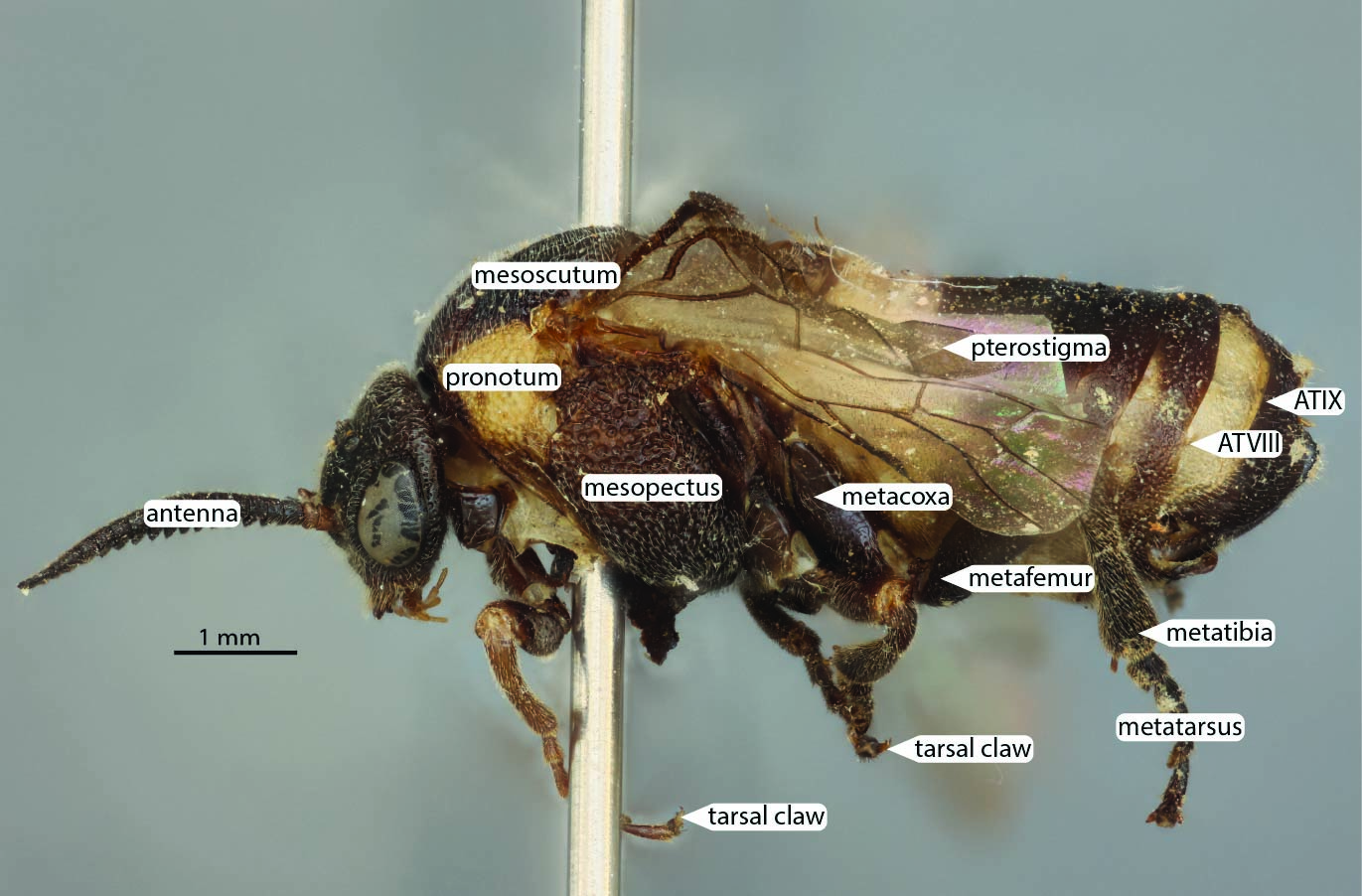
The female of Diprion hani is uniquely discriminated from all other Diprion spp. in having 9 annuliannulus:
vertical row of teeth which occurs at regular intervals on both sides of female gonapophysis VIII. In Diprion, there are 9–12 annuli.
on gonapophyses VIII. D. hani is moreover distinguished from close relative D. koreanus by a bicoloredbicolored:
having two colors, with the change between these colors being abrupt.
mesopectus, metacoxa, metafemur, and metatibia, and a concolorous metanotummetanotum:
the dorsal sclerite of the rearmost thoracic segment (third of three). Appears as a narrow strip of cuticle on the back of Diprion, immediately in front of the abdomen. The cenchri are placed on the metanotum. The metanotal 'trough' is highlighted in pink in the attached image.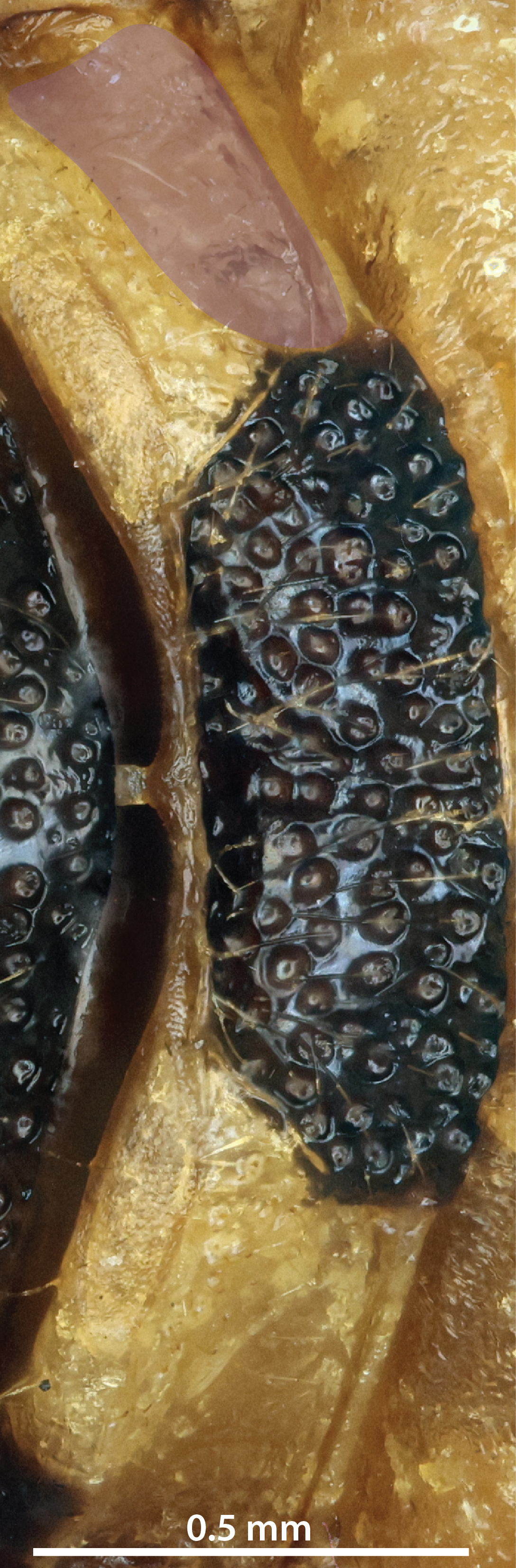 .
.
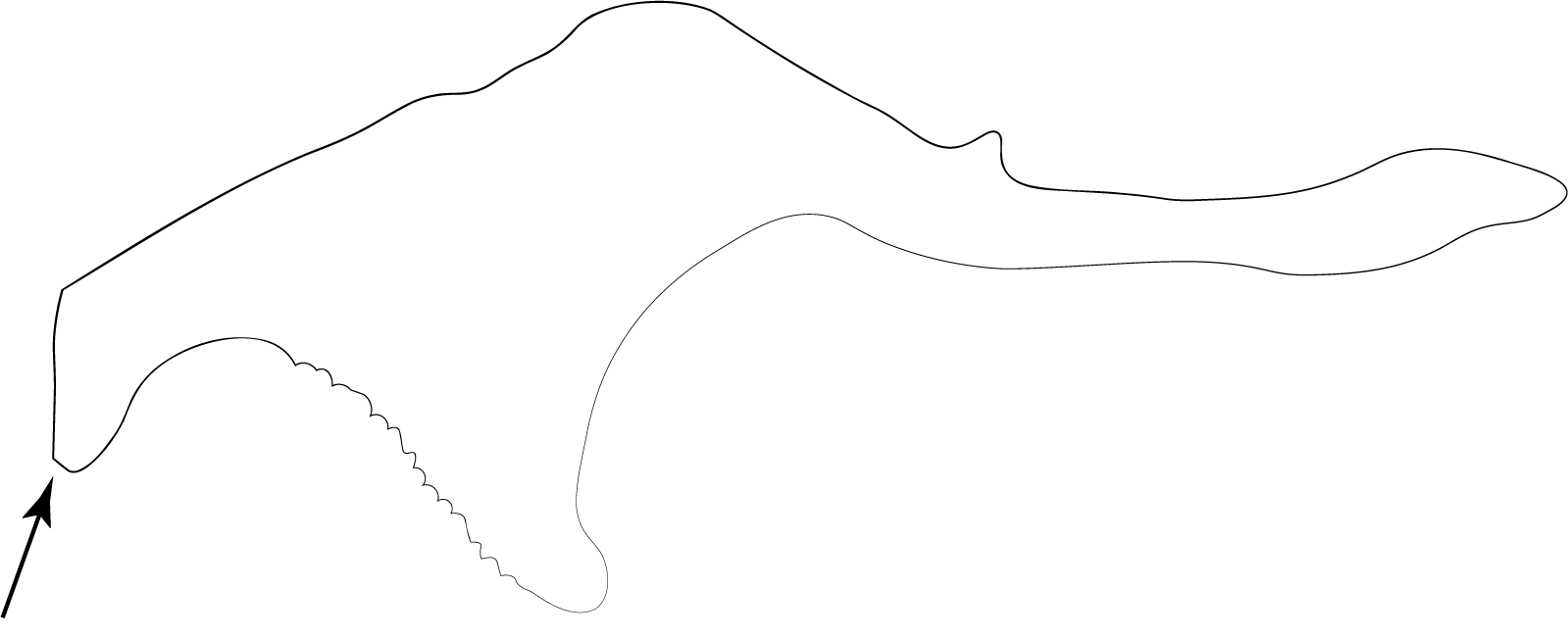
The truncate apex of the penial scleritepenial sclerite:
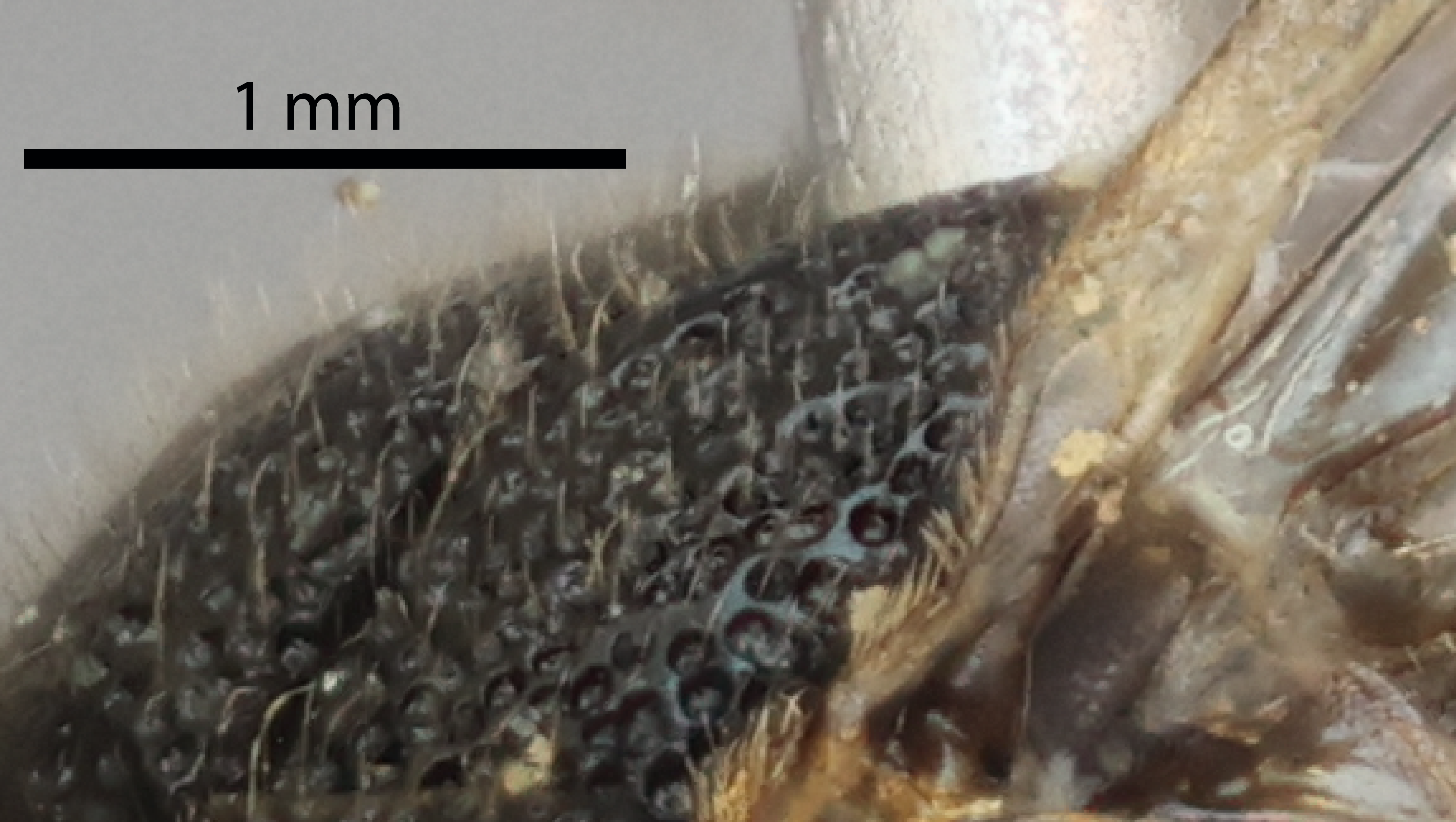
paired sclerites of the male genitalia that convey spermatozoa into the female genital tract (Boudinot 2018). In Diprion, these presumably also help anchor the male in place during mating. Penial sclerites in Diprion have a hatchet-like shape, with the valvura being the 'haft' and the valviceps the 'head'.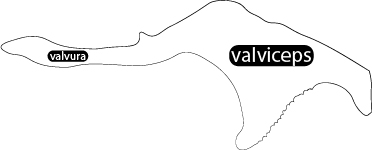 sets the D. hani male apart from all other Diprion spp. The sparseness of the male mesothoracic vestiturevestiture:
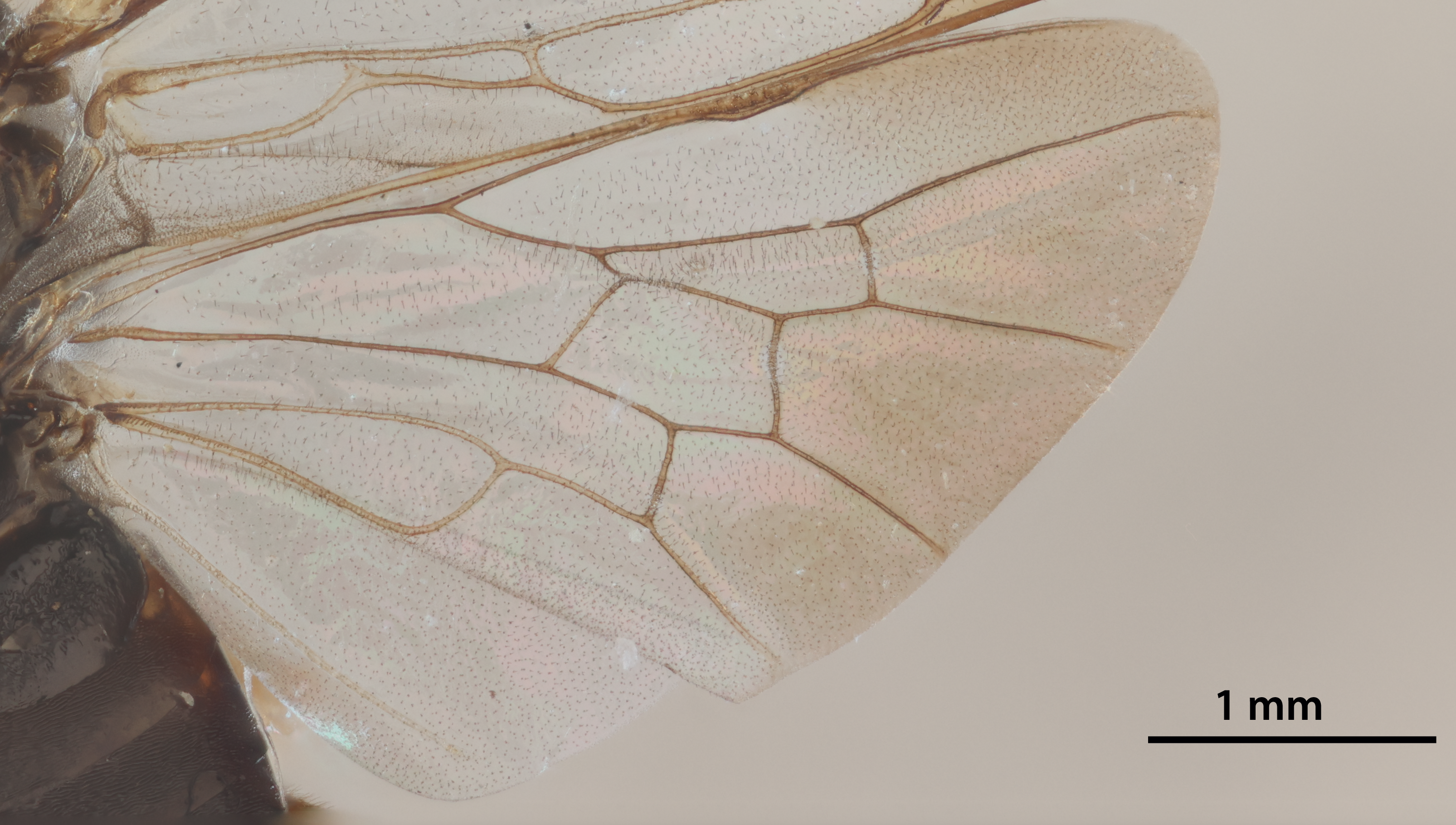
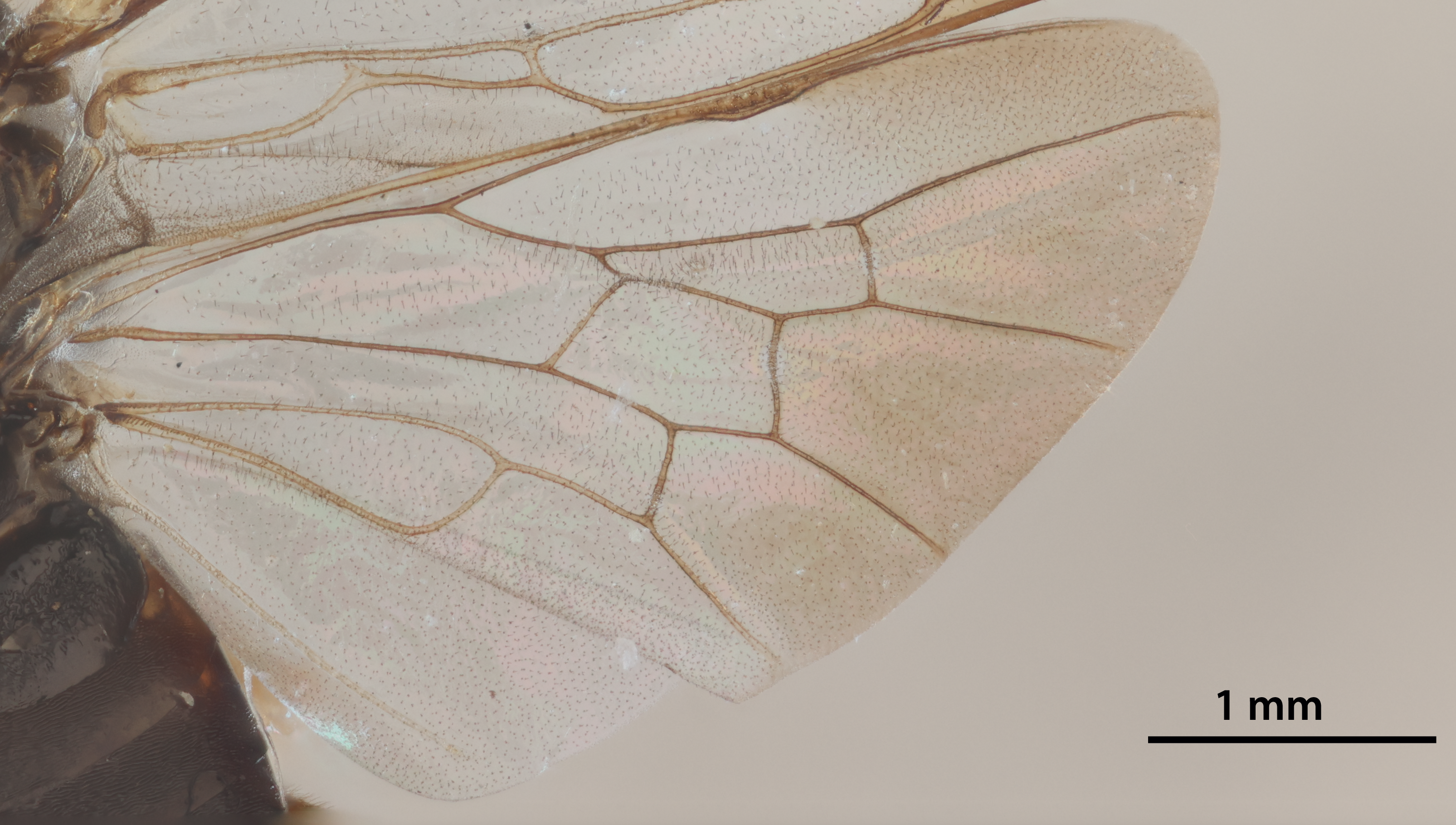
covering of hairs on a surface. In the attached image, that surface is the mesoscutum in profile view.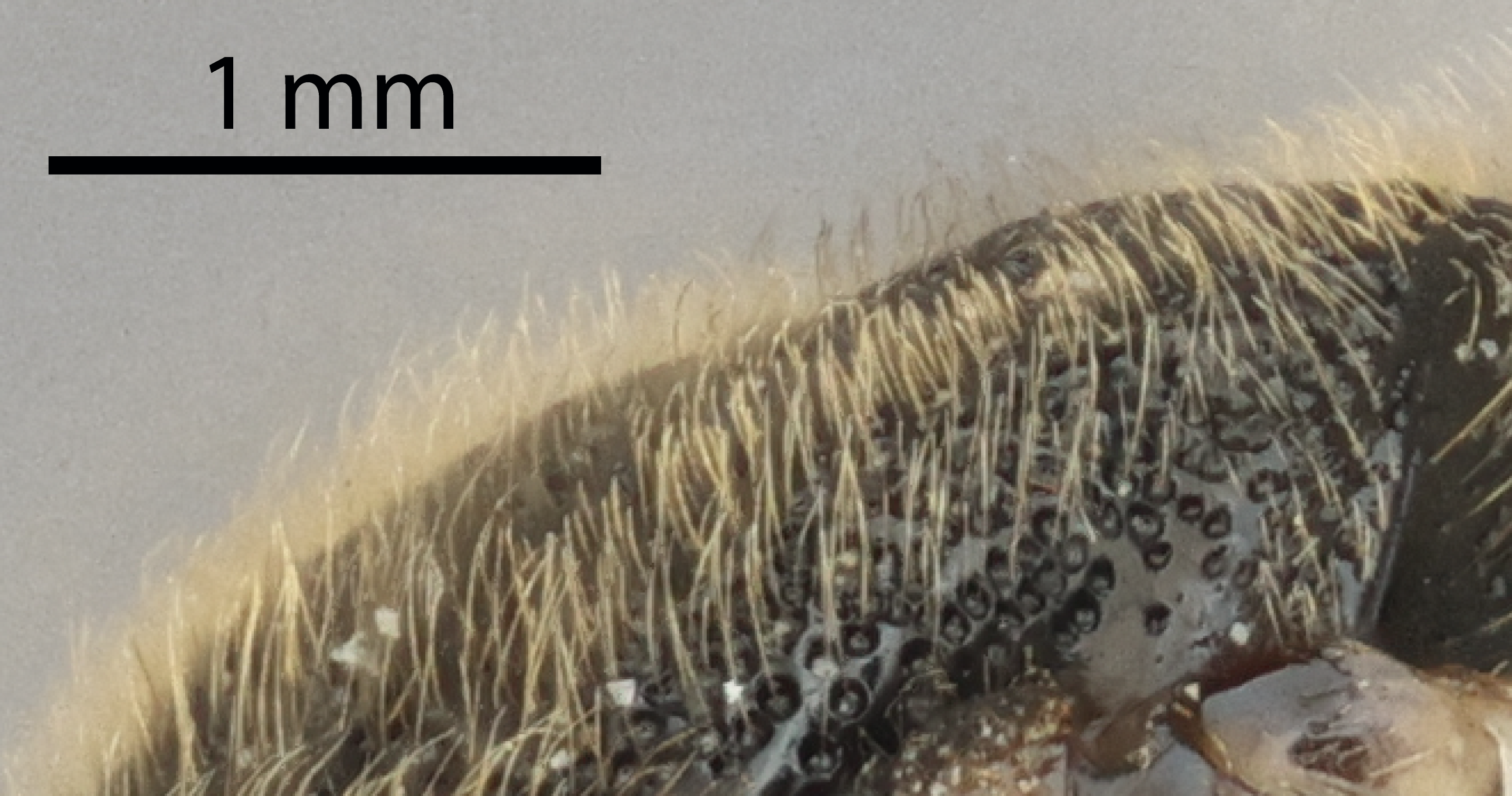 is a character state shared uniquely with D. liuwanensis (among the nine species in which that character could be assessed). The male hindwing is sometimes (but not always) distally infumate, a trait uniquely shared with D. pini.
The larva of D. hani is green with three pairs of black longitudinal stripes: dorsal, lateral, and surpedalsurpedal:
describes a position directly above the legs. In Diprion, this adjective is only relevant to the larval stage.
. The surpedalsurpedal:
describes a position directly above the legs. In Diprion, this adjective is only relevant to the larval stage.
line is broken multiple times, but the other two are continuous. It is unclear from the description (Smith et al. 2008Smith et al. 2008:
Smith DR, Cho S, Han J-H. 2008. A new species of Diprion (Hymenoptera: Diprionidae) damaging Pinus spp. in Korea. Proceedings of the Entomological Society of Washington 110(3): 796–801.) whether these characteristics apply only to the final feeding instarinstar:
the stages of the sawfly larva, delimited by moulting events in which the larva sheds its exoskeleton and thus grows larger. The appearance of the larva changes dramatically throughout its growth from hatching to prepupa. The number of instars may differ according to sex.
, or also the preceding instars and prepupaprepupa:
The final larval instar, which does not feed. Its appearance can differ somewhat from preceding instars.
.
View full screen host table here
Chungcheongbuk-do Province, Republic of Korea. It is possible that Diprion hani is not native to its known range (Smith et al. 2008Smith et al. 2008:
Smith DR, Cho S, Han J-H. 2008. A new species of Diprion (Hymenoptera: Diprionidae) damaging Pinus spp. in Korea. Proceedings of the Entomological Society of Washington 110(3): 796–801.).
The wasp Monodontomerus dentipes (Hymenoptera: Chalcidoidea: Torymidae) has been reported as a gregarious parasitoid of Diprion hani prepupae (Lee et al. 2010Lee et al. 2010:
Lee J-S, Kim I-K, Choi W-I, Jang S-J, Choi, K-S, Shin S-C. 2010. Characteristics of the outbreak area of Diprion hani (Hymenoptera: Diprionidae) and a report of its torymid parasitoid. Korean Journal of Applied Entomology 49(2): 159–162.).
Basionymbasionym:
the original combination of a species name, consisting of the genus name and a specific epithet.
: Diprion hani Smith and Cho, 2008
Author: Z. Griebenow
Content last updated January 2026
idtools.org