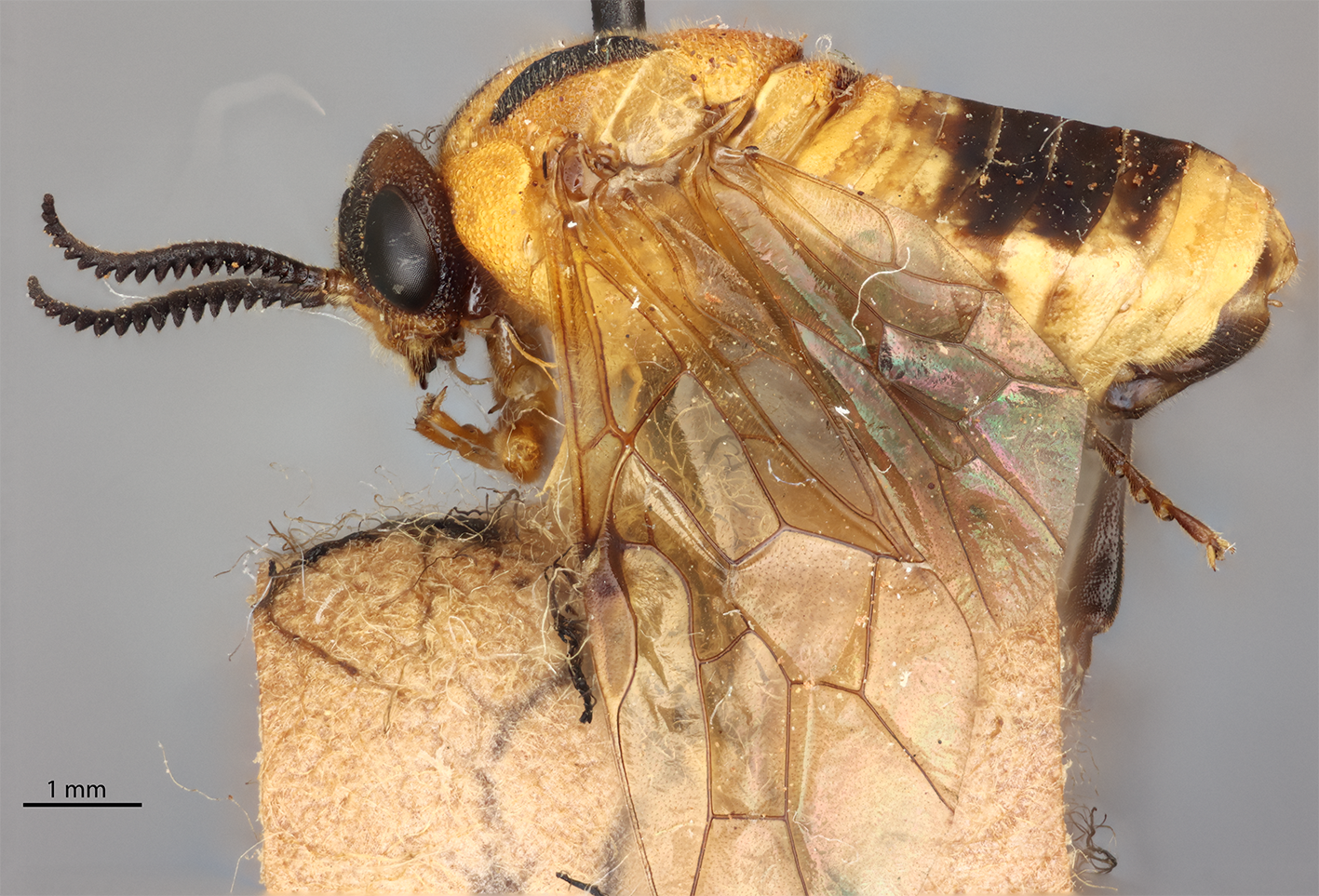
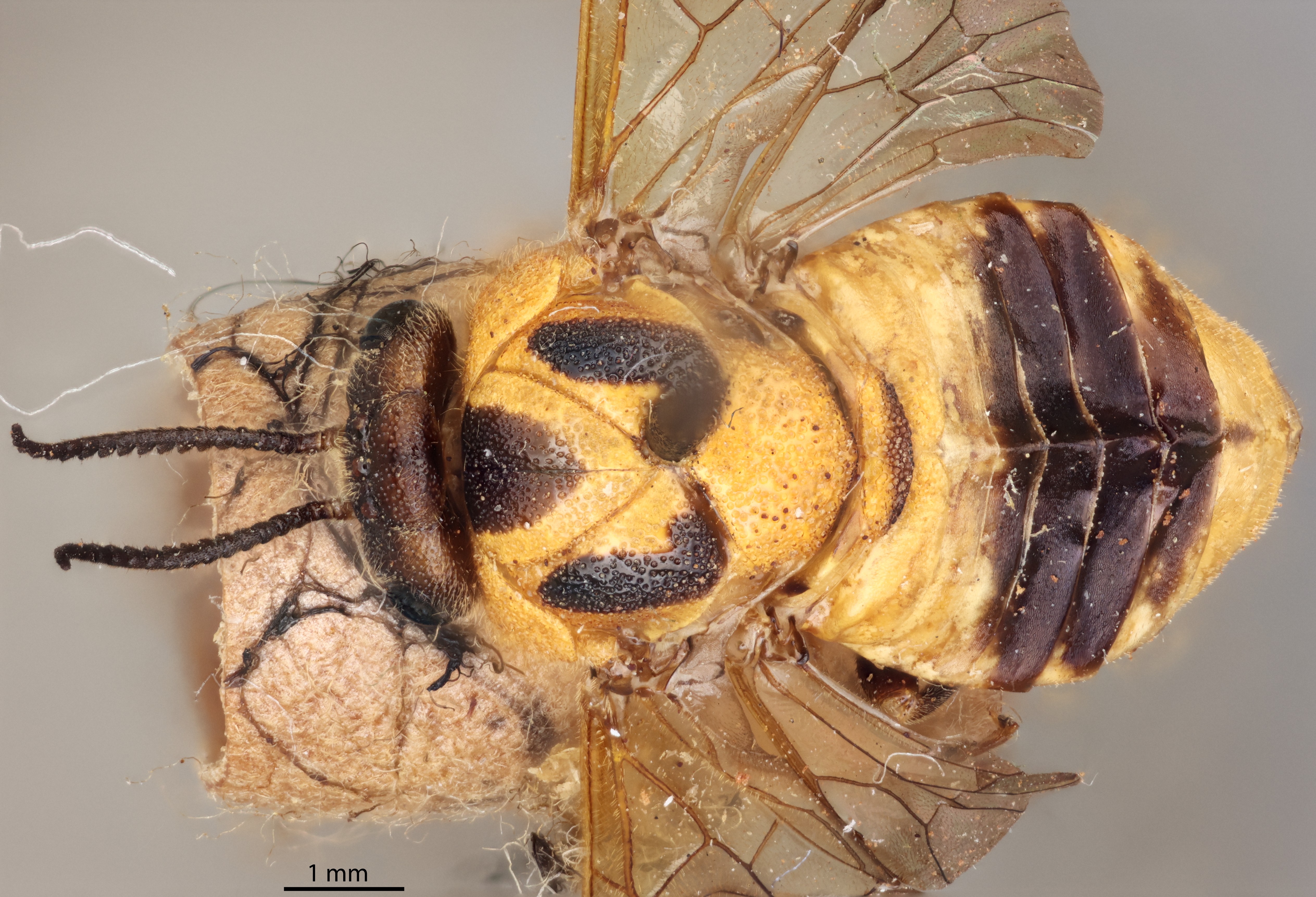
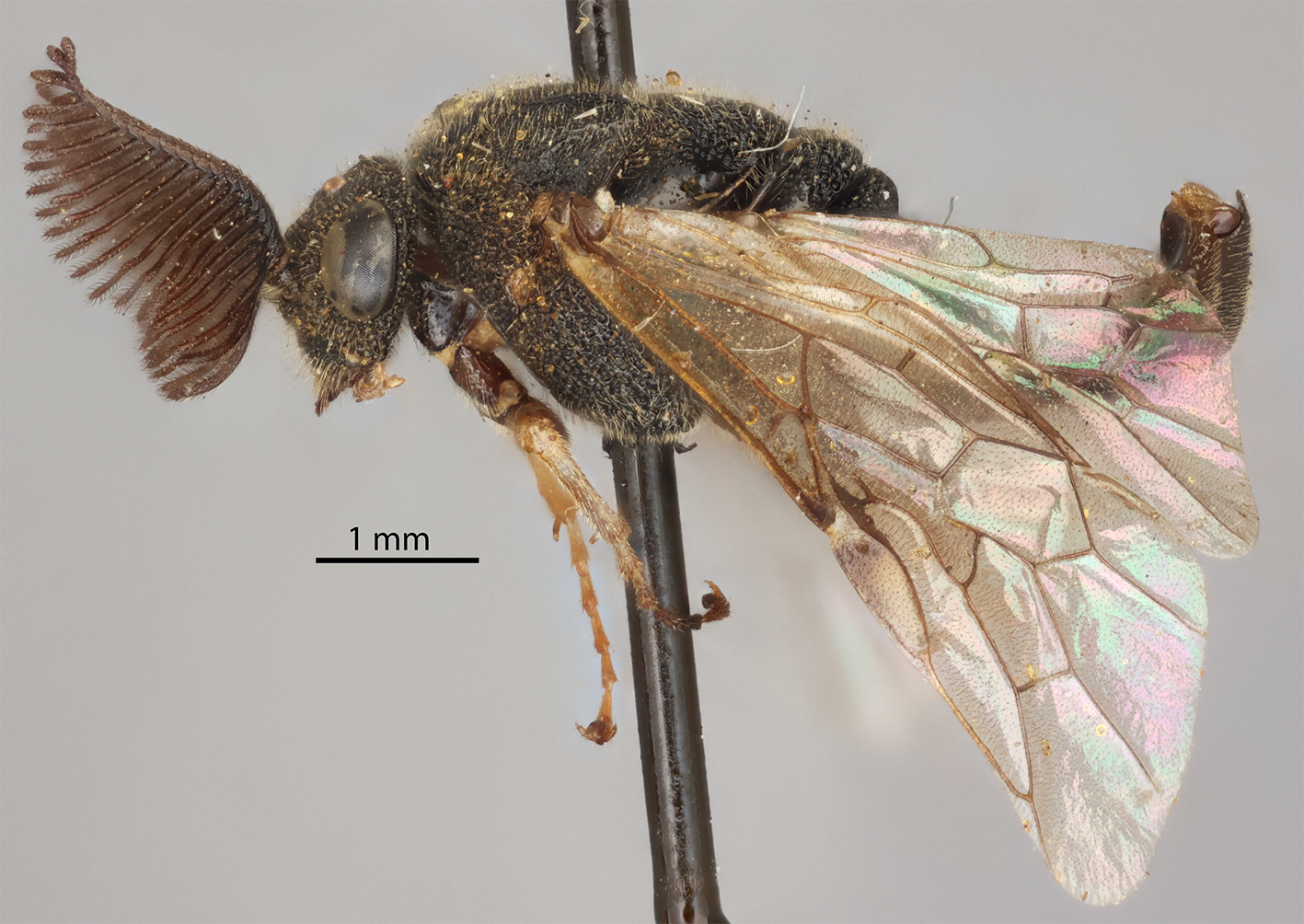
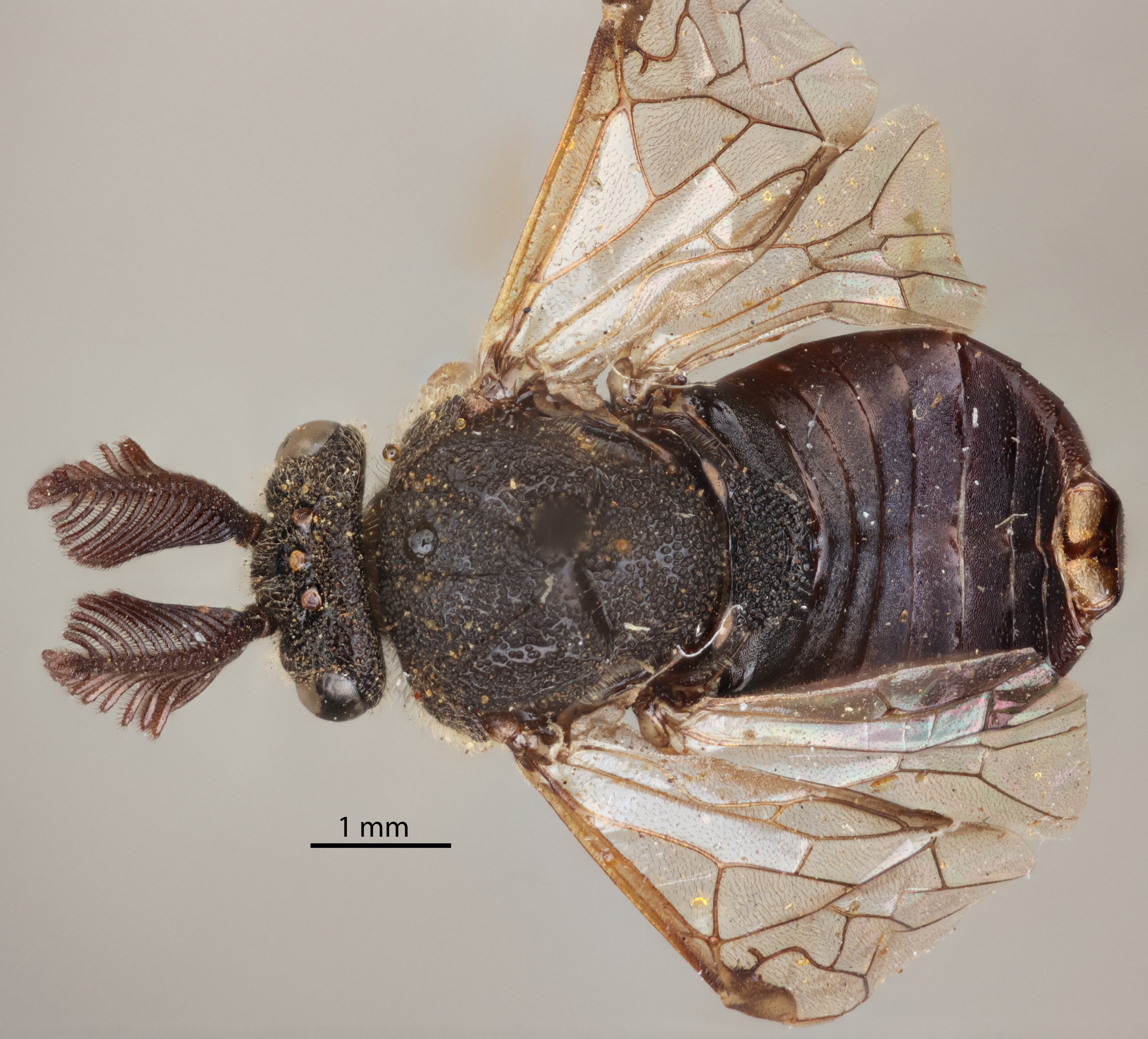
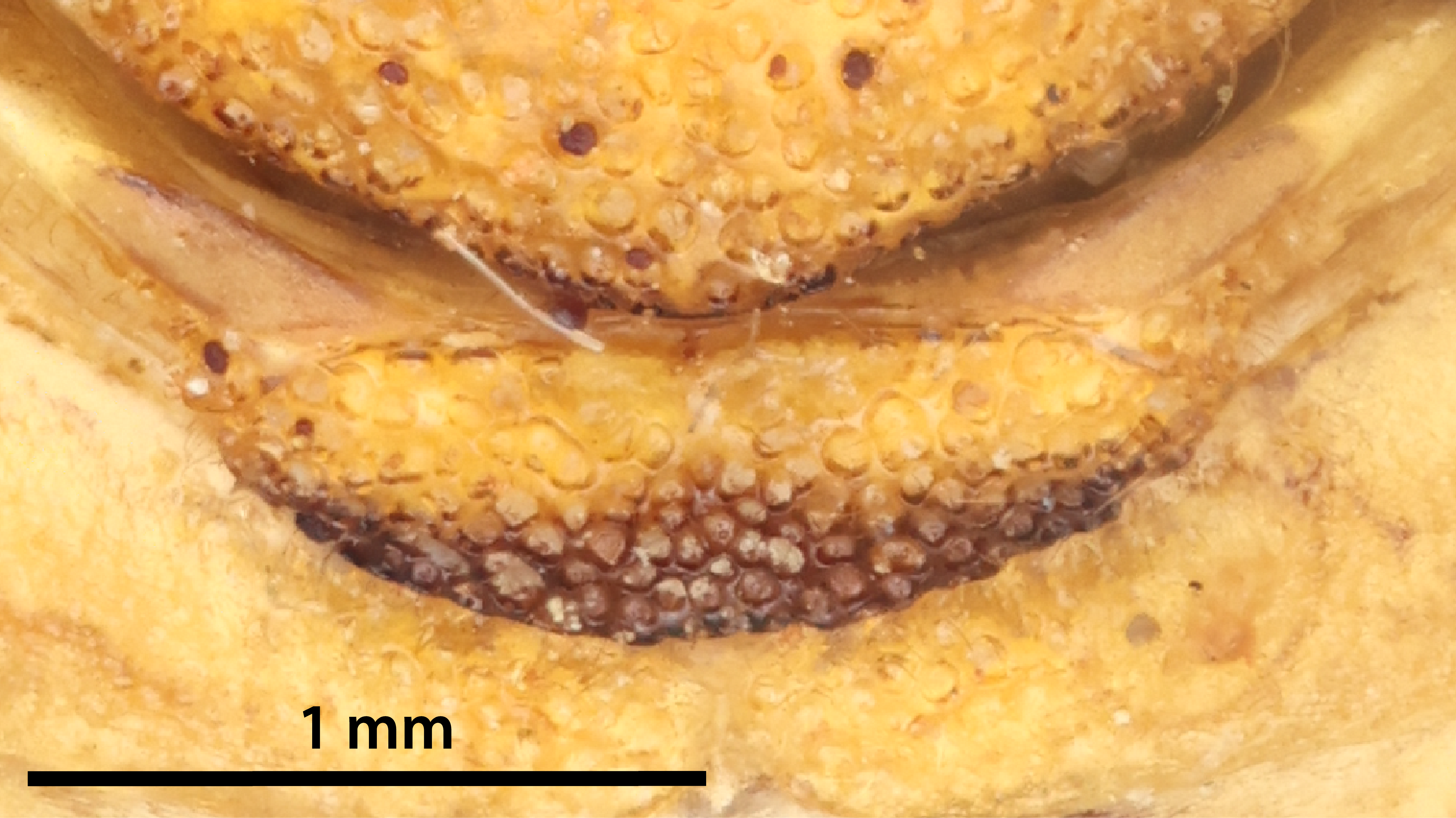

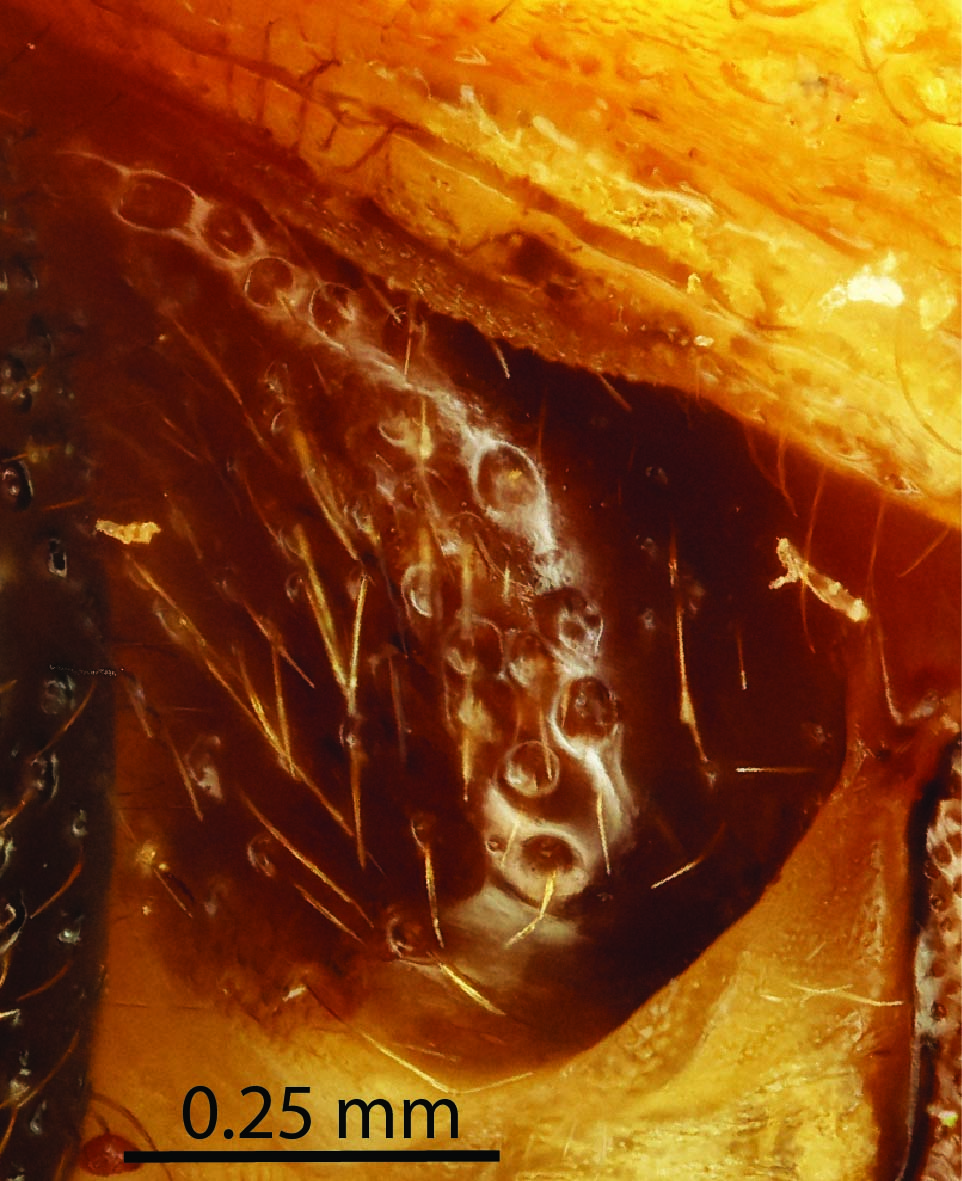
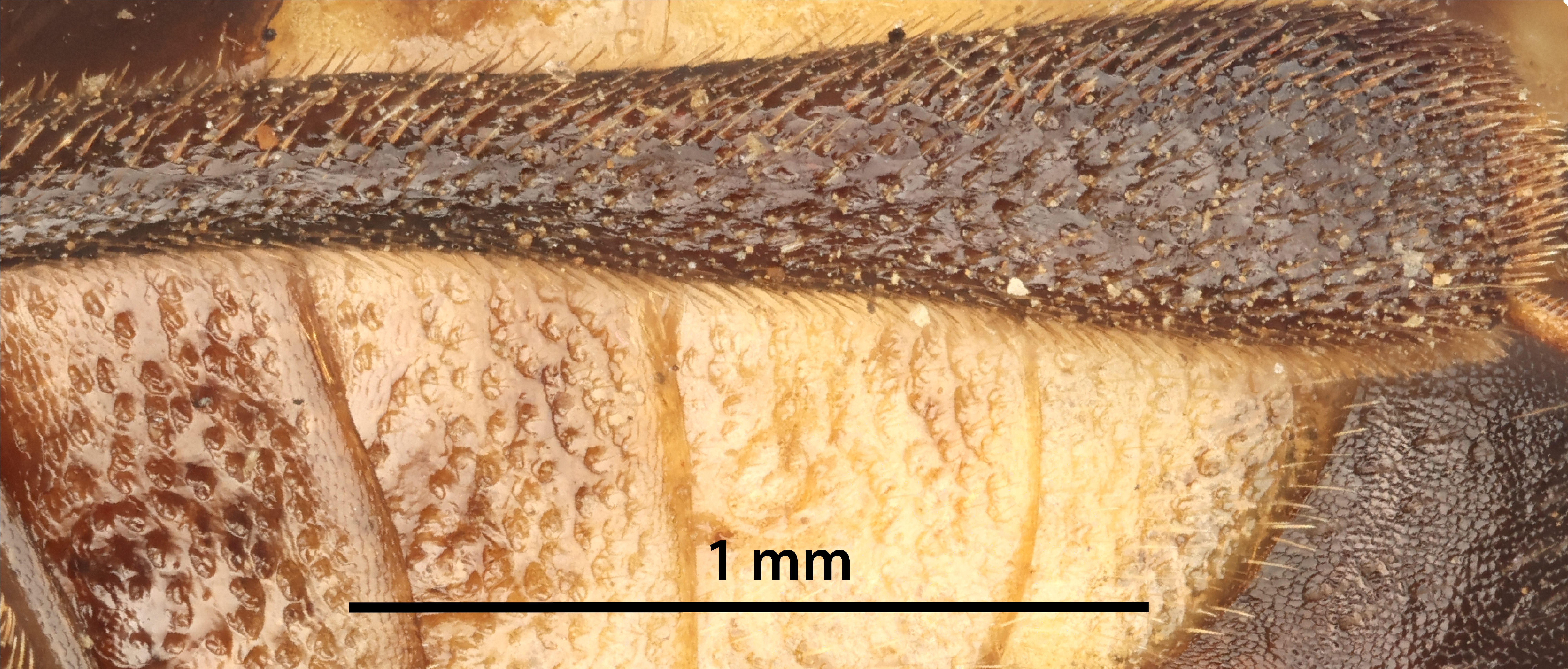
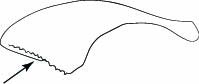
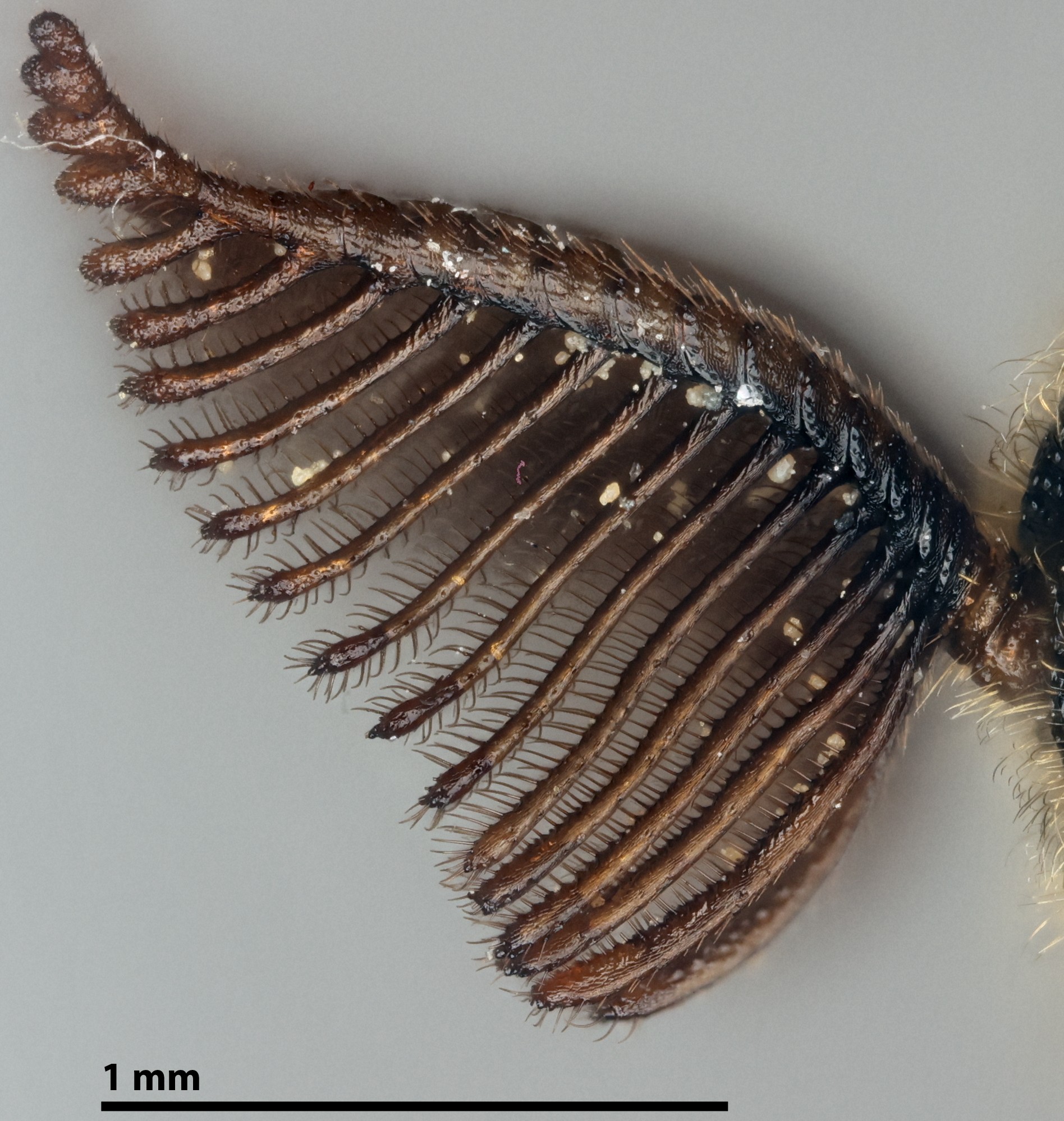
No single character state uniquely identifies the female or male of Diprion nipponicus.
The D. nipponicus female invariably displays a bicoloredbicolored:
having two colors, with the change between these colors being abrupt.
metascutellummetascutellum:
a roughly rectangular platform in the middle of the metanotum, elevated above the metanotal trough. It is located behind and between the cenchri.
, a character state shared only with some (but not all) specimens of D. similis. The mesoscutellum of D. nipponicus is often bicoloredbicolored:
having two colors, with the change between these colors being abrupt.
, as are often that of the European species D. pini and D. similis, but D. nipponicus differs from these in having a concolorousconcolorous:
having a single color throughout.
propleuronpropleuron:
a sclerite of the prothorax ( = front-most thoracic segment) to which the foreleg articulates. Visible in profile and ventral views.
and metatibiametatibia:
the tibia of the hind leg.
. Some D. nipponicus have 20 antennomeresantennomere:
articulated components of the antenna.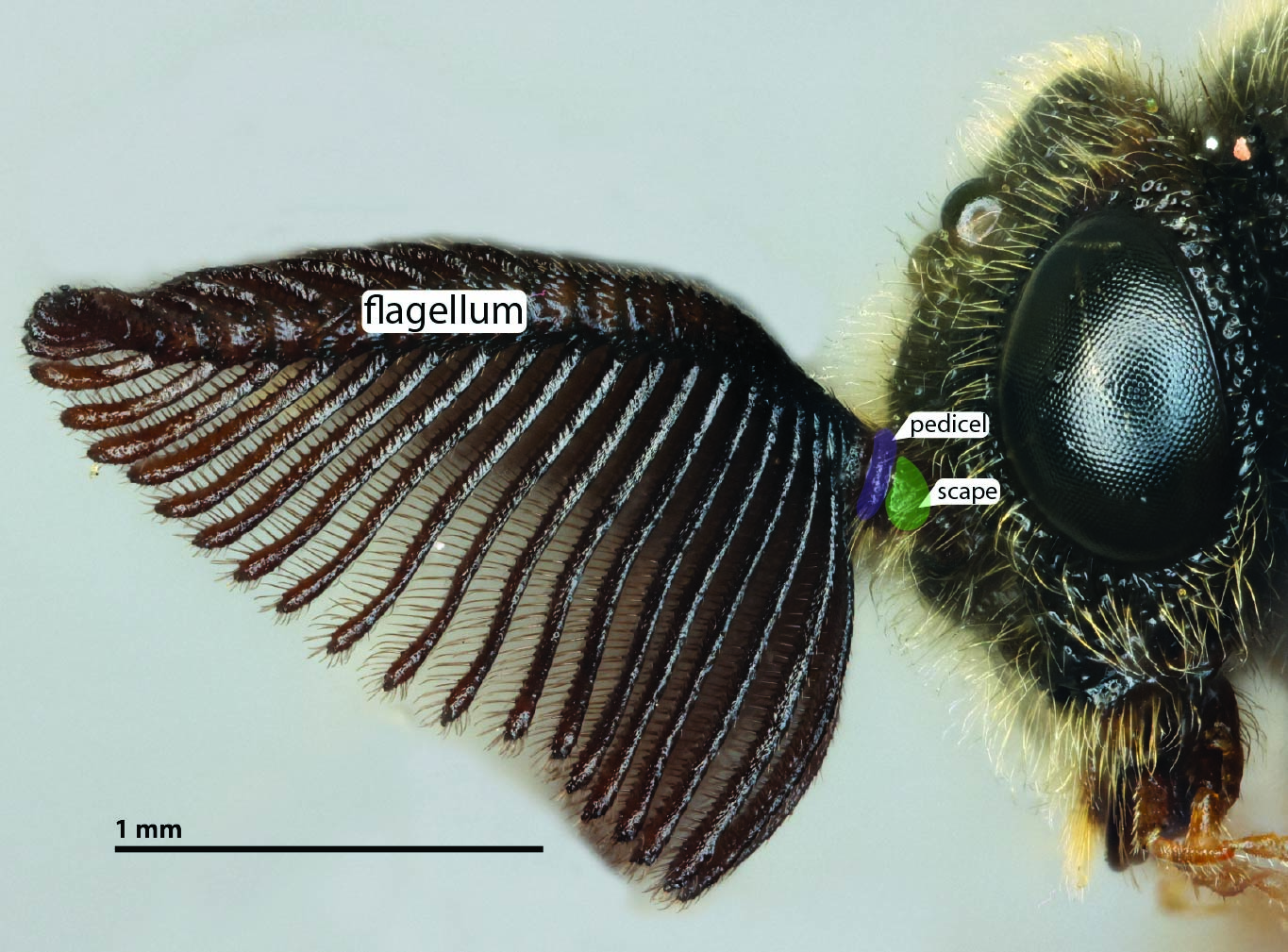 , a condition shared only with D. nanhuaensis.
The D. nipponicus male uniquely shares a linear ventral valvicipital margin with D. liuwanensis, from which it is distinguished by having <24 antennomeresantennomere:
articulated components of the antenna. and dense mesothoracic vestiturevestiture:
covering of hairs on a surface. In the attached image, that surface is the mesoscutum in profile view.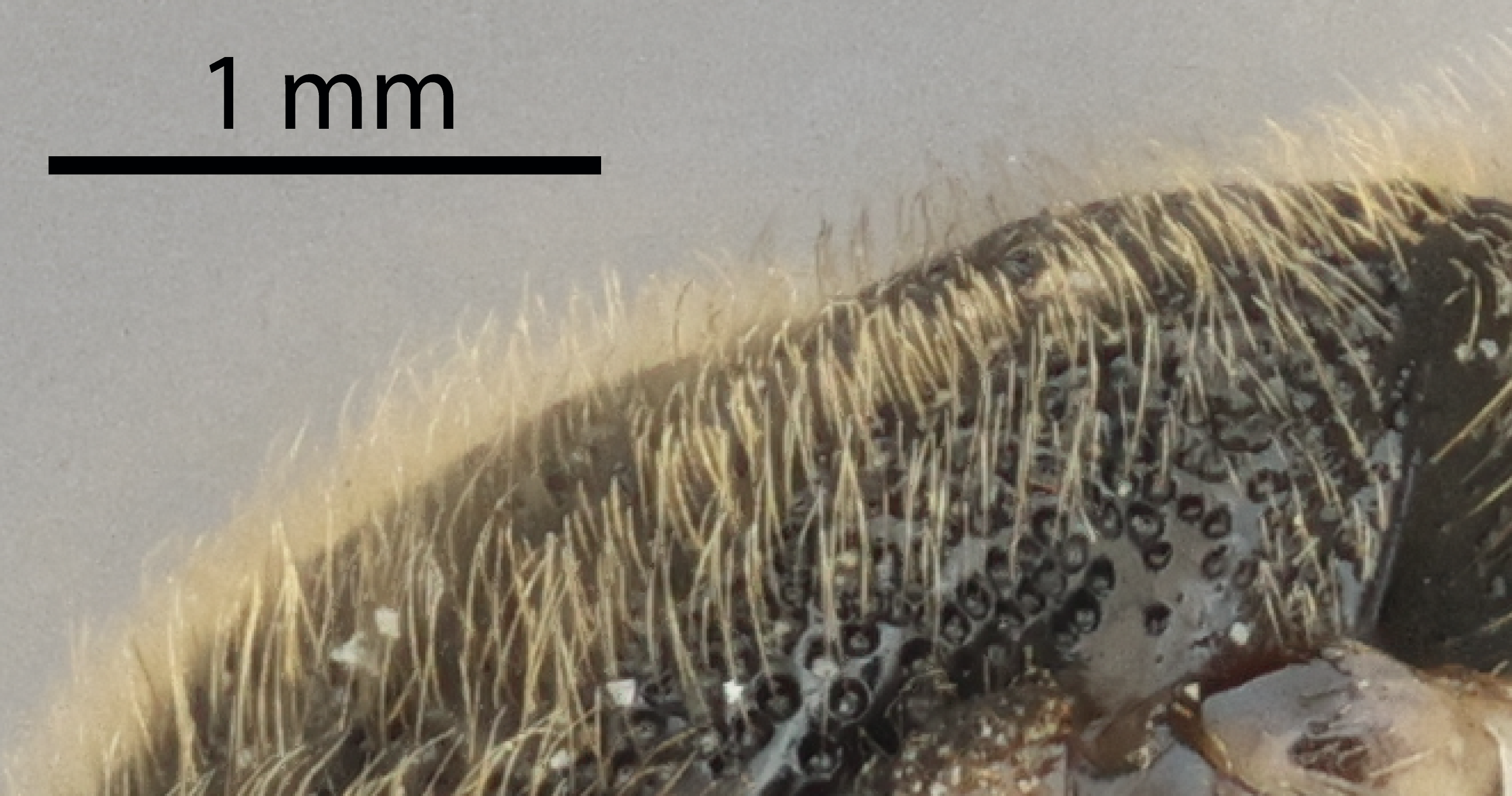 .
.
In the final feeding instarinstar:
the stages of the sawfly larva, delimited by moulting events in which the larva sheds its exoskeleton and thus grows larger. The appearance of the larva changes dramatically throughout its growth from hatching to prepupa. The number of instars may differ according to sex.
, the larva of D. nipponicus shows a black abdominal tergumtergite:
the dorsal plate of an abdominal segment.
X. The rest of the body is either wholly yellow, or yellow with the dorsum (except for the prothorax) grayish. The prepupaprepupa:
The final larval instar, which does not feed. Its appearance can differ somewhat from preceding instars.
has a similar appearance but with the cuticle having a shiny gloss (Hara, pers. comm.).
Reports from larch may be erroneous.
View full screen host table here
Iwate, Gifu, Yamaguchi, Nagasaki, and Kochi Prefectures, Japan (Togashi and Sato 1985Togashi and Sato 1985:
Togashi I, Sato H. 1985. On the species of Diprion Schrank in Japan (Hymenoptera: Symphyta). Transactions of the Shikoku Entomological Society 17(1/2): 97–101., pers. obs.), north to Hokkaido (Tai et al. 2002Tai et al. 2002:
Tai A, Syouno E, Tanaka K, Fujita M, Sugimura T, Higashiura Y, Kakizaki M, Hara H, Naito T. 2002. Regio- and stereochemical study of sex pheromone of pine sawfly. Bulletin of the Chemical Society of Japan 75(1): 111–121.).
Larvae are known to be attacked by the true fly Drino gilva aurora (Diptera: Oestroidea: Tachinidae), whereas prepupae are attacked by the ichneumon wasps Pleolophus setiferae and Oresbius nivalis (Hymenoptera: Ichneumonidae: Cryptinae: Aptesini) (Eichhorn 1965Eichhorn 1965:
Eichhorn O. 1965. On some larch pests and their parasites in Japan, Europe and Canada. [In German.] Beitrage zur Entomologie 15(1–2): 111–126.).
Isaria farinosa (Hypocreales: Cordycipitaceae), an entomopathogenic fungus, is also known to infect Diprion nipponicus (Aoki 1957Aoki 1957:
Aoki K. 1957. Insect pathology [in Japanese]. Tokyo, Gihodo. 493 pp.).
Basionymbasionym:
the original combination of a species name, consisting of the genus name and a specific epithet.
: Diprion nipponica Rohwer, 1910
Obsolete or incorrect combinations: Lophyrus nipponicus
Author: Z. Griebenow
Content last updated January 2026
idtools.org