t
Allochaetophoridae Reck, 1959
Superorder Acariformes » Order Trombidiformes » Suborder Prostigmata » Infraorder Eleutherengona » Hyporder Raphignathina » Superfamily Tetranychoidea » Family Allochaetophoridae
low
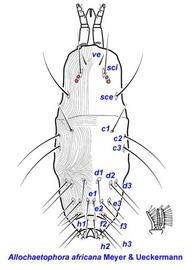
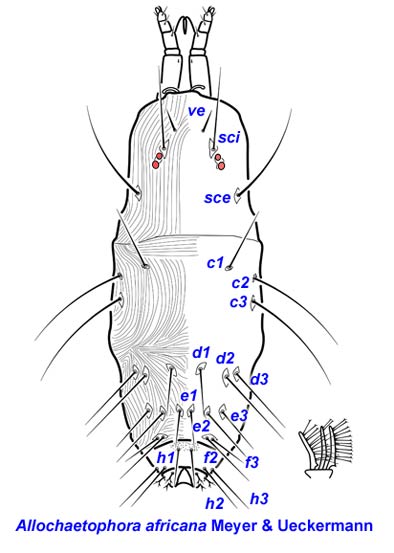
Low. The Allochaetophoridae consists of a single genus, Allochaetophora, with two described species, one from California (from the deutonymph) and one from Africa (all stages). Both are associated with grasses.
Allochaetophorids resemble other elongate tetranychoids such as Linotetranidae (which are blind) and some Tenuipalpidae (which lack a thumbclaw process).
The Allochaetophoridae consists of a single genus, Allochaetophora, with two described species, one from California (from the deutonymph) and one from Africa (all stages). Both are associated with grasses.
Author: David E. Walter
Content last updated Sept. 2006, unless indicated otherwise
Lucid key player updated Sept. 2025
idtools.org