Scorpionida

Is it a mite?

t

Common names

scorpions

Probability of encounter

medium

Quarantine importance

Some species deadly poisonous.

Similarity to mites

None other than general arachnid features.

Morphology

Normal adult length: >15 mm (range 1.5–21 cm)
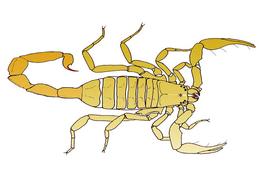
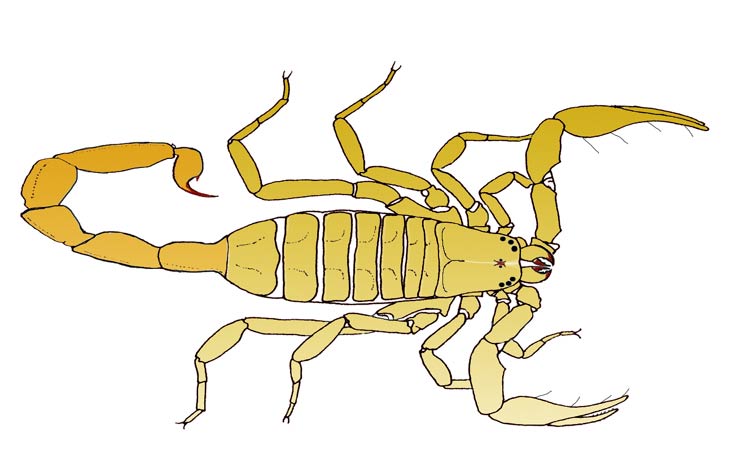
Body tagmata: prosoma, mesosoma (preabdomen), metasoma (postabdomen), sting
Eyes: lateral ocelli, median ocular tubercle with 2 ocelli
Antennae: absent
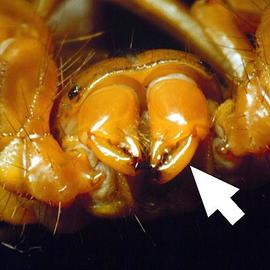
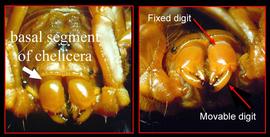
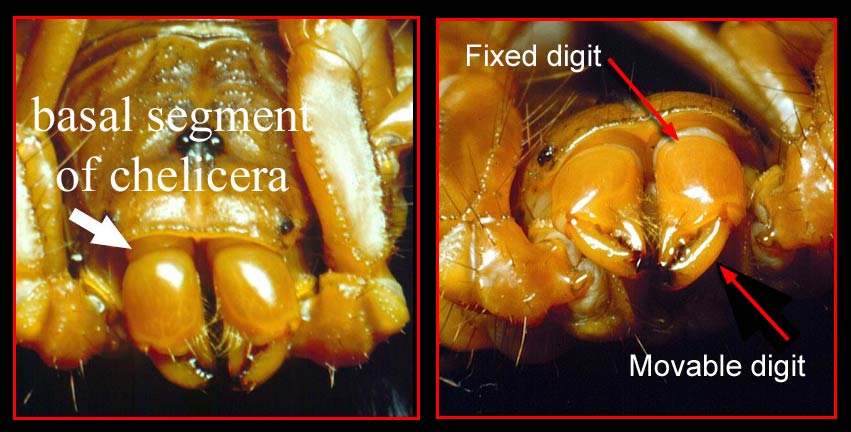
Mouthparts: 3-segmented pincer-like chelicerae; robust, raptorial 5-segmented palps with distal pincers
Legs: 4 pairs
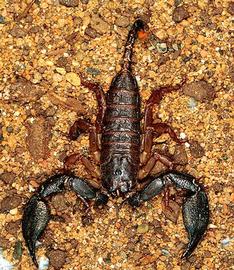
Distinguishing features: 'tail' of ring-like metasomal segments ending in sting; pincer-like claws (pedipalps).

Diversity

 >1,100 spp.

References

  • Fet et al. 2000Fet et al. 2000:
    Fet V, Sissom WD, Lowe G, Braunwalder ME. 2000. Catalogue of the Scorpions of the World (1758–1998). New York Entomological Society, New York.
  • Stockwell (Tree of Life Web Project) 1996Stockwell (Tree of Life Web Project) 1996:
    Stockwell SA. 1996. Scorpionida. Scorpions and their extinct relatives. Version 01 January 1996 (under construction). The Tree of Life Web Project, http://tolweb.org/
Scorpionida
Scorpionida
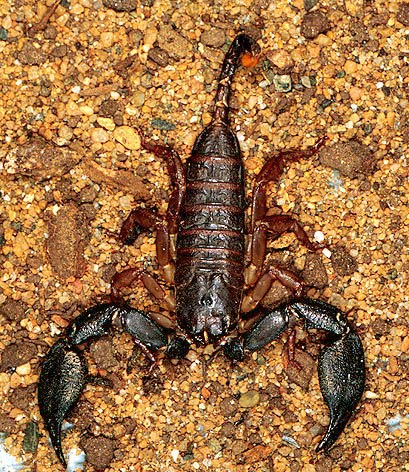
 Liocheles  sp. (HCP)
Liocheles sp. (HCP)
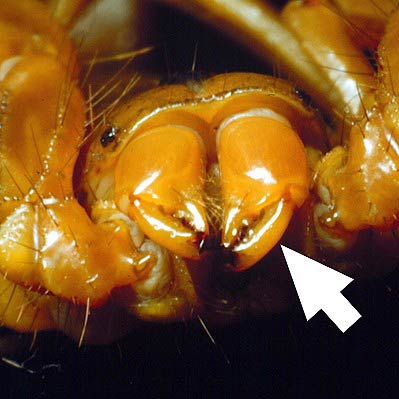
Scorpion chelicera (DEW)
Basal segment of chelicera (DEW)
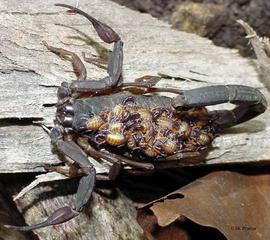
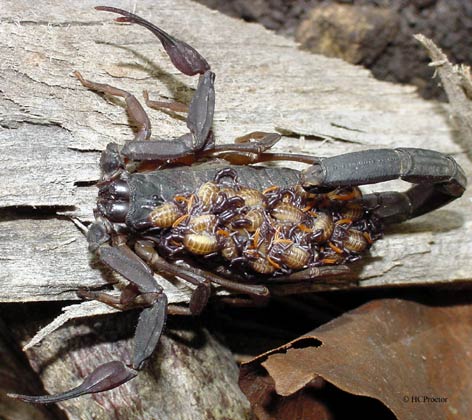
  Centruroides  with young
Centruroides with young