t
spiders
high
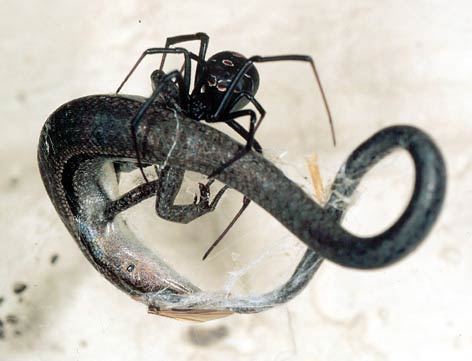
High for some taxa because of medical importance or potential general predator problems. Many large species are used in the pet trade and some may have small, endangered populations.
Spider-like build and lack of segmentation resemble mites, but mites do not have spider waists.
Normal adult length: >5 mm
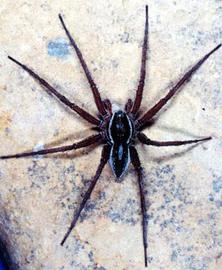
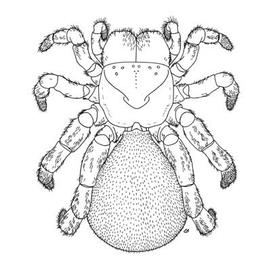
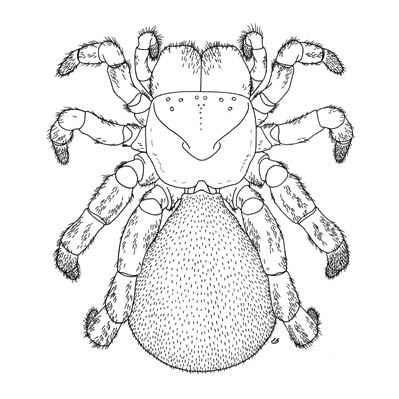
Body tagmata: prosoma (cephalothorax), opisthosoma (abdomen)
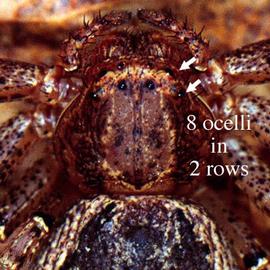
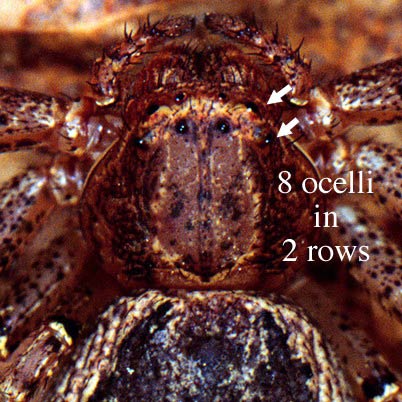
Eyes: 4 + 4 ocelli maximum
Antennae: absent
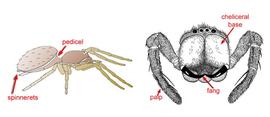
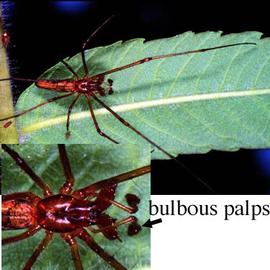
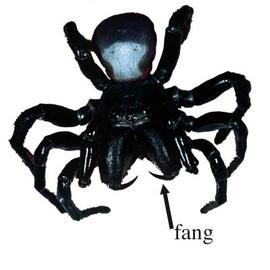
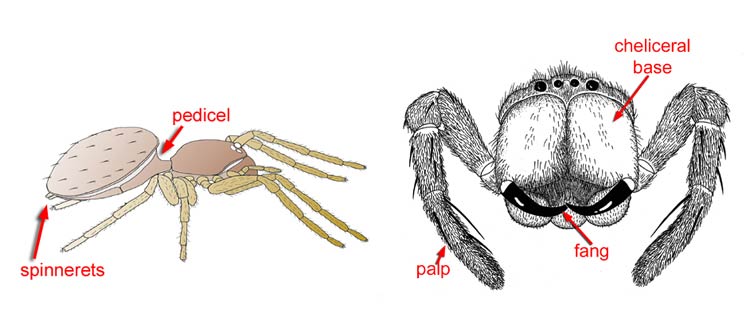
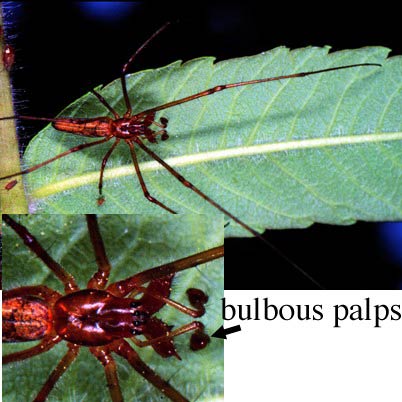
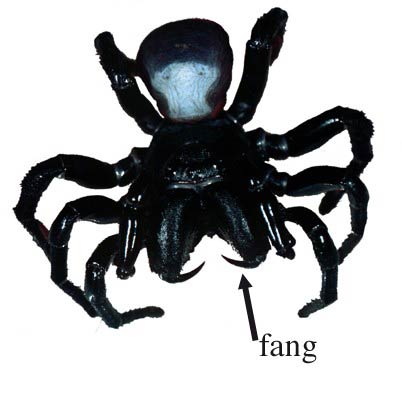
Mouthparts: fang-like chelicerae; feeler-like 5-segmented palps with distal claws (not present on palps of adult males); terminal segment of palps in males is swollen
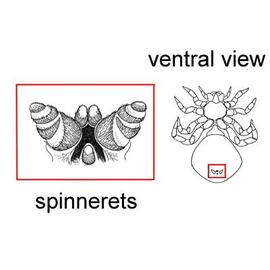
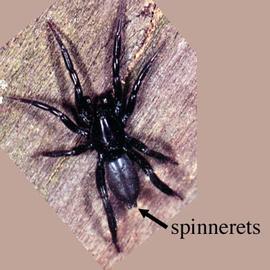
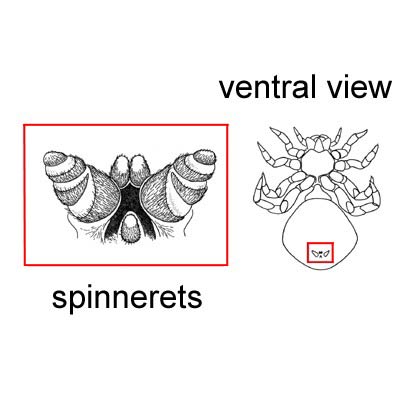
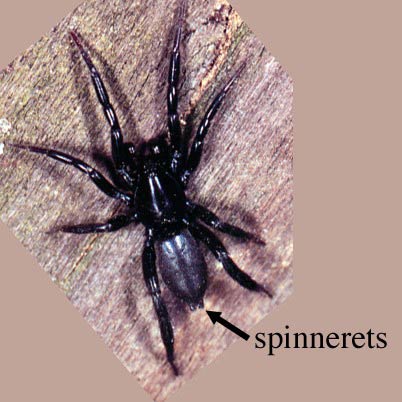
Legs: 4 pairs (NB—some have long, leg-like spinnerets)
Distinguishing features: fangs, spinnerets, pedicel
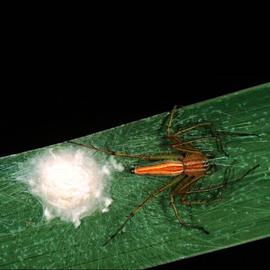
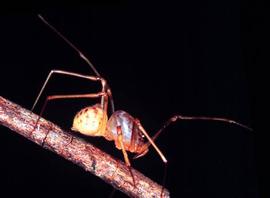
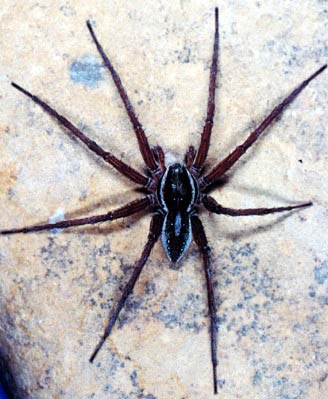
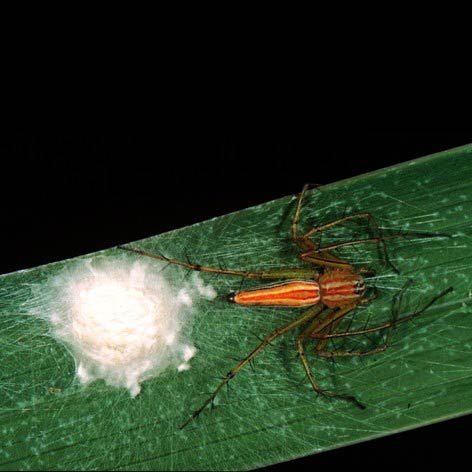
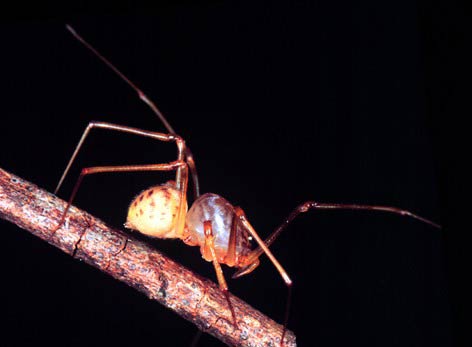
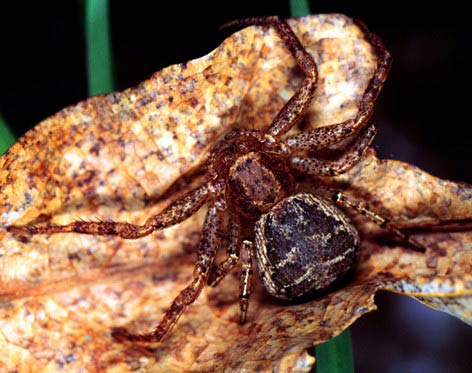
Comments: Spiders all have two clearly defined body regions separated by a narrow waist (pedicel), fang-like mouthparts and abdominal spinnerets that produce silken threads. Male spiders have swollen palps.
>38,000 spp.
Author: David E. Walter
Content last updated Sept. 2006, unless indicated otherwise
Lucid key player updated Sept. 2025
idtools.org