t
Amblypygi (Amblypygida)
whip spiders, tail-less whip scorpions, amblypygids
low
No known importance. Whip spiders may look fierce, but are not venomous and do not appear to have the potential for outbreaks. Some species are used in the pet trade and some may have small, threatened populations.
Much larger than mites and with clear opisthosomal segmentation. More likely to be confused with spiders.
Normal adult length: >20 mm
Body tagmata: prosoma, opisthosoma
Eyes: 3 + 2 + 3 arrangement of ocelli
Antennae: absent
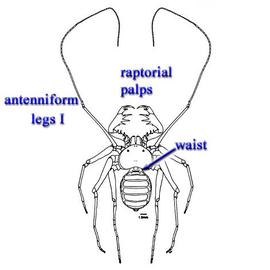
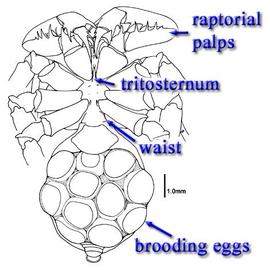
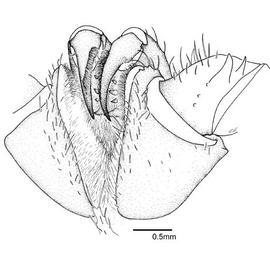
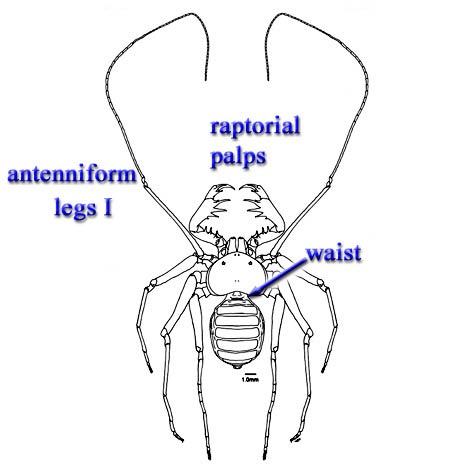
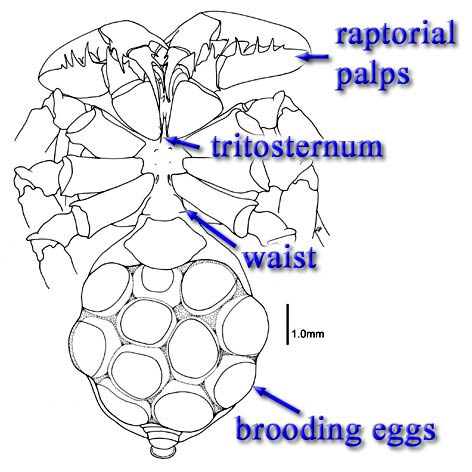
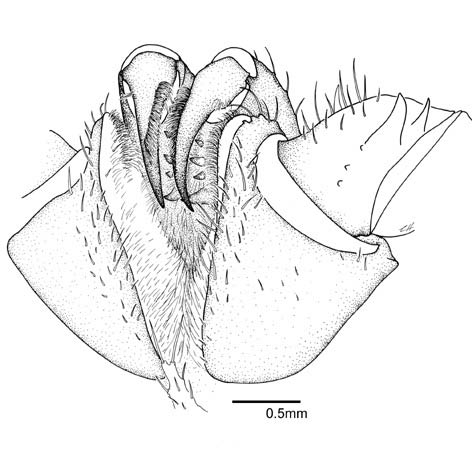
Mouthparts: 2-segmented fang-like chelicerae; robust, spiny-raptorial palps
Legs: 4 pairs; legs I antenniform
Distinguishing features: segmented opisthosoma, stabbing chelicerae, 'tail' absent, pedicel (waist), whip-like legs I with subdivided tarsi
5 families, 17 genera, >136 species
Author: David E. Walter
Content last updated Sept. 2006, unless indicated otherwise
Lucid key player updated Sept. 2025
idtools.org