t
Epicriidae Berlese, 1885
Superorder Parasitiformes » Order Mesostigmata » Suborder Monogynaspida » Infraorder Gamasina » Hyporder Epicriiae » Superfamily Epicrioidea » Family Epicriidae
Epicrius G. Canestrini & Fanzago, Berlesiana Turk, Adenoepicrius Moraza, Neoepicrius Moraza & Johnson
Tarsi II–IV with an intercalary sclerite between the basitarsus and telotarsus that bears setae ad3, pd3; palp apotele 3-tined; dorsal shield with 34 pairs of setae (19 podonotal, 15 opisthosomal).............................. 2
- Tarsi II–IV without a seta bearing intercalary sclerite between the basitarsus and telotarsus; palp apotele 2-tined; dorsal shield with only 15 pairs of setae (10 podonotal, 5 opisthonotal); Western North America .............................. Neoepicrius Moraza & Johnson
Genitoventral shield expanded behind coxae IV and capturing a gland and setae ZV1; palp tarsus with 15 setae; Holacrtic.............................. Epicrius C&F
- Genital or genitoventral shield not expanded; palp tarsus with 14 setae.............................. 3
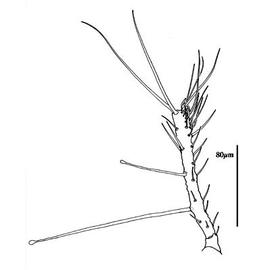
Dorsal shield with short pilosities; st4 on metasternal shield; tarsus I with 4 clubbed macrosetae; Eastern North America.............................. Adenoepicrius Moraza
- Most dorsal shield setae stout, strongly barbed with long pilosities; st4 in soft cuticle; tarsus I with 3 clubbed macrosetae; Palearctic.............................. Berlesiana Turk
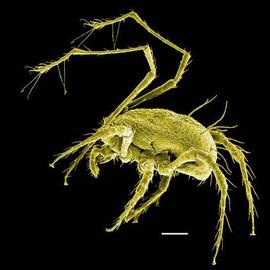
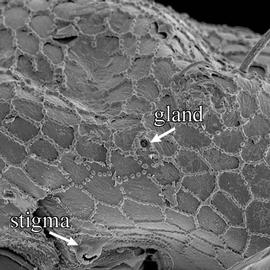
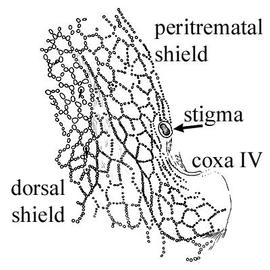
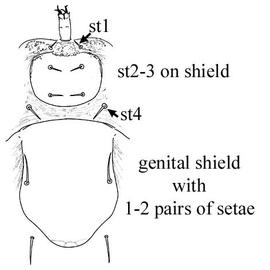
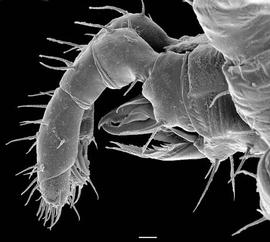
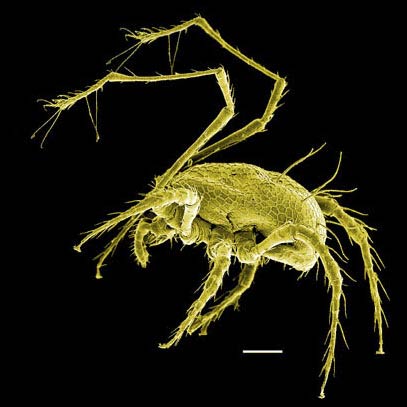
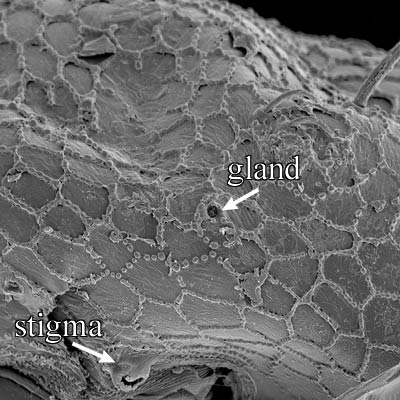
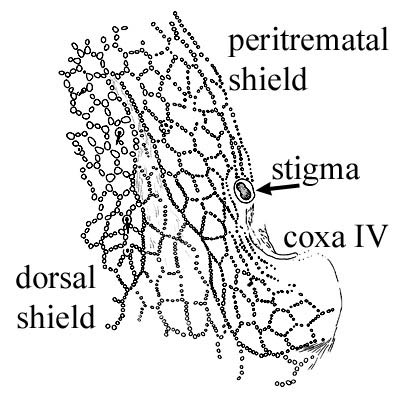
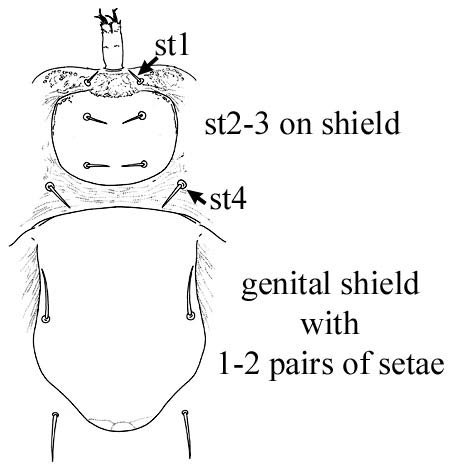
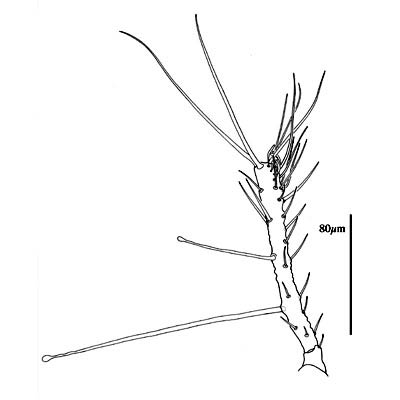
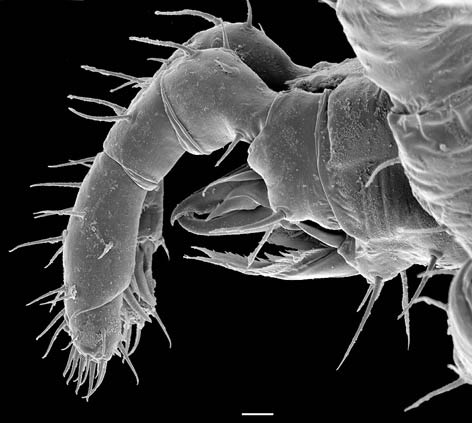
Yellow, tan or dark red brown mites, with a hypotrichous, domed holodorsal shield covered in polygonal reticulum of tubercles and bearing a pair of large dorsolateral gland openings. First pair of sternal setae on jugularia or in soft cuticle; st2–3 on common sclerite; st4 in soft cuticle or on platelets. Genital shield axe- to tongue-shape, with 1–2 pairs of setae. Inguinal glands on small platelets behind coxae IV. Anal opening with 2 valves in small anal shield with 3–5 setae. Peritremes absent or minute. Tarsus I without claws, usually with slender clubbed setae; tibia I sometimes with a minutely clubbed seta. Palp genu with 6 setae; palp apotele with 2 or 3 tines. Epistome denticulate; hypostomal setae in triangular array; hypostomal groove broad, with denticles; corniculi slender, horn-like. Chelicerae chelate-dentate; pilus dentilis setiform; cheliceral setaa elongate, laterad and parallel to digits. Male genital opening on intercoxal shield, valve with or without a pair of setae; neither chelicerae nor legs obviously modified for sperm transfer.
Species of Epicriopsis (Ameroseiidae) have claws and empodium on legs I and well developed peritremes. The presence of peritremes also serves to distinguish species of Podocinidae, and along with divided dorsal shields, some Ologamasidae (Euepicrius), and some Ascidae (Antennoseius) that have convergent elongate legs I and polygonal idiosomal ornamentation.
Author: David E. Walter
Content last updated Sept. 2006, unless indicated otherwise
Lucid key player updated Sept. 2025
idtools.org