t
Veigaia Oudemans
Superorder Parasitiformes » Order Mesostigmata » Suborder Monogynaspida » Infraorder Gamasina » Hyporder Dermanyssiae » Superfamily Veigaioidea » Family Veigaiidae » Genus Veigaia
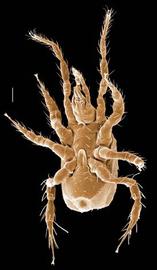
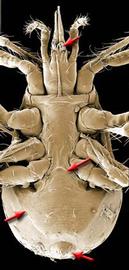
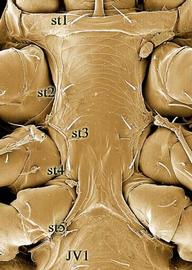
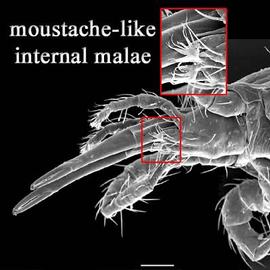
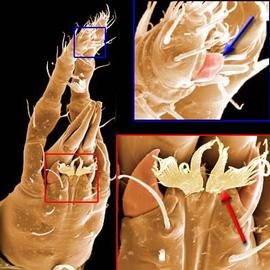
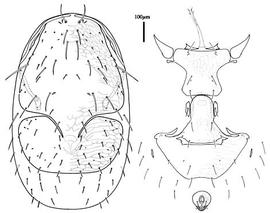
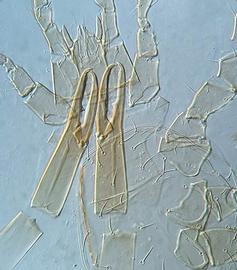
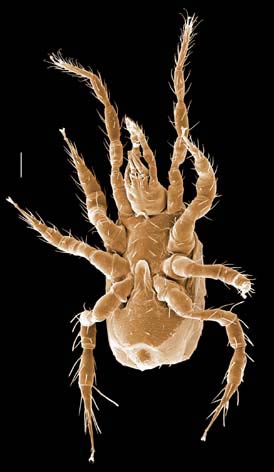
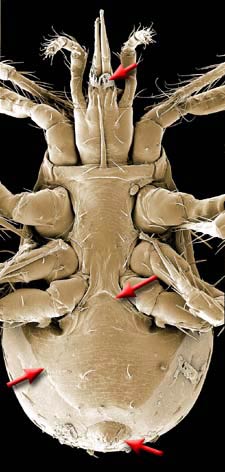
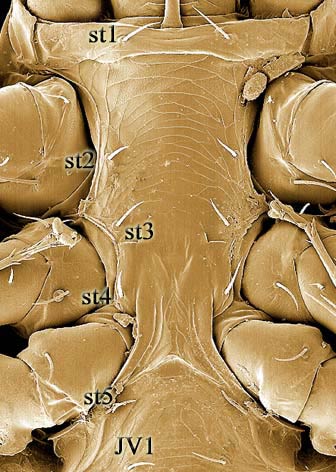
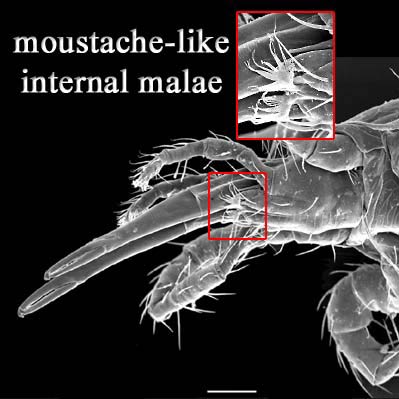
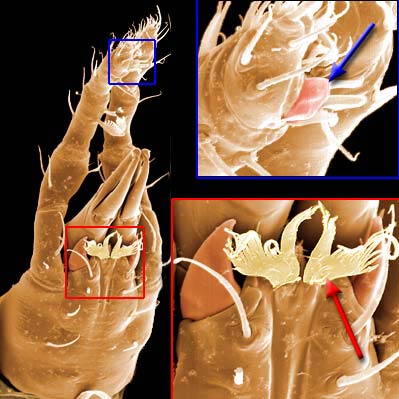
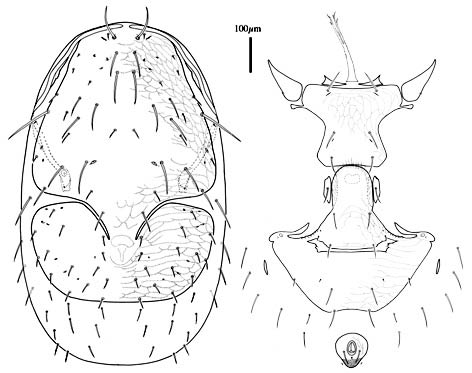
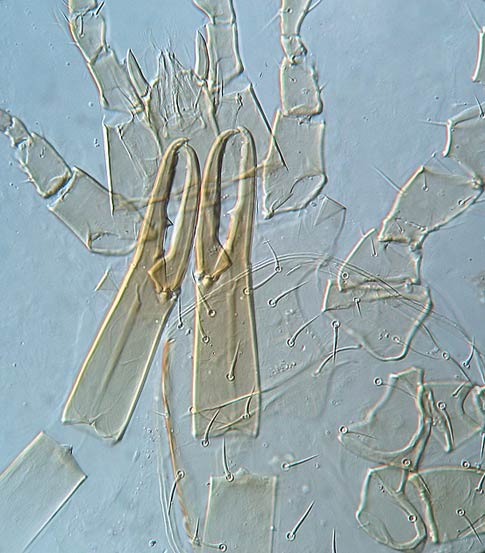
Yellow to orange-brown dermanyssine mesostigmatans. Females with separate podonotal and opisthonotal shields or with deeply incised schizodorsal shield; opisthonotal region reduced, hypotrichous to slightly hypertrichous; males with holodorsal shield. Peritremes typical running past coxa I; peritrematal shield usually narrow, joining podonotal shield anteriorly, sometimes fused to ventral shield. Female with large sternal shield bearing 3 pairs of setae (st1–3) and 2 pairs of lyrifissures (stp1–2); metasternal shields strap-like to subtriangular and bearing st4, stp3; genital shield usually trapezoid and bearing 1 pair of setae, free from, partially fused to (at posterior corners), or completely fused to ventral shield; rarely absent (Gamasolaelaps); ventral shield well developed, free from or fused to peritrematal or genital shields; anal shield free and bearing 3 circumanal setae, rarely with 1 pair of ventral setae. Tarsus I slender, elongate, with claws; trochanter I with 6 setae; tibia I with 6 dorsal and 4 (rarely 3) ventral setae; genu IV with 5 dorsal and 2 ventral setae; trochanter and femur IV of female sometimes with ventral spurs. Chelicerae typically elongate, snapping, with teeth and blade-like regions, less commonly chelate-dentate; movable digit without excrescences. Palp genu with 6 setae, palp apotele 3–4 tined and with dorsal hyaline scale-like process; corniculi horn-like; internal malae highly divided, often bilobed and moustache-like. Tritosternum biflagellate, with columnar base. Tectum bifurcate, and often with an elongate, subdorsal median process; subcapitular gutter usually broad, with 10 rows of denticles. Female sperm induction pores typically near base of coxae IV; sperm ducts lead to unpaired, central spermathecal sack (laelapid type). Males with genital opening at base of tritosternum in sternogenital shield or holoventral plate; spermatodactyl simple and finger-like to extremely elongate; legs II with spurs on femora, genua, tibiae and tarsi.
Parasitidae are superficially similar, but have ventrianal shields and lack characters such as the scale-like process above the palp apotele and moustache-like internal malae.
Tarsi II–IV with 1–2 broad ambulacral pads.............................. 2
Tarsi II–IV with 2 narrow, acuminate ambulacra.............................. Cyrthydrolaelaps Berlese
Ambulacral pad entire.............................. Gamasolaelaps Berlese
Ambulacra divided into 2 lobes .............................. Veigaia Oudemans
Author: David E. Walter
Content last updated Sept. 2006, unless indicated otherwise
Lucid key player updated Sept. 2025
idtools.org