t
Eviphididae Berlese, 1913
Superorder Parasitiformes » Order Mesostigmata » Suborder Monogynaspida » Infraorder Gamasina » Hyporder Dermanyssiae » Superfamily Eviphidoidea » Family Eviphididae
Alliphis Halbert, Canestriniphis Potter & Johnston, Copriphis Berlese, Crassicheles Karg, Evimirus Karg, Eviphis Berlese, Pelethiphis Berlese, Rafaphis Skorupski & Blaszak, Scamaphis Karg, Scarabaspis Womersley, Scarabacariphis Masan, Thinoseius Berlese
Palp genu with 6 setae.............................. 2
- Palp genu with 5 setae.............................. Thinoseius
Tibia I with 3 ventral setae; 4–6 rows of deutosternal denticles; palp apotele 2-tined.............................. 3
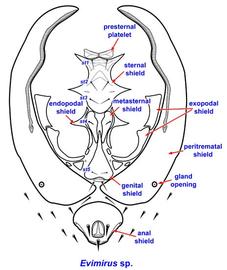
- Tibia I with 2 ventral setae; 3 rows of deutosternal denticles; palp apotele 3-tined.............................. Evimirus
Genu III with 2 ventral seta; chelicerae normal.............................. 4
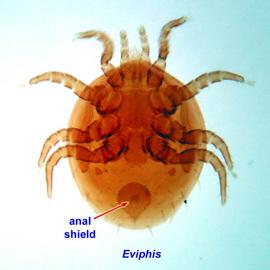
- Genu III with 1 ventral seta; chelicerae slender, elongate, with small digits.............................. Eviphis
Setae on coxae I–II setiform or spine-like.............................. 5
- Setae on coxae I–II mostly knob-like.............................. Scarabaspis
Peritrematal shield not extending posterior to coxa IV.............................. 6
- Peritrematal shield produced strongly behind coxae IV.............................. Copriphis
Dorsal shield with 30 pairs of setae; J1 present.............................. 7
- Dorsal shield with 26 pairs of setae; J1 absent.............................. Scamaphis
Vertical setae (j1) elongate and conspicuous..............................8
- Vertical setae (j1) shorts.............................. Alliphis
Tibia II with 10 setae; genu II with 9 setae.............................. Crassicheles
- Tibia II with 11 setae; genu II with 10 setae.............................. Uroiphis
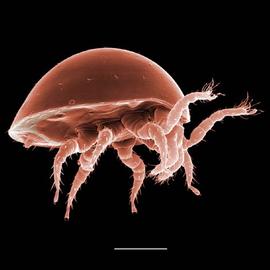
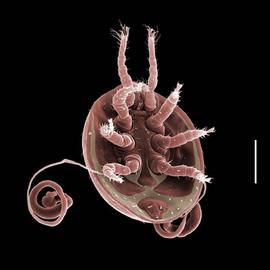
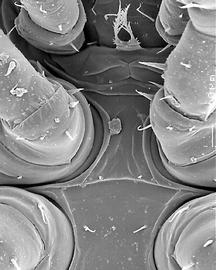
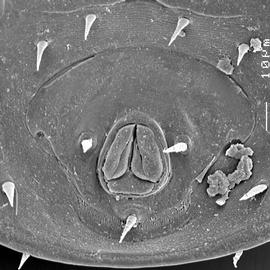
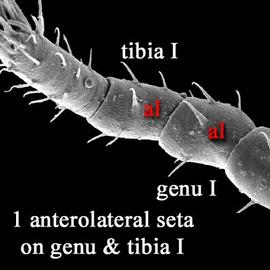
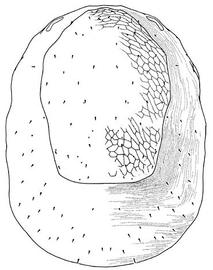
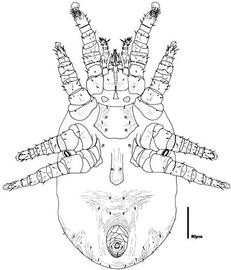
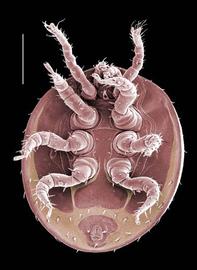
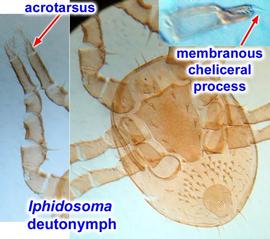
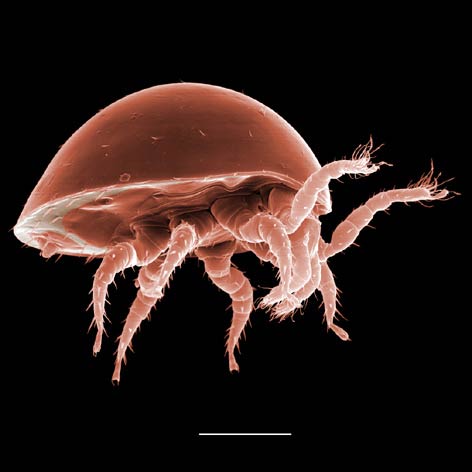
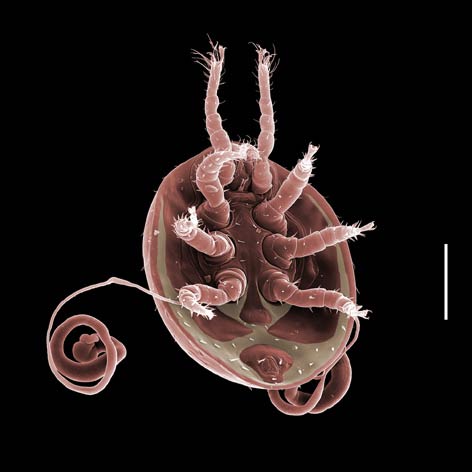
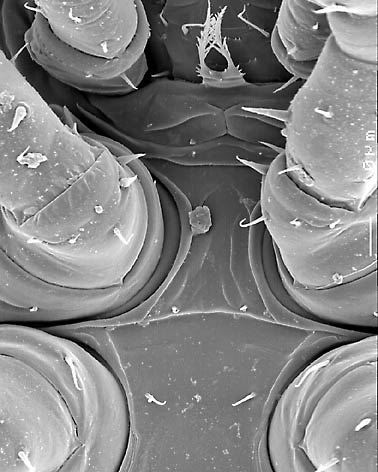
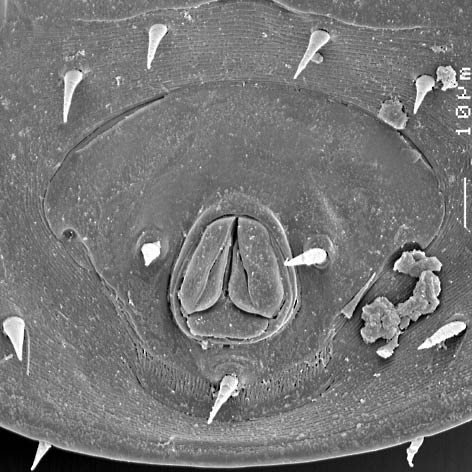
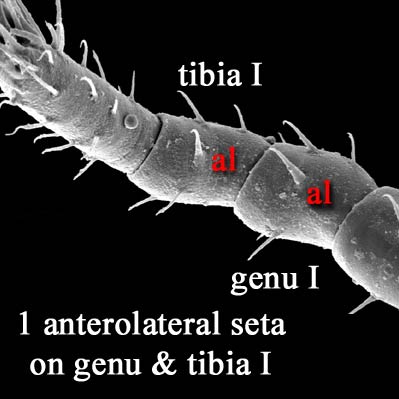
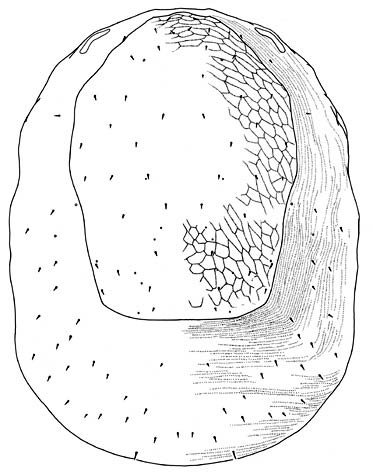
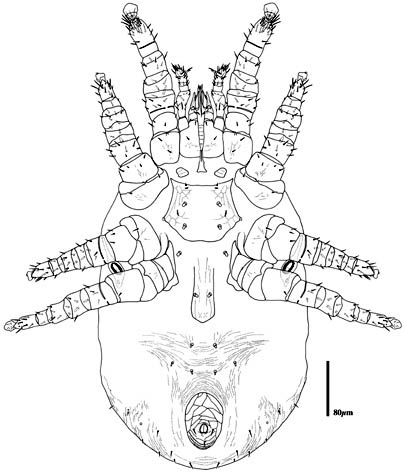
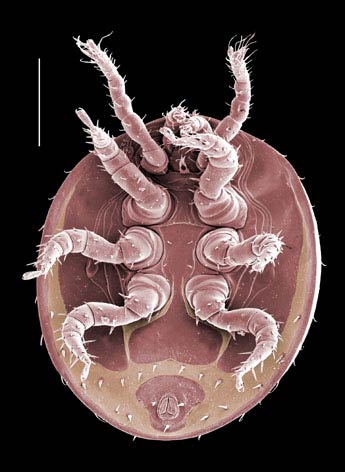
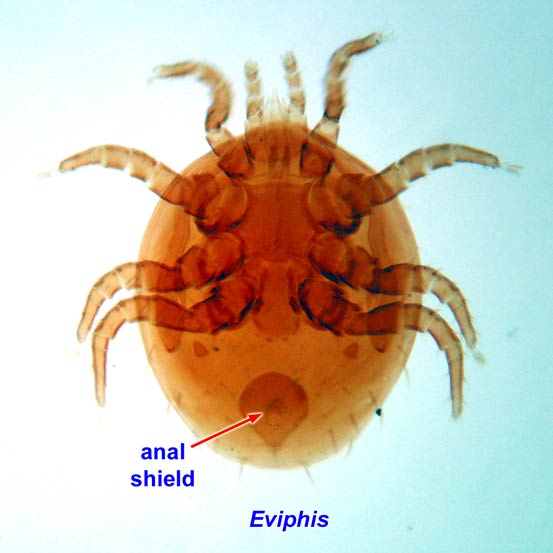
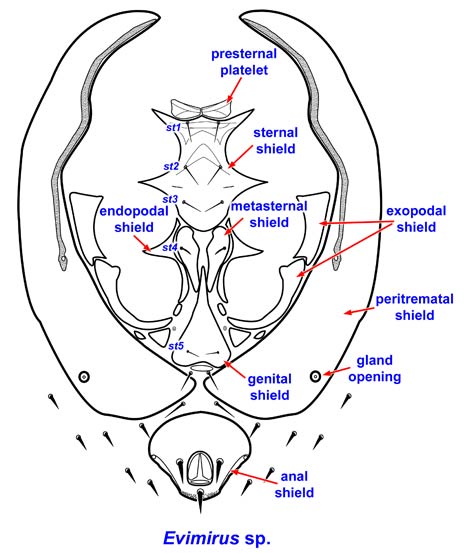
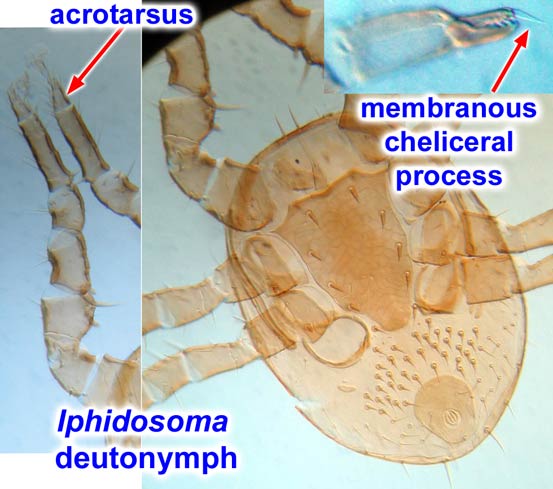
Yellow, brownish to bright pink dermanyssine mesostigmatans with holodorsal shields usually bearing 25–30 pairs of setae (17 in Thinoseius), sometimes dome-like. Peritremes generally well developed, shield sometimes produced posteriorly; large glands may be present near stigmata that secrete a viscous substance. Sternal shield (absent in Thinoseius) bearing 3 pairs of setae (st1–3) and 2 pairs of lyrifissures; metasternal shields present with st4 or absent (st4 in soft cuticle); genital shield subrectangular, strap-like or onion-shaped (Evimirus), with 0–1 pair of setae; anal shield with 3 circumanal setae. Tarsus I with claws; trochanter I with 5–6 setae; tibia I with 5/2–3 dorsal/ventral setae, genu I 5/3; genu IV with 7 setae, 4/1 dorsal/ ventral; coxal spurs are found in Scarabaspis. Chelicerae chelate-dentate or elongate and slender (uropodoid), sometimes with a distal excrescence in the males. Palp genu with 6 setae, palp apotele 2- or 3-tined; corniculi horn-like; subcapitulum with 3–6 rows of denticles. Tritosternum biflagellate with columnar or short, squat base. Tectum with long median process or denticulate. Female sperm induction pores near bases of coxae IV. Males with genital opening at base of tritosternum in sternogenital shield; spermatodactyl usually well developed.
The mouthparts of some eviphidoids resemble those of uropodoids.
Author: David E. Walter
Content last updated Sept. 2006, unless indicated otherwise
Lucid key player updated Sept. 2025
idtools.org