t
Parholaspididae Evans, 1956Evans, 1956:
Evans GO. 1956. On the classification of the family Macrochelidae with particular reference to the subfamily Parholaspinae (Acarina - Mesostigmata). Proceedings of the Zoological Society of London 127: 345–377.
Superorder Parasitiformes » Order Mesostigmata » Suborder Monogynaspida » Infraorder Gamasina » Hyporder Dermanyssiae » Superfamily Eviphidoidea » Family Parholaspididae
Calholaspis Berlese, Gamasholaspis Berlese, Holaspina Berlese, Holaspulus Berlese, Hyattolaspina Datta & Bhattacharjee, Krantzolaspina Datta & Bhattacharjee, Krantzholaspis Petrova, Latinella Krantz, Neparholaspis Evans, Parholaspis Berlese, Parholaspella Krantz, Parholaspulus Evans, Proparholaspulus Ishikawa, Parholaspella Krantz, Snaveolaspis Johnston
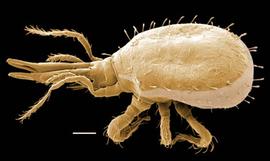
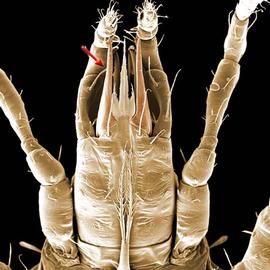
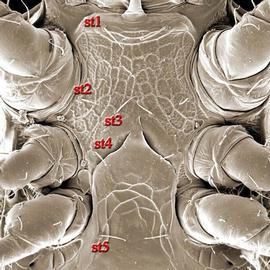
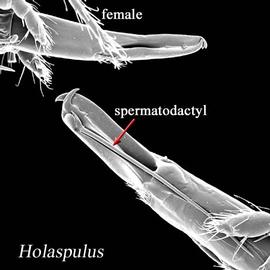
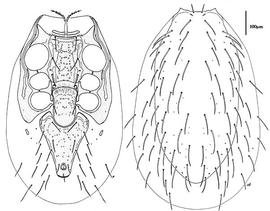
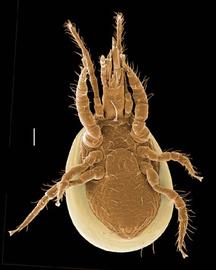
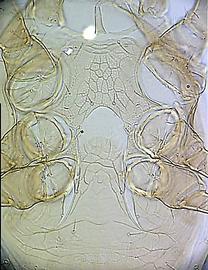
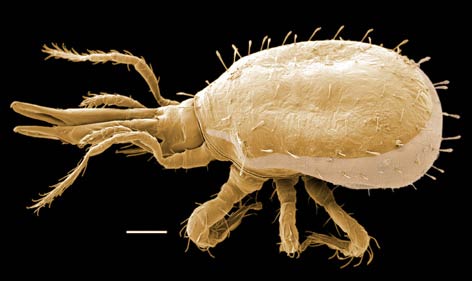
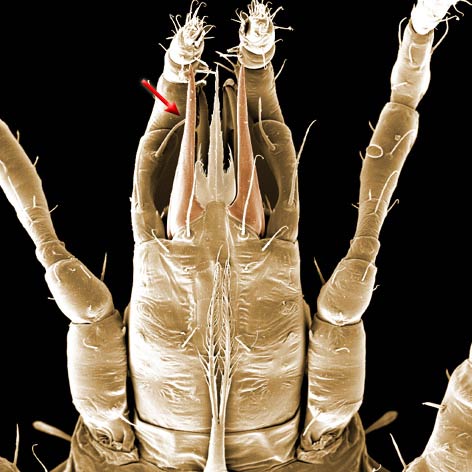
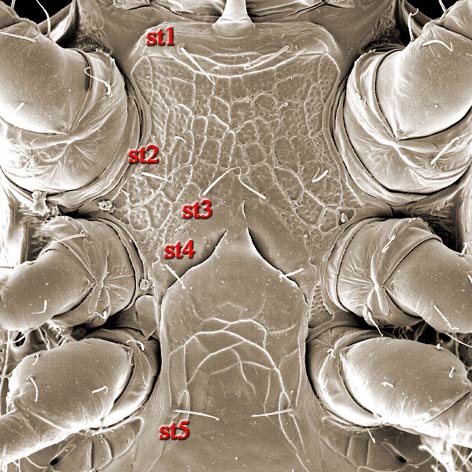
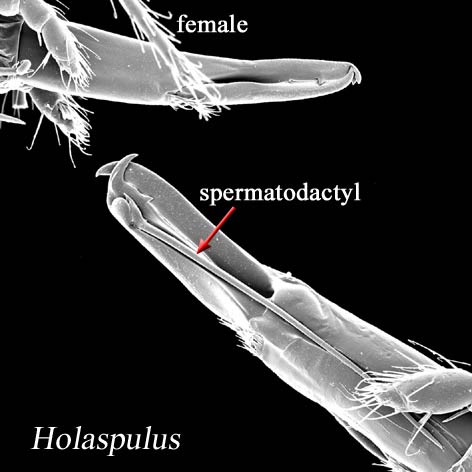
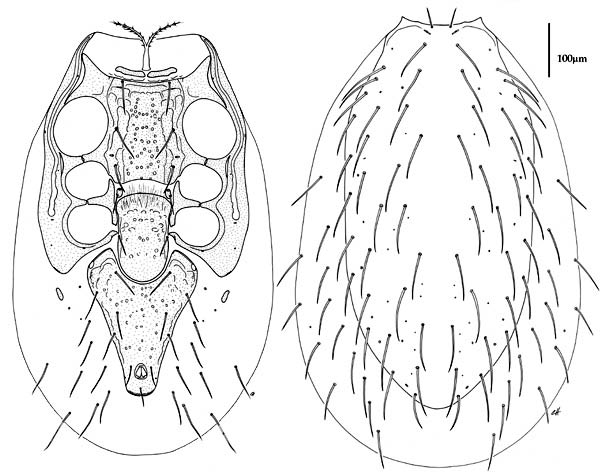
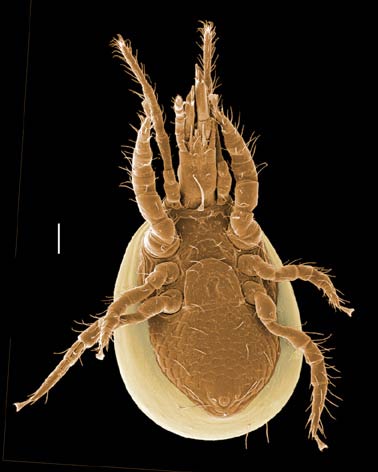
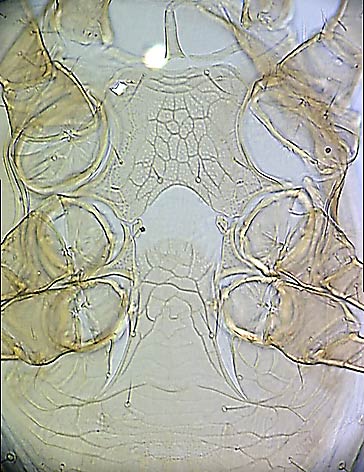
Yellow to dark brown dermanyssine mesostigmatans with holodorsal shields. Peritremes generally well developed, shields sometimes produced posteriorly. Sternal shield bearing 3 (rarely 4) pairs of setae (st1–3, 4) and 2–3 pairs of lyrifissures; metasternal shields present with st4 or fused to sternal or endopodal shields; genital shield mound-shaped, tongue-shaped, or broadly opisthogenital and bearing 1–2 (rarely more) pair of setae; ventrianal shield broad with several pairs of ventral setae, sometimes fused to genital shields. Tarsus I with or without claws; trochanter I with 6 setae; tibia I with 5/3 dorsal/ ventral setae, genu I 5/2–3; genu IV with 9 setae, 4/1 dorsal/ ventral. Chelicerae chelate-dentate, serrate, or snapping; movable digit without excrescences, but with well developed arthrodial brush. Palp genu with 6 setae, palp apotele 3-tined; corniculi horn-like to bayonet-like. Tritosternum biflagellate with columnar base. Tectum with long median process or denticulate-trifurcate. Female sperm induction pores near bases of coxae IV. Males with genital opening at base of tritosternum in sternogenital shield; spermatodactyl usually well developed.
Macrochelids (recurved peritreme); pachylaelapids (lack arthrodial brush); Ologamasidae (tibia I with 6 dorsal setae); Laelapidae: Ololaelaps (lacks arthrodial brush).
Author: David E. Walter
Content last updated Sept. 2006, unless indicated otherwise
Lucid key player updated Sept. 2025
idtools.org