t
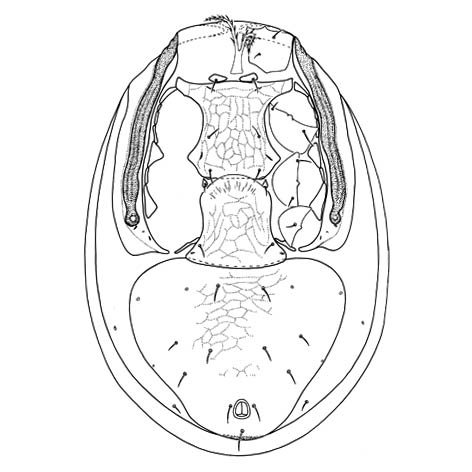
Neojordensia Athias-Henriot
Superorder Parasitiformes » Order Mesostigmata » Suborder Monogynaspida » Infraorder Gamasina » Hyporder Dermanyssiae » Superfamily Ascoidea » Family Ascidae » Subfamily Arctoseiinae » Genus Neojordensia
Species of Orthadenella have setae z1 and more setae on their legs. Species of Zygoseius (Pachylaelapidae) have the metasternal shield fused to endopodal elements. Species of Proctolaelaps have an anal shield. Species of Lasioseius usually have tricarinate setae and have a phytoseiid-type sperm access system.
With holodorsal shield that captures the R-series.............................. 2
- Dorsal shield divided into two subequal shields; R-series setae in softcuticle.............................. 3
Seta z1 present laterad seta j1 on anterior median region of dorsal shield; femur III with 7 setae; genu I with 13 setae; tibia II with 10 setae.............................. Orthadenella (Blattisociidae)
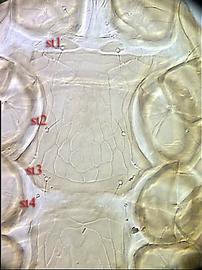
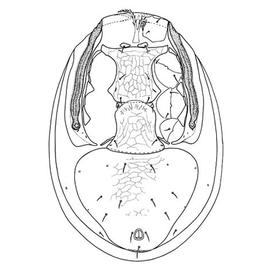
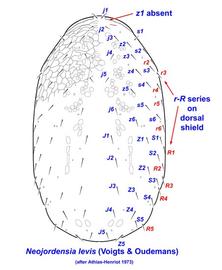
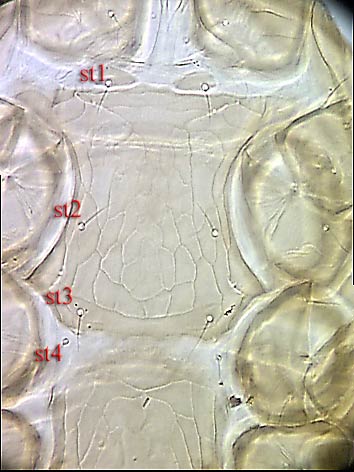
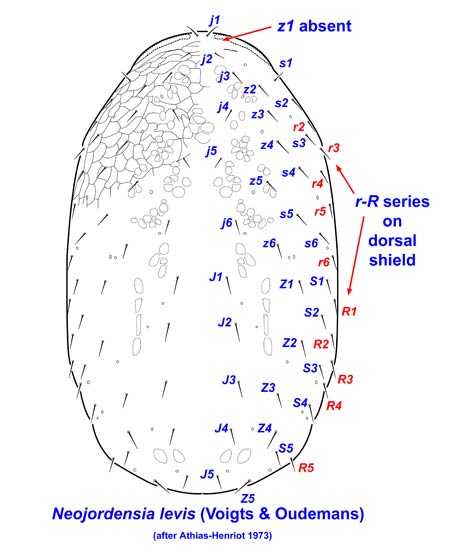
- Seta z1 absent; femur III with 6 setae; genu I with 12 setae; tibia II with 9 setae.............................. Neojordensia
Opisthonotal shield with 12 pairs of setae (J3, Z2, S1 absent); podonotal shield lacking setae j2, z1, z3; adult leg setation strongly neotenous, genua I–II–III–IV with 11–8–7–7 setae, tibiae with 11–7–7–7 setae; female with anal shield.............................. Diseius
- Opisthonotal shield with 15 or more pairs of setae (J3, Z2, S1 present); podonotal shield with setae j2, z3, sometimes z1; adult leg setation not strongly neotenous, minimum number of setae on genua 12–11–8–8, on tibiae 13–10–8–9; female with anal or ventrianal shield.............................. 4
Hypostome with corniculi bifid apically; anterior rostral setae thickened, spinelike; dorsal shield setae z1 absent.............................. Anephiasca
- Hypostome with corniculi entire apically; anterior rostral setae of similar thickness to other hypostomal setae; dorsal shield setae z1 present or absent.............................. 5
Female with epigynial shield strongly rounded posteriorly and with small subtriangular ventrianal or anal shield bearing 3–5 setae; male with ventrianal shield united to peritrematal shields; soft body cuticle often with microtuberculate striae.............................. 6
- Female with epigynial shield truncate posteriorly and usually with well developed ventrianal shield (rarely anal shield) bearing 3–9 setae (including circumanal setae); male with ventrianal shield separate from peritrematal shields; soft body cuticle striae without microtubercles.............................. 8
Palps elongated, at least half as long as leg I; palp trochanter longer than femur; palp tibia almost 3 times as long as tarsus.............................. Anystipalpus
- Palps of normal length, about one-third as long as leg I; palp trochanter slightly shorter than femur; palp tibia twice as long as tarsus.............................. 7
Legs I with ambulacra and claws.............................. Antennoseius (Vitzthumia)
- Legs I without ambulacra and claws.............................. Antennoseius (Antennoseius)
Opisthonotal shield with setae Z4 & S5 usually approximate and inserted together on pair of prominent posterolateral tubercles; podonotal shield lacking setae z1, j2 well behind level of j1; peritrematal shields of adults broad, truncate posteriorly; genu I with 12 setae (av2 absent).............................. Asca
- Opisthonotal shield with setae Z4, S5 well separated, not borne on pair of strong tubercles; podonotal shield with setae z1 present; j2 tending to be displaced anteriorly, often in approximately transverse row with z1 and j1; peritrematal shields of adults narrow or of moderate width, tapering posteriorly; genu I with 13 setae (av2 present).............................. 9
Podonotal shield with transverse line extending across surface at level of setae z6, opisthonotal shield with similar line at level of setae J1; paranal setae inserted close to anterior margin of anus; genu IV with 8 setae (pl1 absent); tibia IV with 9 setae (pl2 absent).............................. Protogamasellus
- Dorsal shields without transverse lines extending completely across surface; paranal setae inserted closer to posterior margin of anus than to anterior margin; genu IV with 9 setae (pl1 present); tibia IV with 10 setae (pl2 present).............................. 10
Sternal pore 3 in soft cuticle; setae r3 and Z5 club-shaped, densely plumose; gnathotectum denticulate; movable digit of chelicerae serrate.............................. Ectoantennoseius
- Sternal pore 3 on sternal shield; setae r3 and Z5 setiform, smooth to barbed; gnathotectum more or less smoothly trifurcate; movable digit of chelicerae usually with 4–6 teeth, not serrate.............................. Gamasellodes
Moist soils in forests and meadows. Quarantine intercepts in the US include on yam roots from Japan (Neojordensia orientalis Chant) and on an orchid leaf from England (N. levis [Voights & Oudemans]).
Author: David E. Walter
Content last updated Sept. 2006, unless indicated otherwise
Lucid key player updated Sept. 2025
idtools.org