Uropodoidea

Mesostigmata

t

Taxonomy

updated 2025

Name

Uropodoidea Kramer, 1881

Synonyms

Polyaspidoidea and Trachyuropodoide

Classification

Superorder Parasitiformes » Order Mesostigmata » Suborder Monogynaspida » Infraorder Uropodina »  Superfamily Uropodoidea

Children

Including the families Uropodidae Kramer (s.l.) Nenteriidae Hirschmann, Trematuridae Berlese, Macrodinychidae Hirschmann, Trigonuropodidae Hirschmann, Urodinychidae Berlese, Dinychidae Berlese, Circocyllibamidae Sellnick, Deraiophoridae Trägårdh, Discourellidae Baker & Wharton

Diagnostic characters

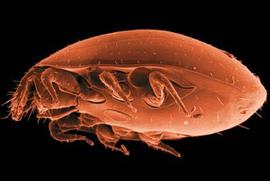
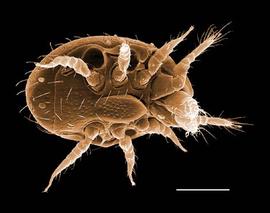
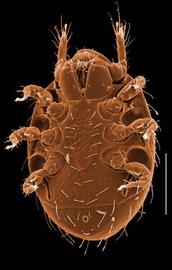
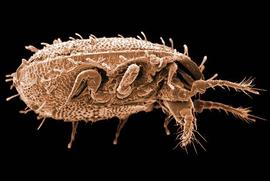
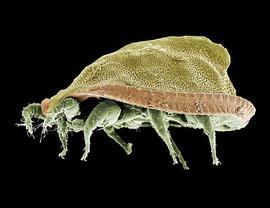
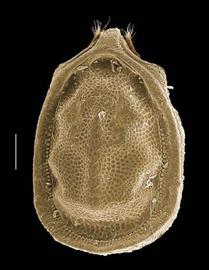
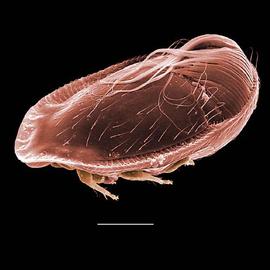
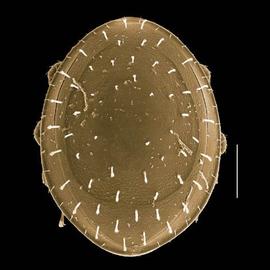
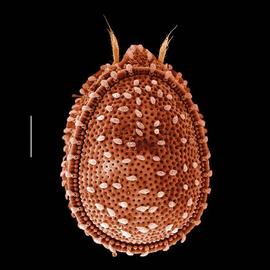
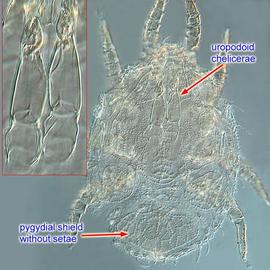
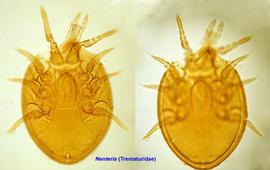
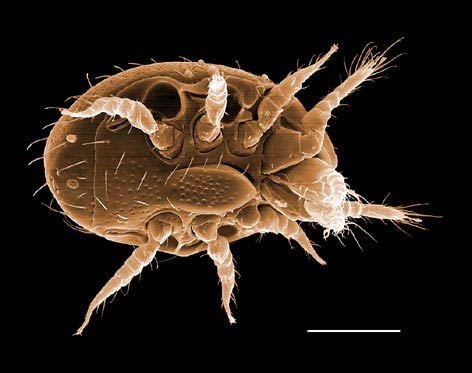
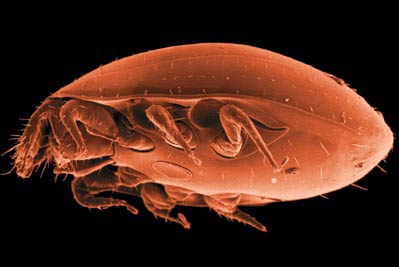
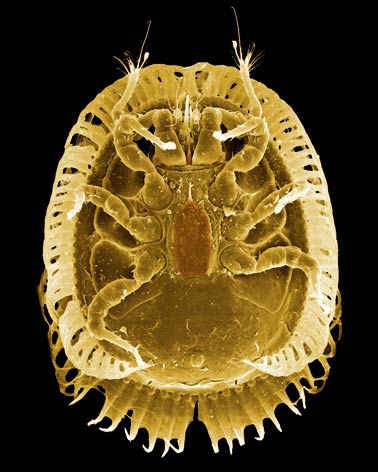
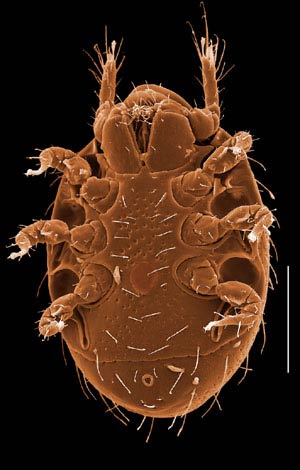
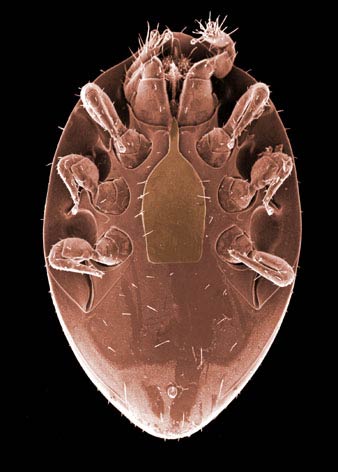
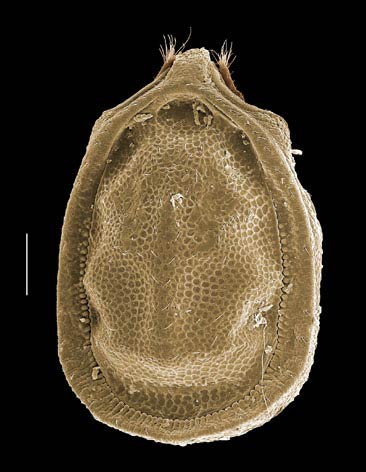
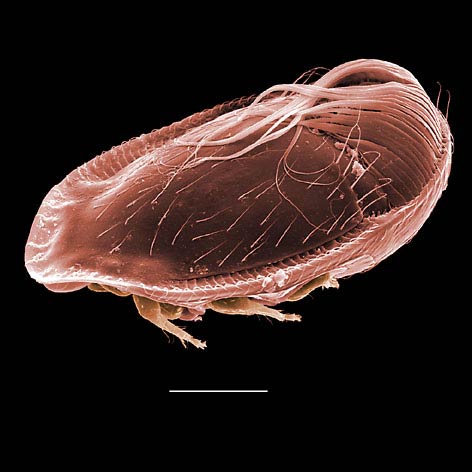
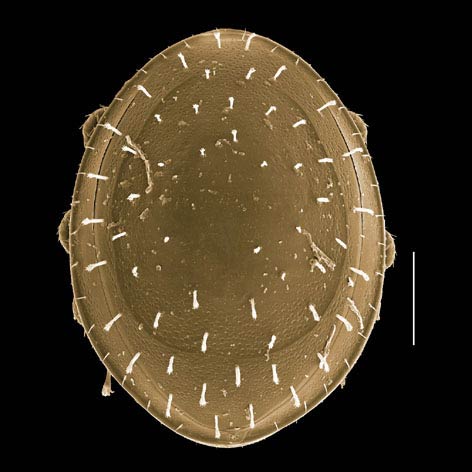
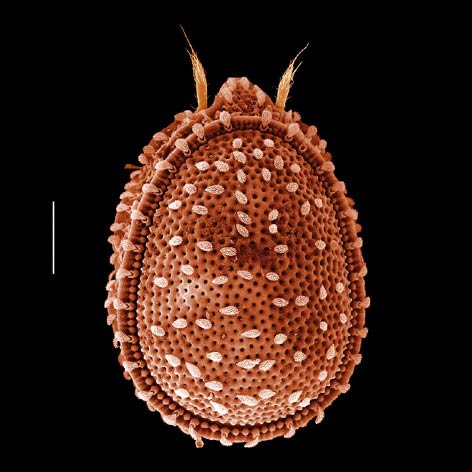
  • Tortoise-like uropodine mesostigmatans, usually oval to circular in outline and encased in armor dorsally and ventrally; shields usually indistinct, marginal and pygidial shields sometimes discernable.
  • Usually >100 dorsal idiosomal setae
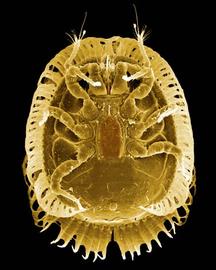
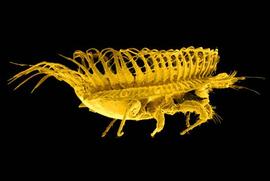
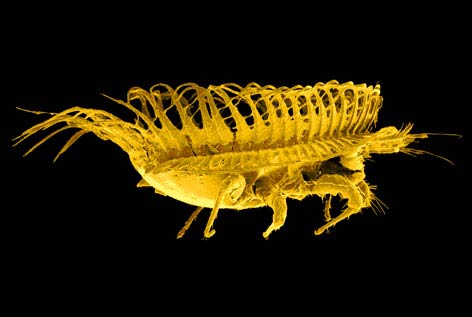
  • Marginal setae sometimes elaborated to produce a fringe or basket-like arrangement
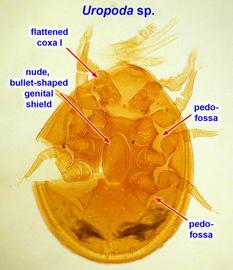
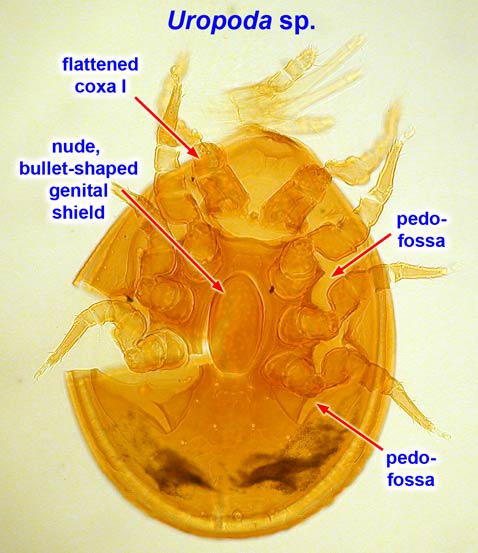
  • Scabellum and pedofossae usually present
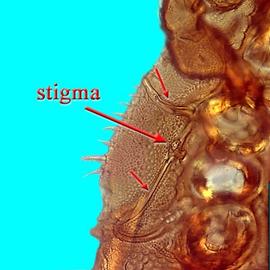
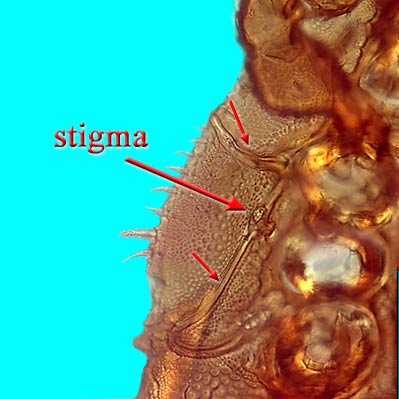
  • Peritremes often sinuous or bent; stigmata often at level of coxae II–III.
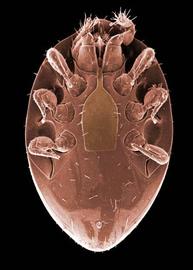
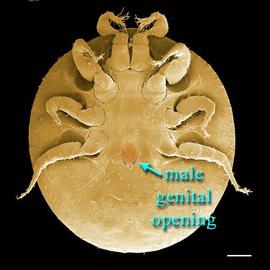
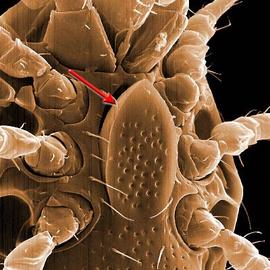
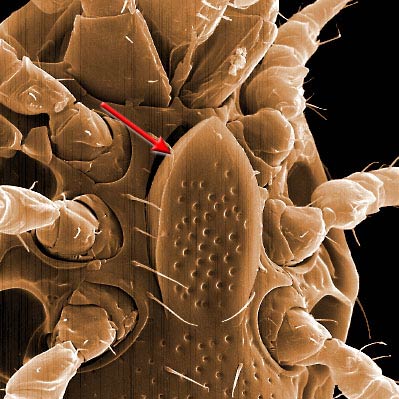
  • Sternal setae (st1–5) on ventral shield that encompasses the genital opening and protects all of the venter; anal opening with 2–5 circumanal setae.
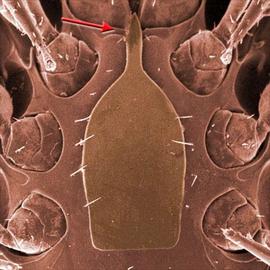
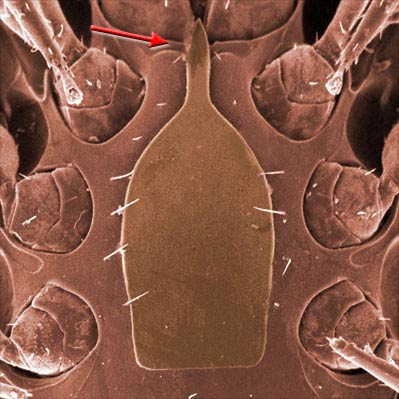
  • Genital shield nude, usually entirely intercoxal and truncate posteriorly (postcoxal in Metagynella) often with anterior median process
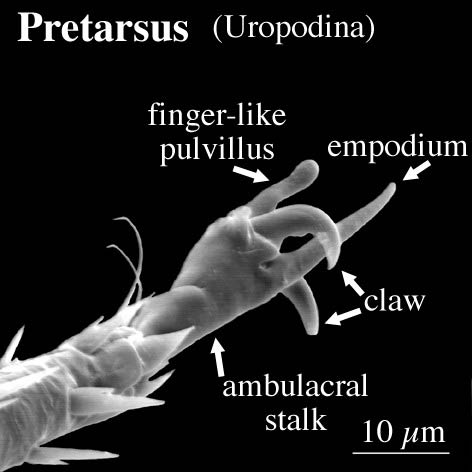
  • Legs I with or without ambulacra, coxae I large, flattened, usually contiguous; trochanter I with 4 setae; tibia I with 3 dorsal and 2 ventral setae; all genu with <4 dorsal setae; genu II with <2 lateral setae.
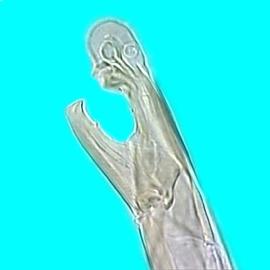
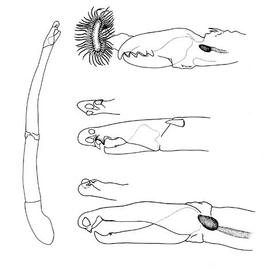
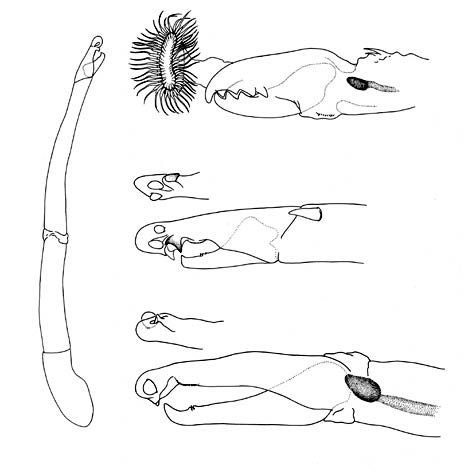
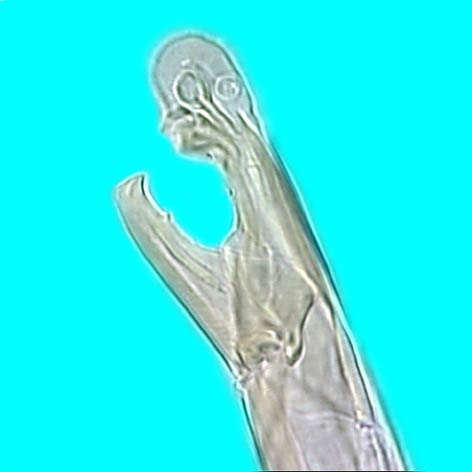
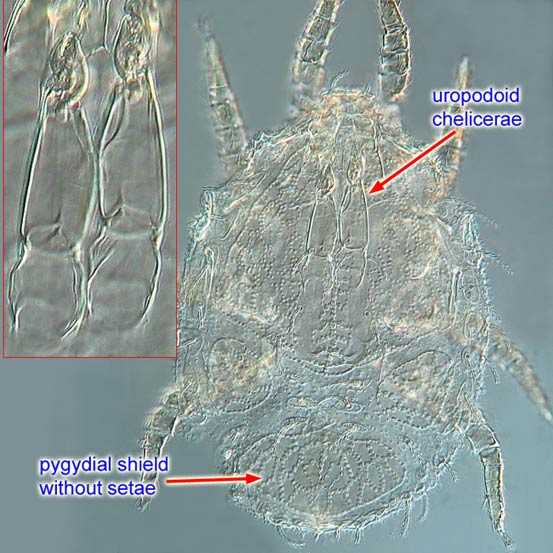
  • Chelicerae typically slender, elongate, with small digits and distal sensory area (sometimes highly elaborated); corniculi horn-like.
  • Tectum hyaline; hypostomal denticles typically dense to irregular. Palp apotele 2-tined; palp genu with 4–5 setae, palp femur with 5 (rarely 4) setae.
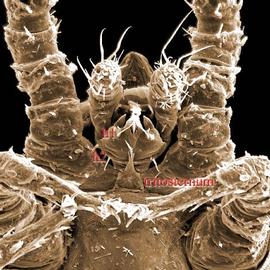
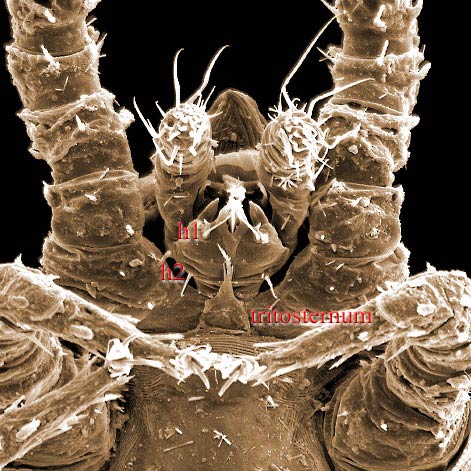
  • Tritosternal laciniae typically fused, highly divided; tritosternal base variable, usually wider than long.
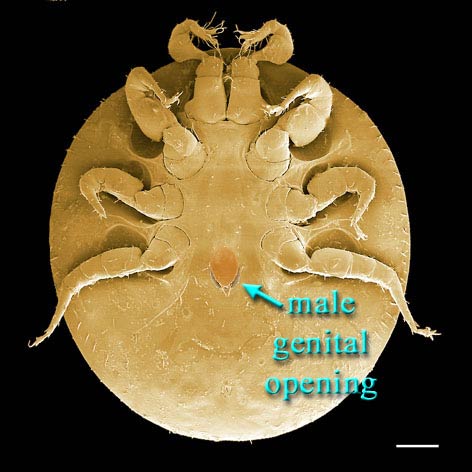
  • Male genital opening usually intercoxal, anterior valve rarely with a pair of setae; chelicerae not obviously modified for sperm transfer.

Key to adult females of common Uropodoidea

  1. Chelicerae with large, sclerotized node at base of movable digit.............................. 3
    - Chelicerae without large, sclerotized node.............................. 2

  2. Genital opening intercoxal.............................. Uropodidae
    - Genital opening postcoxal.............................. Metagynuridae, Metagynella

  3. Fixed digit simple, lobed or acuminate distally, not ending in a flower-like process.............................. 4
    - Fixed digit ending in a flower-like process.............................. Uroactiniidae, Uroactinia

  4. Pilus dentilis absent or modified into a membranous process; internal malae linear.............................. 6
    - Pilus dentilis bifurcate; internal malae densely plumose, moustache-like.............................. Trachyuropodidae (5)

  5. Body ornamented with large pits and/ or tubercles .............................. Trachyuropodidae, Trachyuropoda
    - Body flattened, oval, smooth to punctate, without large pits or tubercles.............................. Trachyuropodidae, Oplitis

  6. Fixed digit produced as strong lobe or acuminate structure; genu I with pair of ventral setae.............................. 9
    - Chelicerae chelate-dentate, without distal process; genu I without ventral setae.............................. Trematuridae (7)

  7. Peritremes present in adults (and deutonymphs).............................. 8
    - Peritremes absent in adults (present in deutonymphs) ..............................Trematuridae, Trematura

  8. Tectum denticulate, tapering; corniculi divided; often with 1–2 pairs of elongate posterior setae.............................. Trematuridae, Trichouropoda
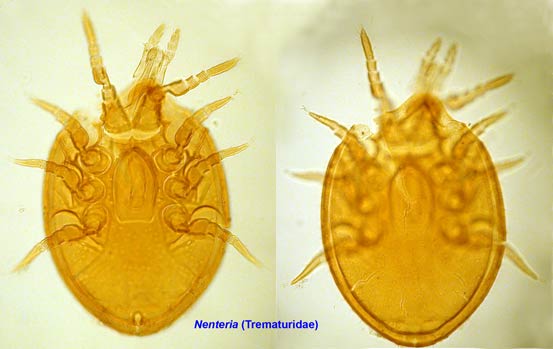
    - Tectum with distally branched process; corniculi simple; without elongate distal setae.............................. Trematuridae, Nenteria

  9. Pedofossae usually present; internal malae simple or denticulate.............................. 10
    - Pedofossae absent; internal malae bifurcate.............................. Dinychidae, Dinychus

  10. Separate pygidial plate bearing setae present.............................. Urodiaspis
    - Pygidial region fused to dorsal shield, sometimes produced as tooth-like process.............................. Uroobovella (11)

  11. Metapodal lines and anterior genital shield process absent.............................. Uroobovella (Uroobovella)
    - Metapodal lines present, anterior genital shield process present or absent.............................. Uroobovella (Fuscouropoda)

Similar taxa

Well armored, tortoise-like mites with uropodine chelicerae are likely to be Uropodoidea.

Ecology and distribution

Uropodoids occur in most litter types and are especially common in compost and in mesic to wet forests. Some species infest worm beds, but probably have little effect on the worms. The few species that have been studied are primarily predatory (especially on maggots and nematodes), although some are known to feed on fungi as well. Insects, myriapods, and small lizards are often covered with the phoretic deutonymphs of these mites, each attached by a small anal pedicle.

References

  • Ainscough 1981Ainscough 1981:
    Ainscough BD. 1981. Uropodine studies. I. Suprageneric classification in the cohort Uropodina Kramer, 1882 (Acari: Mesostigmata). International Journal of Acarology 7: 47–56.
  • Athias 1976Athias 1976:
    Athias F. 1976. Observations morphologiques sur Polyaspis patavinus Berlese 1881 (Acariens: Uropodides). 2. Morphologie et chètotaxie des appendices au cours du dèveloppement postembryonnaire. Acarologia 18: 194–216.
  • Athias-Binche and Bloszyk 1988Athias-Binche and Bloszyk 1988:
    Athias-Binche F, Bloszyk J. 1988. Australian Uropodina (Acari: Anactinotrichida). I. Australocilliba gen. n. (Cillibidae). Journal of the Australian Entomological Society 27: 1–8.
  • Athias-Binche and Evans 1981Athias-Binche and Evans 1981:
    Athias-Binche F, Evans GO. 1981. Observations on the genus Protodinychus Evans, 1957 (Acari: Mesostigmata) with descriptions of the male and phoretic deuteronymph. Proceedings of the Royal Irish Academy (Section B) 81B: 25–36.
  • Bloszyk and Halliday 1995Bloszyk and Halliday 1995:
    Bloszyk J, Halliday RB. 1995. A new species of Dinychus Kramer from Tasmania (Acarina: Dinychidae). Journal of the Australian Entomological Society 34: 187–191.
  • Evans and Till 1979Evans and Till 1979:
    Evans EO, Till WM. 1979. Mesostigmatic mites of Britain and Ireland (Chelicerata: Acari-Parasitiformes): An introduction to their external morphology and classification. Transactions of the Zoological Society of London 35 (2): 145–270.
  • Gilyarov and Bregatova 1977Gilyarov and Bregatova 1977:
    Gilyarov MS, Bregatova NG, eds. 1977. Handbook for the identification of soil-inhabiting mites, Mesostigmata. Zoological Institute of the Academy of Sciences, Petrograd.
  • Johnston 1961Johnston 1961:
    Johnston DE. 1961. A review of the lower uropodid mites (former Thinozerconoidea, Protodinychoidea and Trachytoidea) with notes on the classification of the Uropodina (Acarina). Acarologia 3: 522–545.
  • Karg 1989aKarg 1989a:
    Karg W. 1989a. Acari (Acarina), Milben Unterordnung Parasitiformes (Anactinotrichaeta) Uropodina Kramer, Schildkrötenmilben. Die Tierwelt Deutschlands 67: 1–203.
  • Krantz and Ainscough 1990Krantz and Ainscough 1990:
    Krantz GW, Ainscough B. 1990. Mesostigmata. pp. 583–665. In: Dindal DL, ed. Soil biology guide. John Wiley & Sons, Brisbane.
  • Wisniewski and Hirschmann 1993Wisniewski and Hirschmann 1993:
    Wisniewski J, Hirschmann W. 1993. Gangsystematik der Parasitiformes. Teil 548. Katalog der Ganggattungen, Untergattungen, Gruppen und Arten die Uropodiden der Erde. Acarologie, Schriftenreihe für Vergleichende Milbenkunde 40: 1–220.
  • Womersley 1959bWomersley 1959b:
    Womersley H. 1959b. A new species of Urodiscella (Acarina, Uropodidae) from Australia. Records of the South Australian Museum 13: 349–353.
Uropodidae male (DEW)  
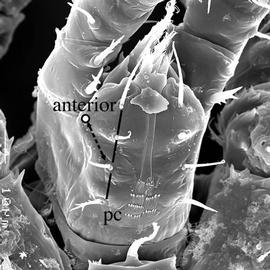
Uropodine hypostome (DEW)  
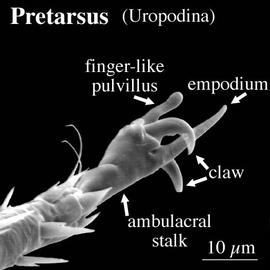
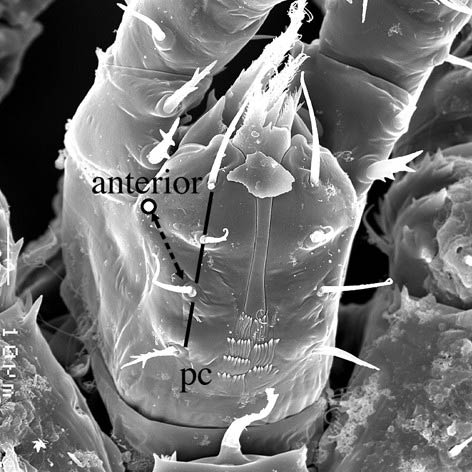
Uropodid tarsus IV (DEW)
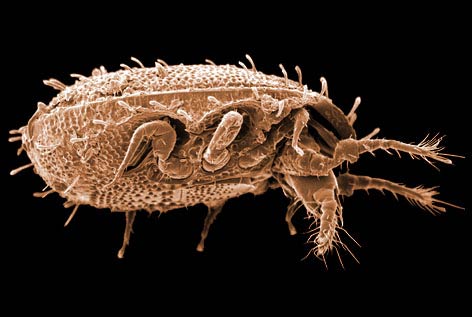
 Basket mite venter (DEW)
Basket mite venter (DEW)
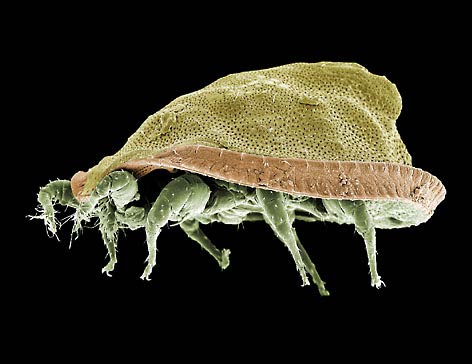
 Basket mite lateral (DEW)
Basket mite lateral (DEW)
Female uropodid; tortoise-like in shape (DEW)
Male uropodid (DEW)
Male uropodid (DEW)
Female uropodid (DEW)
 'Hat' mite (Uropodidae) (DEW)
'Hat' mite (Uropodidae) (DEW)
Uropodid (DEW)
Uropodid (DEW)
Uropodid (DEW)
Uropodid (DEW)
 Uropodid from ant colony (DEW)
Uropodid from ant colony (DEW)
 Uropodidae (DEW)
Uropodidae (DEW)
 Australocillibia  sp. male (DEW)
Australocillibia sp. male (DEW)
 Larval uropodid (DEW)
Larval uropodid (DEW)
 Uropodid fixed digit (DEW)
Uropodid fixed digit (DEW)
Uropodoid chelicerae (CH, DEW)
 Deutonymphal uropodid from Iran
Deutonymphal uropodid from Iran
 Uropoda female venter
Uropoda female venter
 Nenteria  female
Nenteria female
Peritreme sinuous; stigmata at level of coxae II–III
Sternal setae ( st1 – 5 ) on ventral shield that encompasses the genital opening and protects all of the venter
Sternal setae (st1–5) on ventral shield that encompasses the genital opening and protects all of the venter
Anterior median process