test
Tetranychoidea Donnadieu, 1875Donnadieu, 1875:
Donnadieu AL. 1875. Recherches pour servir a l'histoire des Tétranyques. Pitrat Ainé, Lyons.
Superorder Acariformes » Order Trombidiformes » Suborder Prostigmata » Infraorder Eleutherengona » Hyporder Raphignathina » Superfamily Tetranychoidea
spider mites, peacock mites, false spider mites.
very high
Open Tetranychoidea Pests Ranking Model and List
Very high. The Tetranychoidea contains most of the important plant-parasitic mites outside of the Eupodoidea, including the spider mites and false spider mites.
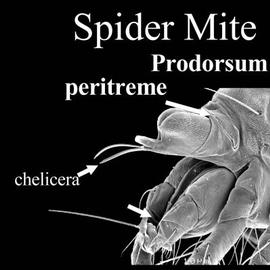
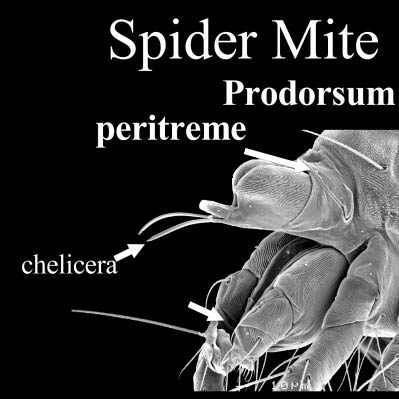
Most species soft-bodied, others with varying degrees of dorsal sclerotization; mostly white, red, yellow, or green in color. Cheliceral bases adnate, fused mesally into a stylophore (sometimes withdrawn into the body); chelicerae with fixed digit reduced and movable digit whiplike. Peritremes, when present, typically chambered structures on the dorso-lateral surface of the prodorsum; naso absent; prodorsal trichobothria absent; eye lenses usually present. Palps 4–5 segmented; with or without one or a claw-like seta on the palp tibia and with a thumb- or button-like subterminal palp tarsus. Leg tarsi usually with tenent hairs on claws or empodium. Genital papillae absent; males with an intromittent aedeagus.
The Stigmaeidae are sometimes confused with spider mites, but these predatory mites lack the whip-like movable digits. Cryptognathidae are capable of retracting their gnathosoma, but their cheliceral bases are free and the movable digit is hook-like.
The Tetranychoidea are plant-associated mites, and includes the infamous spider mites (Tetranychidae). Tetranychoid species that feed on grasses or pasture legumes may occasionally appear in soil samples.
Author: David E. Walter
Content last updated Sept. 2006, unless indicated otherwise
Lucid key player updated Sept. 2025
idtools.org