Major mite taxa
test
Taxonomy
updated 2025
Name
Raphignathina Kethley, 1982
Classification
Superorder Acariformes » Order Trombidiformes » Suborder Prostigmata » Infraorder Eleutherengona » Hyporder Raphignathina
Children
superfamilies: Cheyletoidea, Myobioidea, Pterygosomatoidea, Raphignathoidea, Tetranychoidea
Common names
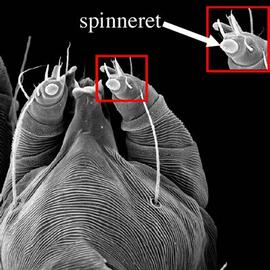
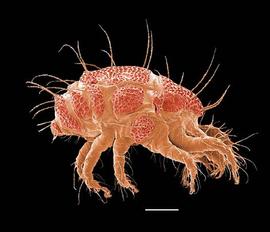
spider mites, peacock mites, false spider mites, raphignathoids, cheyletoids, myobiids, cheyletiella, follicle mites, quill mites, skin mites, walking dandruff
Probability of encounter
very high
Quarantine importance
Very high. The Tetranychoidea contains most of the important plant-parasitic mites outside of the Eupodides, including the spider mites and false spider mites. The Cheyletoidea contains many important parasites of wildlife and some important pests of pets, laboratory animals, livestock, and people.
Diagnosis
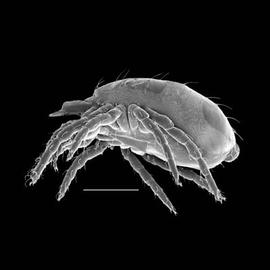
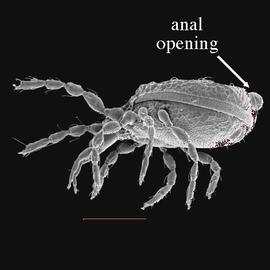
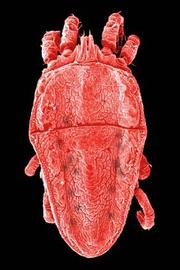
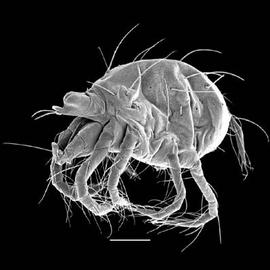
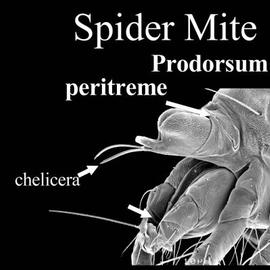
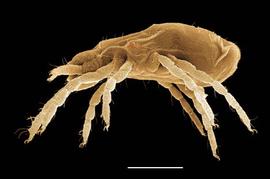
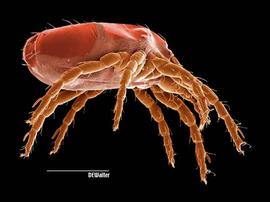
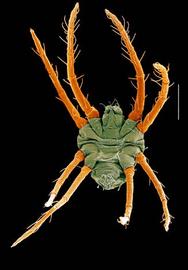
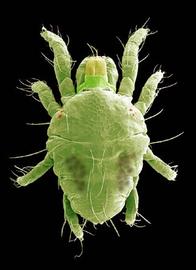
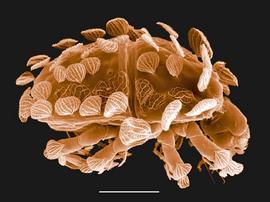
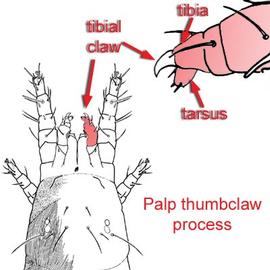
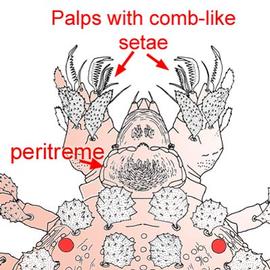
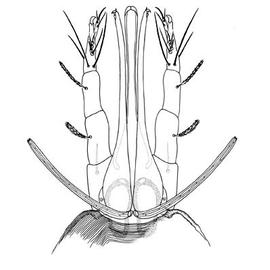
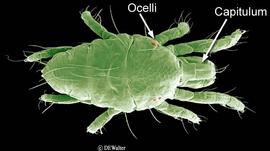
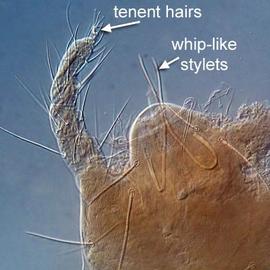
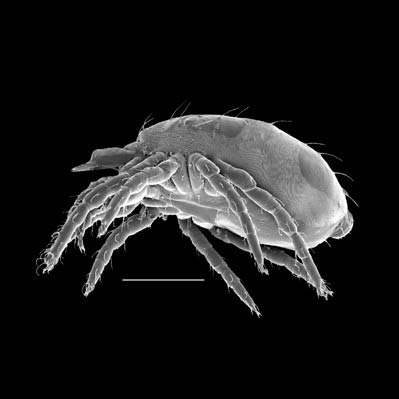
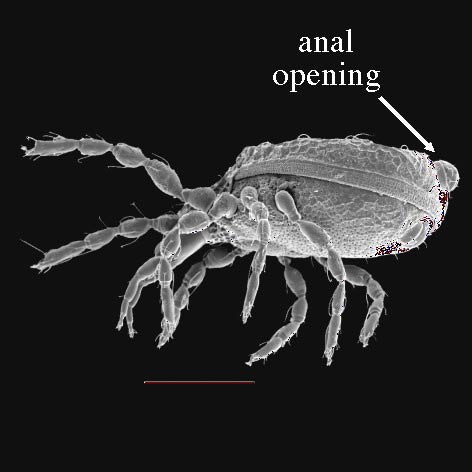
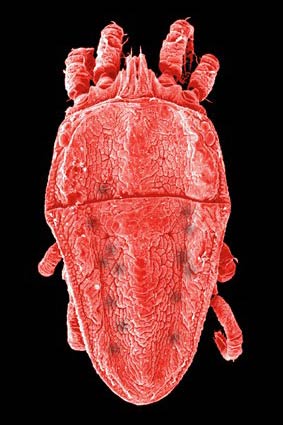
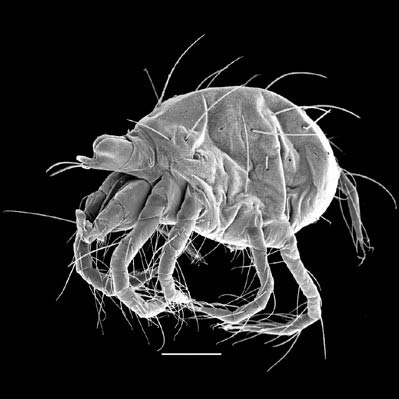
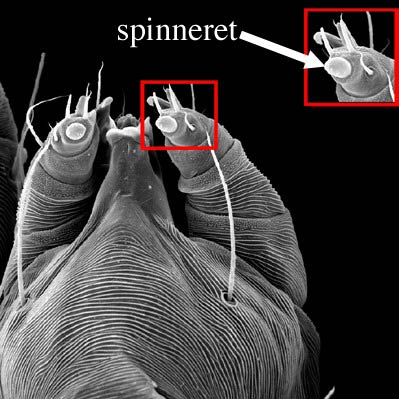
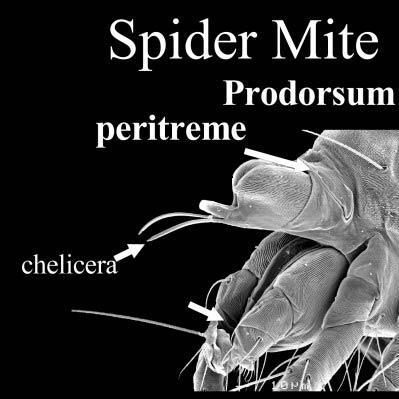
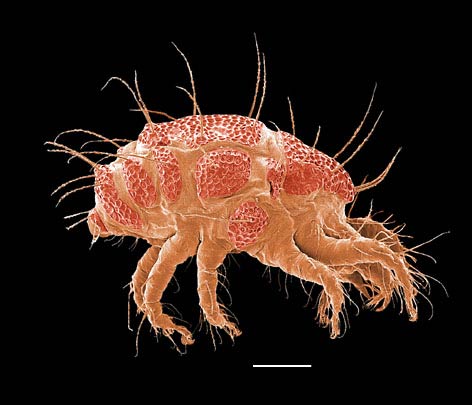
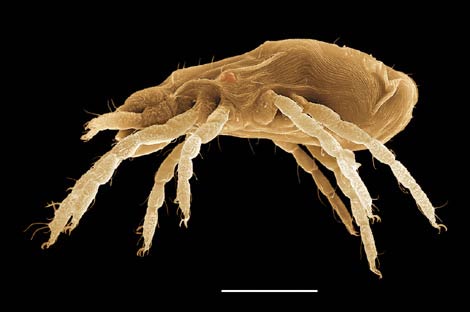
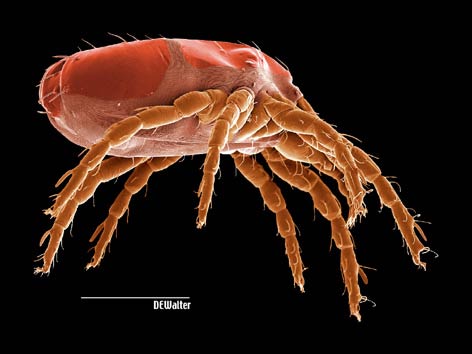
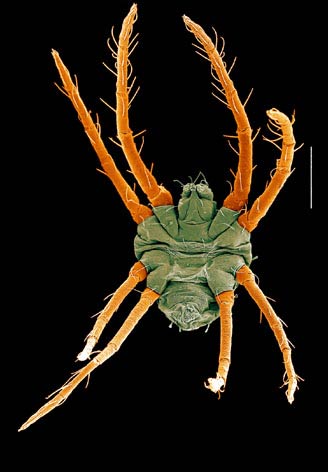
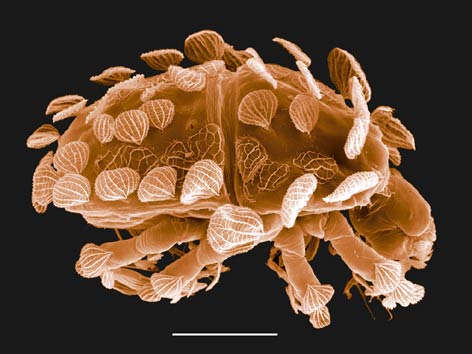
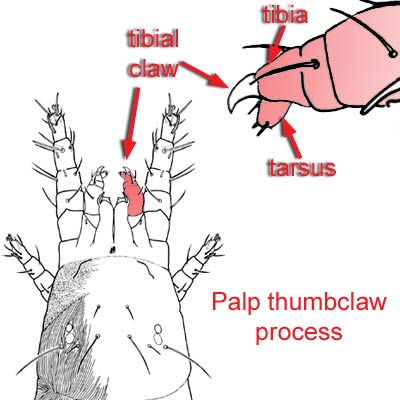
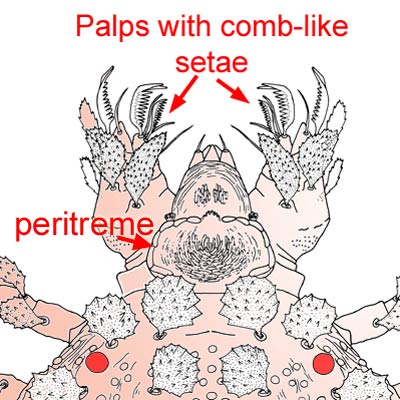
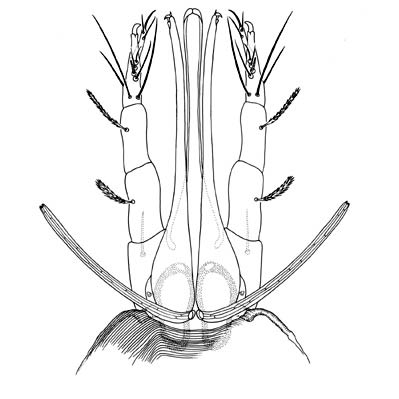
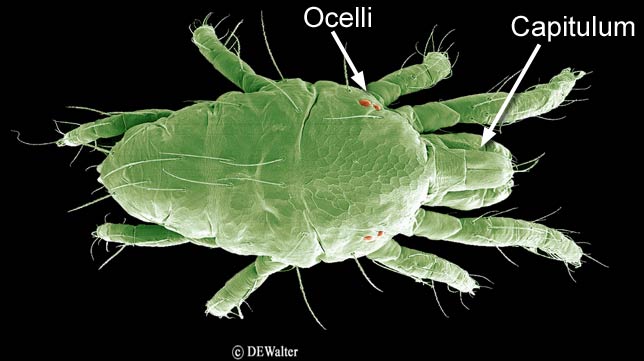
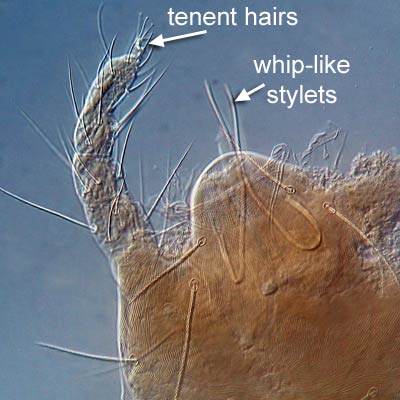
Raphignathina are small to medium in size; most species soft-bodied, others with varying degrees of dorsal sclerotization; mostly white, red, yellow, or green in color. Cheliceral bases free, adnate, fused mesally into a stylophore (sometimes withdrawn into the body), or forming a gnathosomal capsule; chelicerae with fixed digit reduced and movable digit bladelike, needle-like, or whiplike. Peritremes, when present, often elaborate chambered structures on the dorsal surface of the prodorsum or chelicerae; naso absent; prodorsal trichobothria absent; eye lenses usually present. Palps 4–5 segmented; usually with one or more claw-like setae on the palp tibia and with a thumb- or button-like subterminal palp tarsus. Body setae range from short and sparse, to long and barbed, to dentritic, to plate-like. Leg tarsi usually with tenent hairs on claws or empodium. Genital papillae absent; males with an intromittent aedeagus.
Similar taxa
Anystides and Eupodides usually have genital papillae and prodorsal trichobothria, both of which are lacking in the Raphignathina.
Ecology and distribution
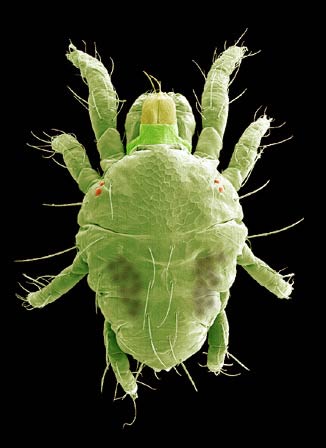
The Raphignathoidea is composed of several families of predatory and herbivorous mites, and are very common in soil, moss and on foliage. The Stigmaeidae are the most ecologically diverse, acting as predators in leaf litter and in trees, and herbivores in moss. Barbutiidae, Caligonellidae, Camerobiidae, Cryptognathidae, Dasythyreidae, Eupalopsellidae and Raphignathidae are frequently encountered in the drier soil microhabitats (e.g., dry soil, bark, moss). Homocaligidae, on the other hand, appear restricted to semi-aquatic habitats. Most families of Cheyletoidea are parasites that are unlikely to turn up in soil samples. The exception is Cheyletidae, which includes many free-living predators inhabiting litter, soil, tree bark, foliage, as well as stored products and vertebrate nests. Myobiidae are fur parasites of rodents, insectivores and bats. The Tetranychoidea are plant-associated mites, and includes the infamous spider mites (Tetranychidae). Tetranychoid species that feed on grasses or pasture legumes may occasionally appear in soil samples.
References
- Beard et al. 2003Beard et al. 2003:
Beard JJ, Walter DE, Allsopp P. 2003. Spider mites of sugarcane in Australia: A review of grass-feeding Oligonychus Berlese (Acari: Prostigmata: Tetranychidae) with the description of four new species. Australian Journal of Entomology 42: 51–78.
- Bolland et al. 1998Bolland et al. 1998:
Bolland HR, Gutierrez J, Flechtmann CHW. 1998. World catalogue of the spider mite family (Acari: Tetranychidae). Brill, Leiden.
- Evans et al. 1993Evans et al. 1993:
Evans GA, Cromroy HL, Ochoa R. 1993. The Tenuipalpidae of Honduras (Tenuipalpidae: Acari). Florida Entomologist 76: 126–155.
- Fan et al. 2003aFan et al. 2003a:
Fan Q-H, Walter DE, Proctor HC. 2003a. A review of the family Barbutiidae (Acari: Raphignathoidea) with the description of two new species from Australia. Systematic and Applied Acarology 8: 107–130.
- Fan et al. 2003bFan et al. 2003b:
Fan Q-H, Walter DE, Proctor HC. 2003b. A review of the genus Ledermuelleriopsis Willmann (Acari: Prostigmata: Stigmaeidae). Invertebrate Systematics 17: 1–24.
- Gerson and Walter 1998Gerson and Walter 1998:
Gerson U, Walter DE. 1998. The transfer of Mecognatha Wood from the Stigmaeidae to Mecognathidae, n. fam., a new synonymy, and a key to the families of the Raphignathoidea (Acari: Prostigmata). Systematic and Applied Acarology 3: 145–147.
- Helle and Sabelis 1985Helle and Sabelis 1985:
Helle W and Sabelis MW, eds. 1985. Spider mites: Their biology, natural enemies, and control. World Crop Pests, Vol. 1A. Elsevier, New York.
- Hislop and Jeppson 1976Hislop and Jeppson 1976:
Hislop RG, Jeppson LR. 1976. Morphology of the mouthparts of several species of phytophagous mites. Annals of the Entomological Society of America 69: 1125–1135.
- Jeppson et al. 1975Jeppson et al. 1975:
Jeppson LR, Keifer HH, Baker EW. 1975. Mites injurious to economic plants. University of California Press, Berkeley.
- Kethley 1982cKethley 1982c:
Kethley JB. 1982c. Acariformes. pp. 142–145. In: Parker SP, ed. Synopsis and classification of living organisms, Vol. 2. McGraw-Hill, New York.
- Kethley 1990aKethley 1990a:
Kethley JB. 1990a. Acarina: Prostigmata (Actinedida). pp. 667–756. In: Dindal DL, ed. Soil biology guide. John Wiley & Sons, Brisbane.
- Krantz 1978Krantz 1978:
Krantz GW. 1978. A manual of acarology [2nd ed.]. Oregon State University Book Stores, Corvallis.
- Luxton 1973Luxton 1973:
Luxton M. 1973. Mites of the genus Cryptognathus from Australia, New Zealand, and Niue Island. Acarologia 15: 53–75.
- Meyer 1979Meyer 1979:
Meyer MKPS. 1979. The Tenuipalpidae (Acari) of Africa with keys to the world fauna. Republic of South Africa, Department of Agricultural Technical Services, Entomology Memoir No. 50: 135 pp.
- Meyer and Ueckermann 1997Meyer and Ueckermann 1997:
Meyer MKPS, Ueckermann EA. 1997. A review of some species of the families Allochaetophoridae, Linotetranidae and Tuckerellidae (Acari: Tetranychoidea). International Journal of Acarology 23: 67–92.
- Ochoa et al. 1994Ochoa et al. 1994:
Ochoa R, Aguilar H, Vargas C. 1994. Phytophagous mites of Central America: An illustrated guide. CATIE, Turrialba, Costa Rica.
- Walter and Gerson 1998Walter and Gerson 1998:
Walter DE, Gerson U. 1998. Dasythyreidae, new family, and Xanthodasythyreus n. g. (Acari: Prostigmata: Raphignathoidea) from Australia. International Journal of Acarology 24: 189–197.
- Wood 1967Wood 1967:
Wood TG. 1967. New Zealand mites of the family Stigmaeidae (Acari, Prostigmata). Transactions of the Royal Society of New Zealand, Zoology 9 (9): 93–139.
- Wood 1969Wood 1969:
Wood TG. 1969. The Homocaligidae, a new family of mites (Acari: Raphignathoidea), including a description of a new species from Malaya and the British Solomon Islands. Acarologia 11: 711–729.