test
Anystina van der Hammen, 1972
Superorder Acariformes » Order Trombidiformes » Suborder Prostigmata » Infraorder Anystina
hyporders: Anystae, Parasitengona
whirligig mites, footballers, anystids, caeculids, red velvet mites, water mites, scrub itch mites, chiggers
high
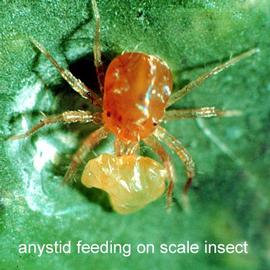
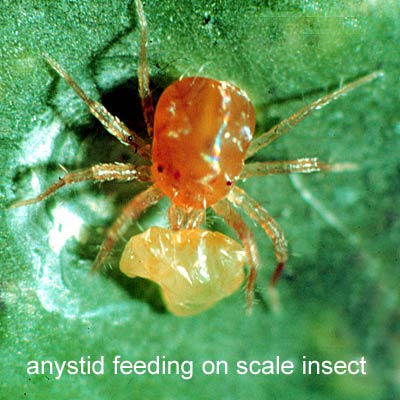
General predators used in biological control occur in the Anystidae and some rarely bite people. Most Parasitengona are parasitic as larvae on insects, but Trombiculoidea attack vertebrates and may cause serious harm to livestock and wildlife through their feeding. Larval trombiculoids (chiggers) also attack people causing a nasty, but transient dermatitis (scrub itch) and may transmit rickettsia that cause scrub typhus.
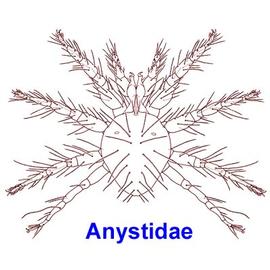
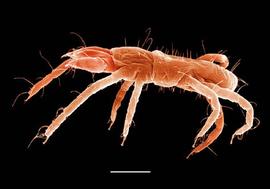
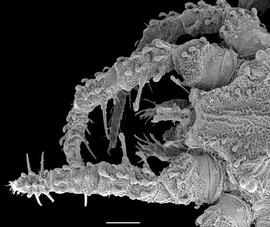
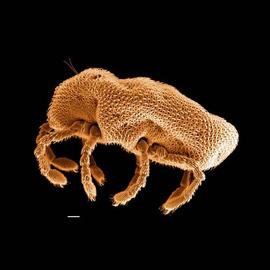
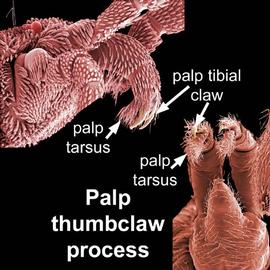
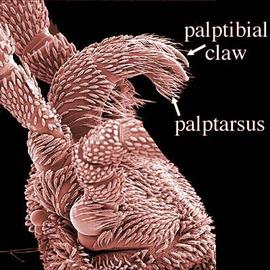
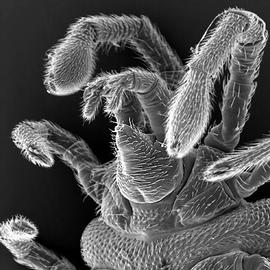
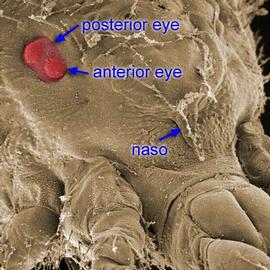
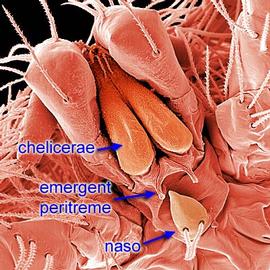
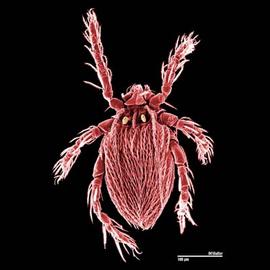
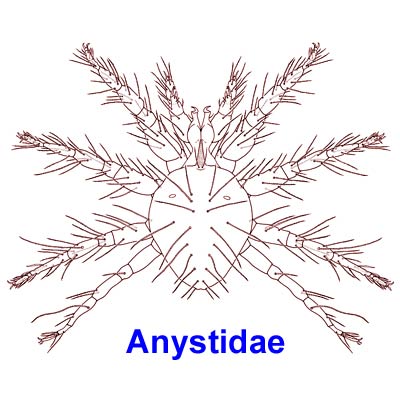
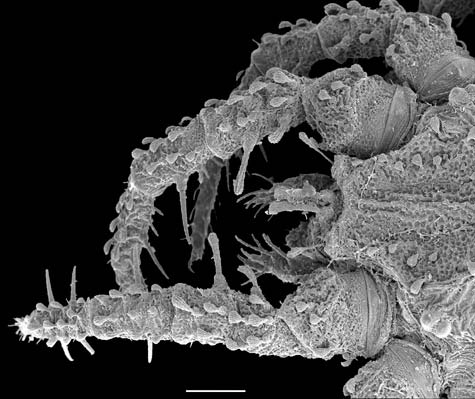
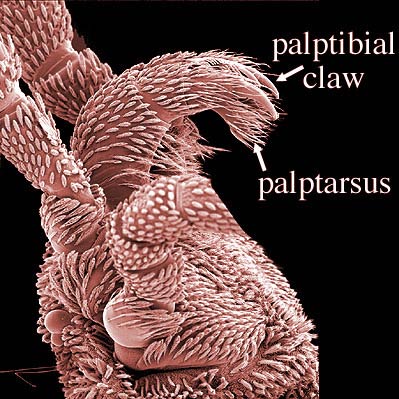
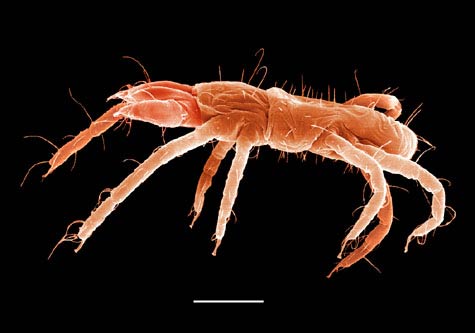
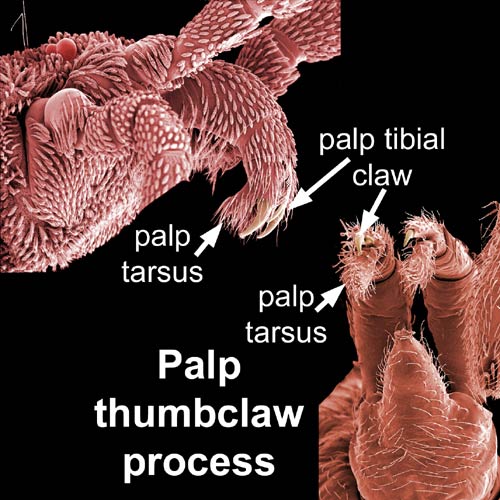
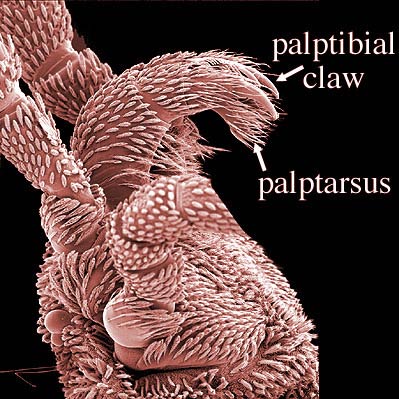
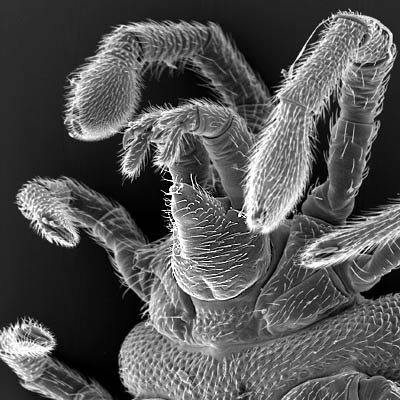
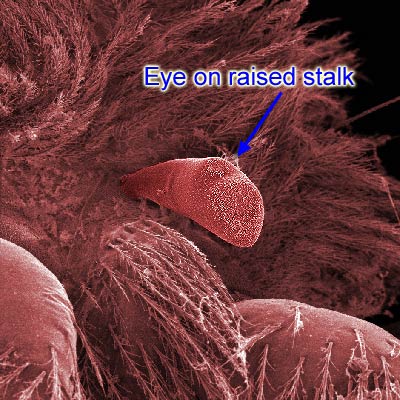
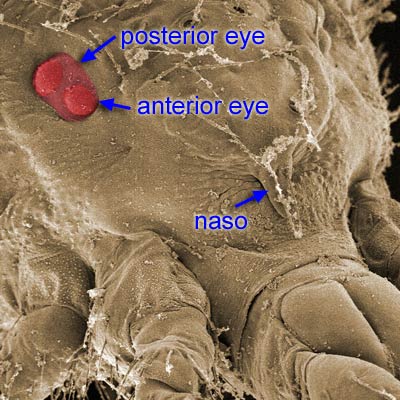
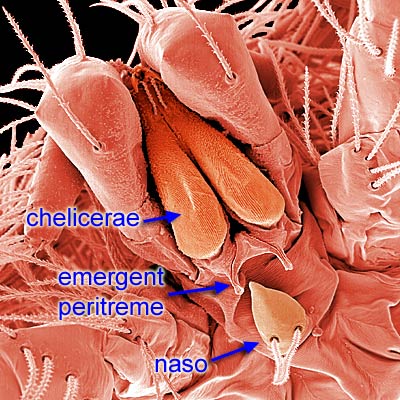
Anystina are small to large, subspherical to elongate mites with soft to heavily sclerotized bodies; purple, red, pink or brown in color. Cheliceral bases separate; fixed digit of chelicera reduced or absent, movable digit usually short and hooked. Palps usually raptorial with a well-developed claw-like seta on the tibia; development of the palp tarsus ranges from subterminal and thumb-like or button-like, to terminal, to absent. Peritremes well-developed and may be emergent or adherent to the prodorsal margin. Naso present or absent; one or two pairs of prodorsal trichobothria present; lateral eyes present or absent. Body setae range from short and scanty to long and hypertrichous; genital papillae usually present but often reduced in size and number.
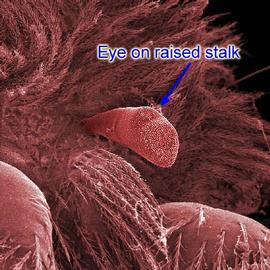
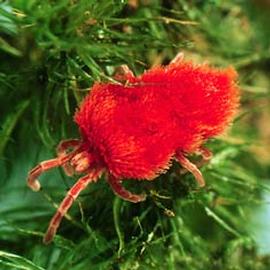
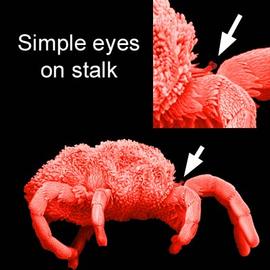
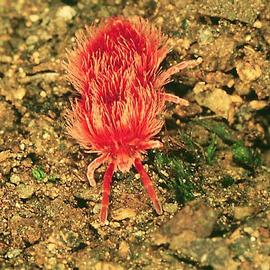
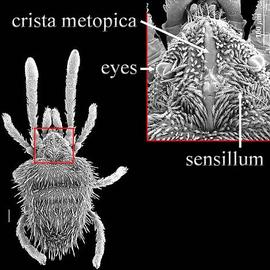
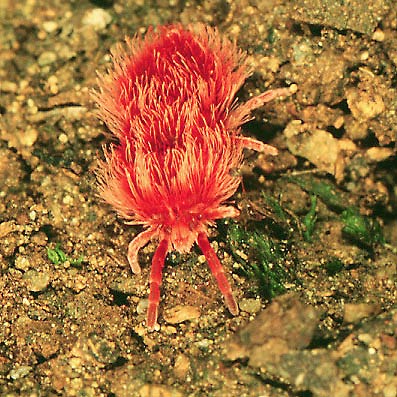
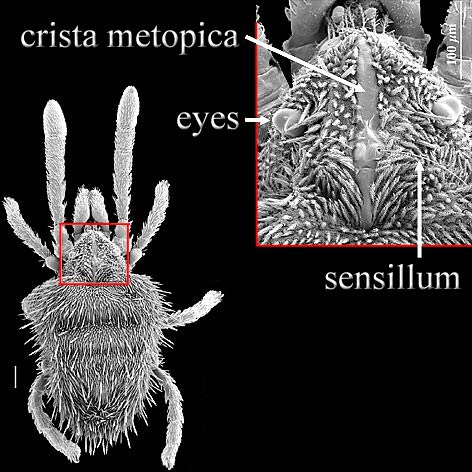
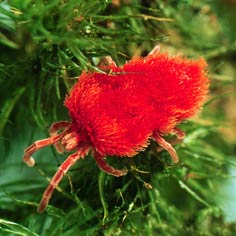
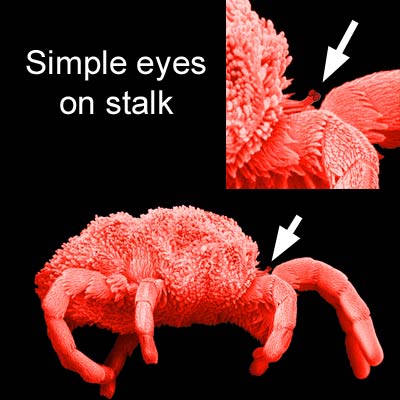
Parasitengona are medium to very large; soft-bodied to heavily sclerotized; primarily red or orange but can be any color. Terrestrial species often conspicuously hypertrichous, displaying a velvety red pelage. Cheliceral bases separate; fixed digit of chelicera absent, movable digit hooked or linear. Palps often raptorial with a well-developed claw-like seta on the tibia; development of the palp tarsus ranges from subterminal and thumblike, to terminal, to absent. Gnathosoma retractile in some species. Stigmata and peritremes, when present, between the cheliceral bases. Terrestrial species usually with one or two pairs of prodorsal trichobothria, often mounted on a linear sclerotised plate (the crista metopica); eye lenses almost always well-developed. Genital papillae usually present but variable in size and number.
Raphignathina lack prodorsal trichobothria.
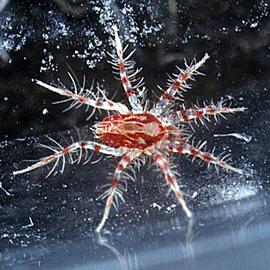
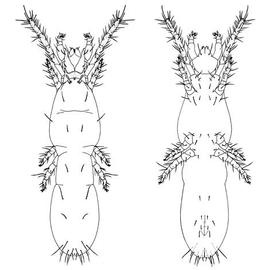
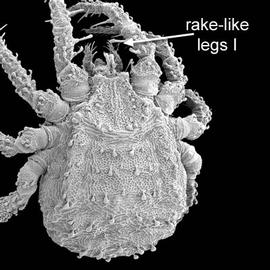
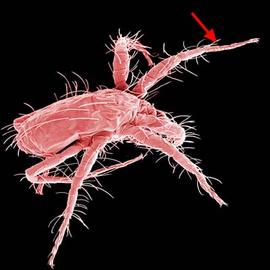
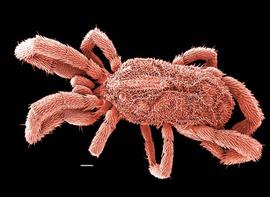
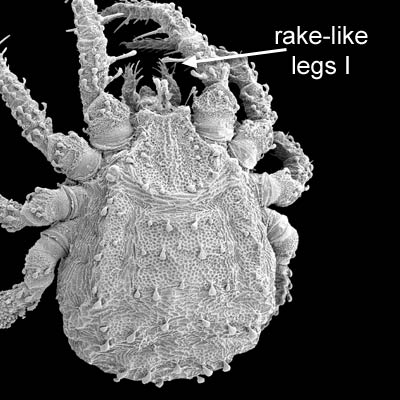
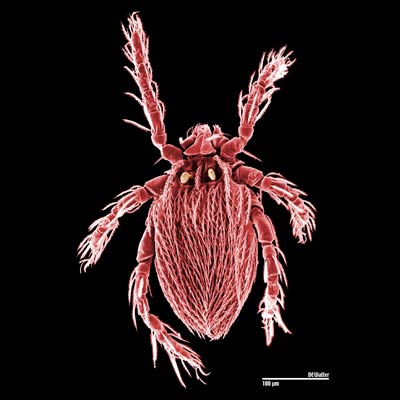
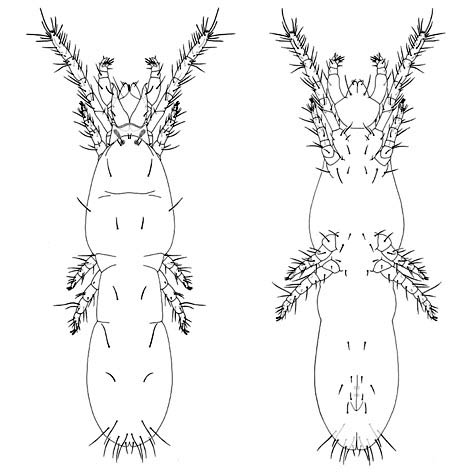
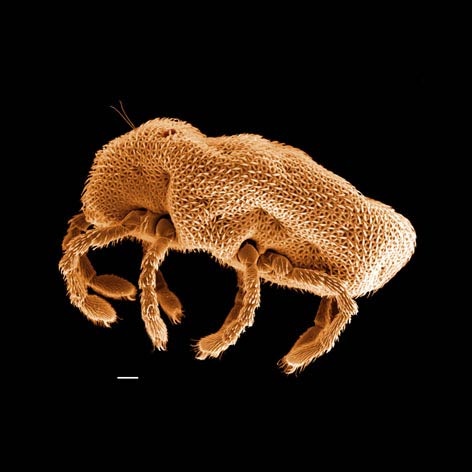
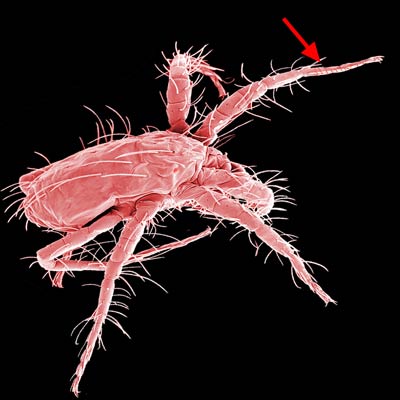
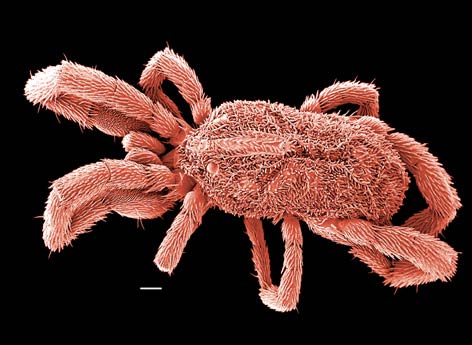
Most Anystides are thought to be predators of small arthropods. They are common in dry habitats, including deserts, where they are found in leaf litter and on rock surfaces, bark, and foliage. The Anystidae are known as 'whirligig mites' because of the rapid, spinning style of running exhibited by many species; some are useful biocontrol agents of mite and insect pests. The Caeculidae are also common in dry soils and in rocky habitats. These are distinctive sit-and-wait predators with massive spiny legs I; however, at least one species has been cultured on fungi. The Paratydeidae are small elongate mites with a distinctive idiosomal furrow posterior of legs IV. Their ecology is poorly understood. The same can be said of the less elongate Pseudocheylidae that are characteristic of dry soils.
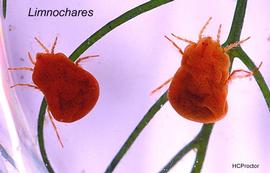
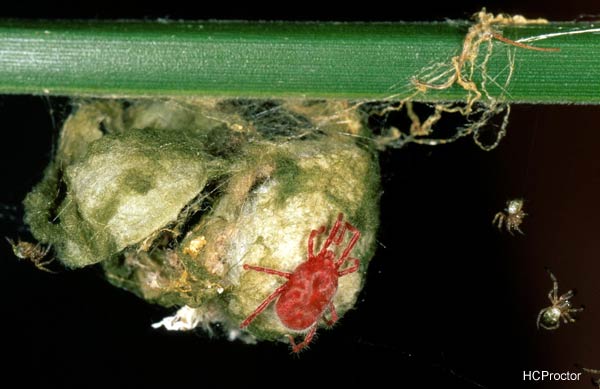
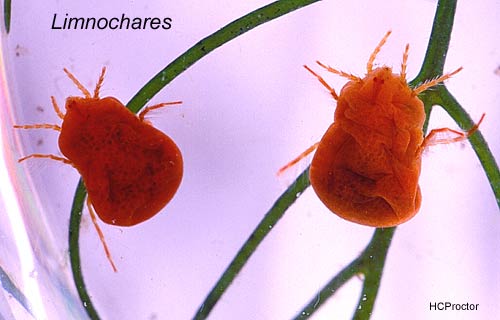
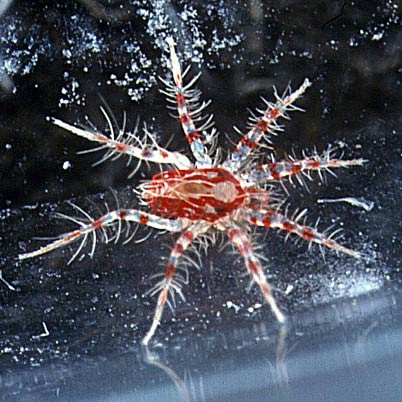
The Parasitengona are united on the basis of their complex life cycle. Larvae are parasites of invertebrates or vertebrates and are usually heteromorphic to the nymphal and adult stages. The predatory deutonymphal stage takes place in between the inactive pupa-like proto- and tritonymphal stages. Most postlarval Parasitengona are predators of small invertebrates, particularly arthropods, but a few species are parasitic as adults. The majority of the described species belong to the Hydrachnidiae, or 'water mites'. The approximately 2,000 named species of terrestrial Parasitengona fall into two groups: the Erythraiae, which have chelicerae that can be retracted within the idiosoma; and the Trombidiae, which have non-retractable chelicerae. Members of both groups are often large (5–8 mm), bright red and furry, resulting in the common name 'velvet mites'. They are abundant and diverse inhabitants of leaf litter, moss, the upper layers of soil, and foliage. The families Leeuwenhoekiidae and Trombiculidae are the well known chiggers.
Author: David E. Walter
Content last updated Sept. 2006, unless indicated otherwise
Lucid key player updated Sept. 2025
idtools.org