test
Labidostommatina Krantz, 1978Krantz, 1978:
Krantz GW. 1978. A manual of acarology [2nd ed.]. Oregon State University Book Stores, Corvallis.
Superorder Acariformes » Order Trombidiformes » Suborder Prostigmata » Infraorder Labidostommatina
superfamily: Labidostommatoidea
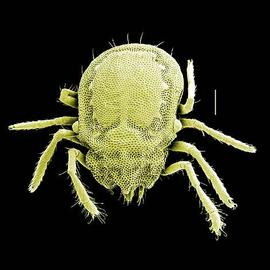
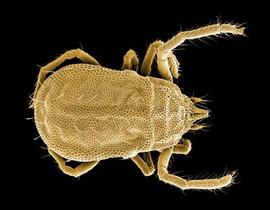
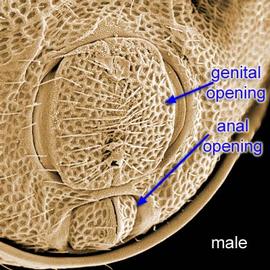
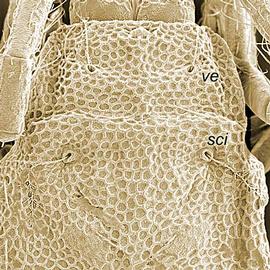
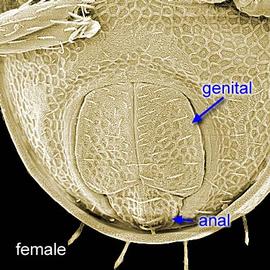
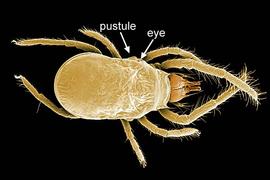
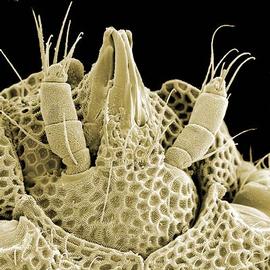
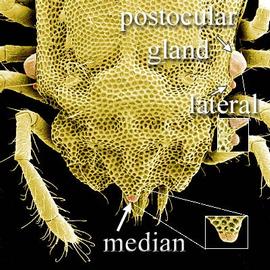
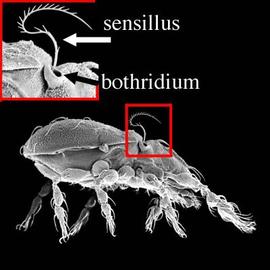
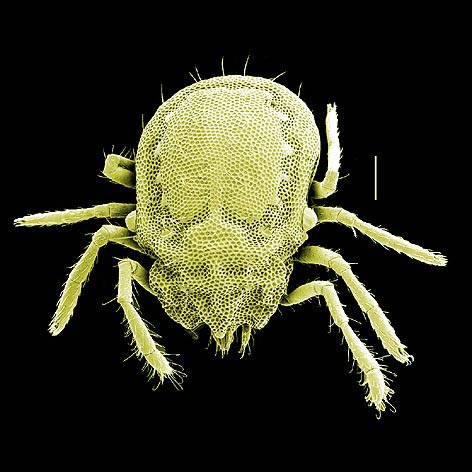
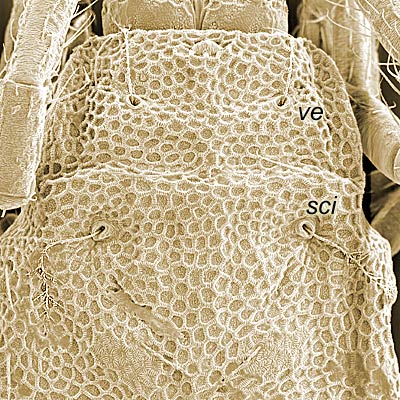
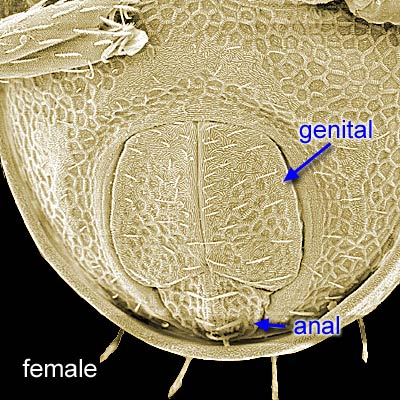
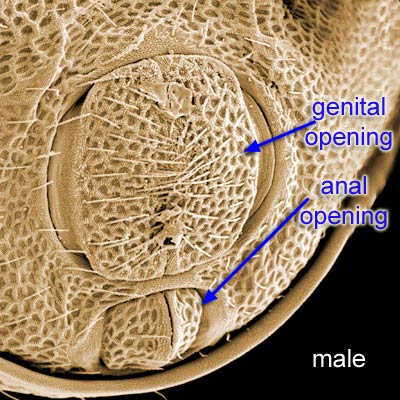
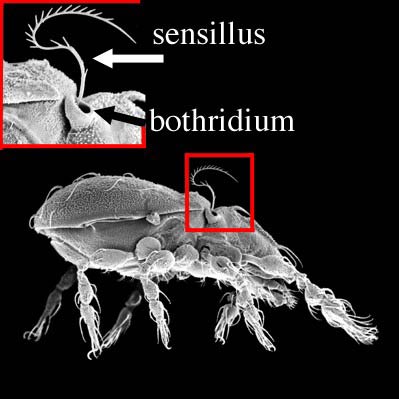
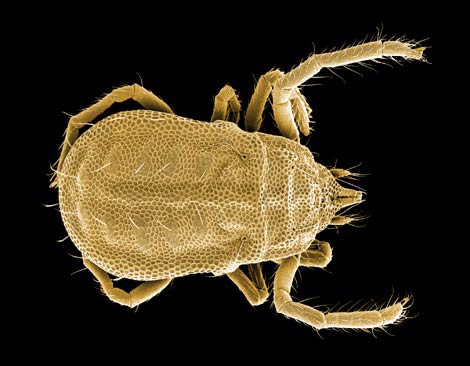
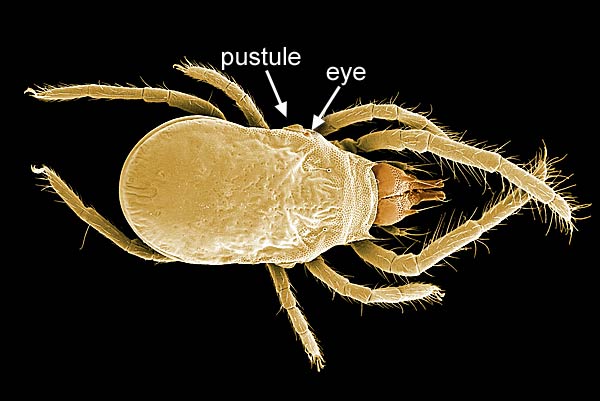
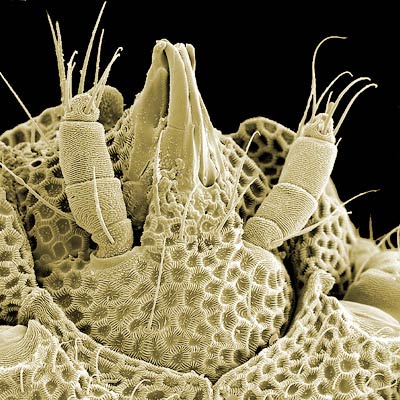
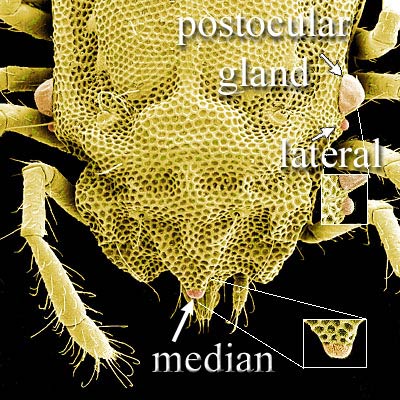
Medium to large-bodied; heavily sclerotized with a single holodorsal shield; green or yellow in color. Body holoid, coxal fields expanded and contiguous, forming a ventral 'cross-hatch' pattern. Dorso-sejugal furrow absent. Chelicerae astegasime, robust and strongly chelate, bases separate; stigmatal openings between cheliceral bases; peritremes absent. Palps 4-segmented, linear, lacking a thumb-claw complex. Two pairs of prodorsal trichobothria; median and lateral eyes present; eye-like postocular pustules present in some species. Body setae short and sparse; 2 pairs of genital papillae in adults. Female genital and anal openings contiguous; male genital and anal openings separate.
Oribatida have only a single pair of prodorsal trichobothria.
Labidostommatid mites are striking, morphologically distinctive animals. They are relatively common in moist forest litter and on rough tree bark. They also inhabit mosses and lichens. These mites are ambush or stalking predators of small arthropods. They walk about on their hind three pairs of legs and use legs I to sense and capture prey.
Author: David E. Walter
Content last updated Sept. 2006, unless indicated otherwise
Lucid key player updated Sept. 2025
idtools.org