test
Astigmata Canestrini, 1891
Superorder Acariformes » Order Sarcoptiformes » Suborder Oribatida » Infraorder Desmonomata » Hyporder Astigmata
acarids, astigmatids, dust mites, tyroglyphids, cheese mites, grain mites, fur mites, feather mites, mange mites, scab mites, scabies, scaly leg mites, grocer's itch, lemon-scented mites
high
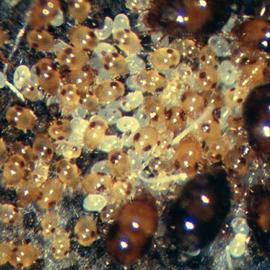
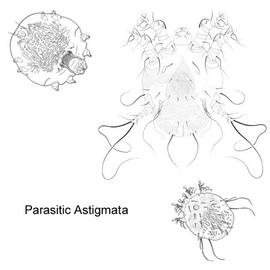
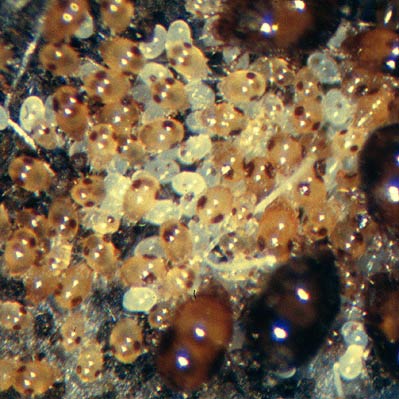
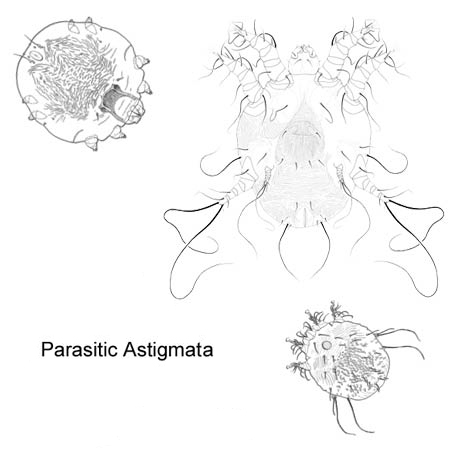
The Astigmatina contains many species of concern that are pests in homes (house dust, furniture, food) and stored products. These products are directly damaged by mite feeding and indirectly by the dispersal of microbial propagules. Additionally, astigmatans are major sources of allergens and significant contributors to asthma and other allergic reactions. Astigmatans are also significant parasites of vertebrates, including species that cause mange in livestock, pets and wildlife. Scabies is a significant disease in people and sarcoptic mange a major problem with livestock, pets and wildlife. Insects, especially those that build nests or inhabit logs, have a host of astigmatan associates that may be significant if found on insects imported as biocontrol agents, pets, or pollinating agents. A few species of Acaridae are minor pests of seedling crops, and one genus, Heimsarcoptes, contains useful predators of scale insects.
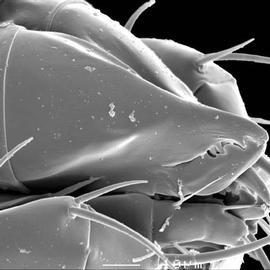
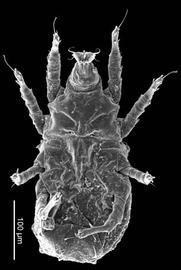
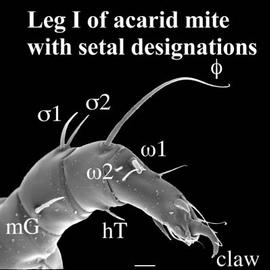
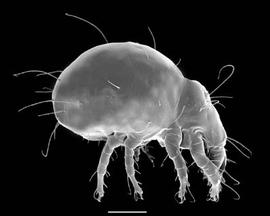
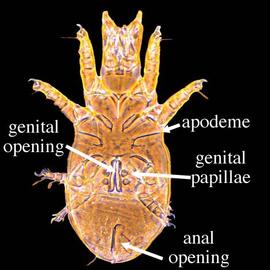
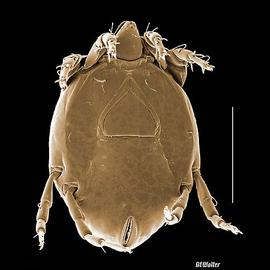
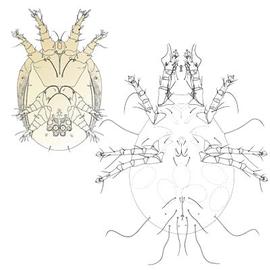
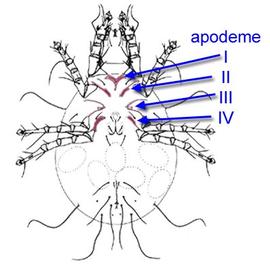
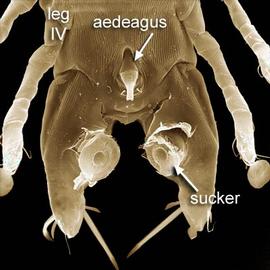
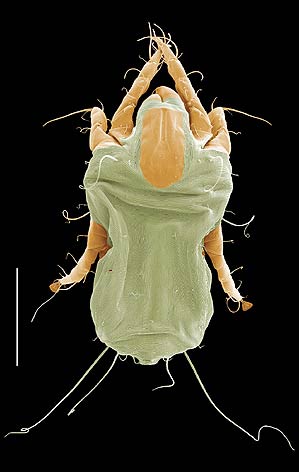
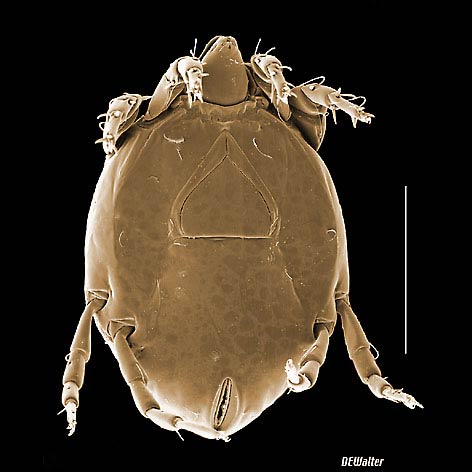
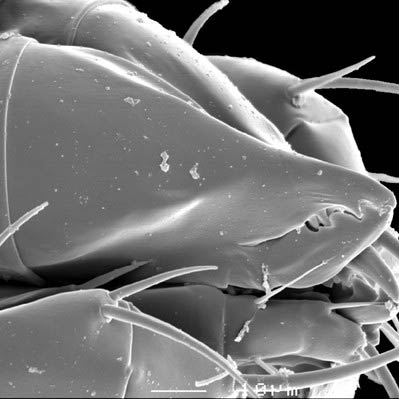
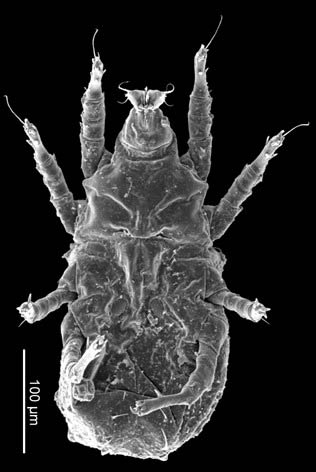
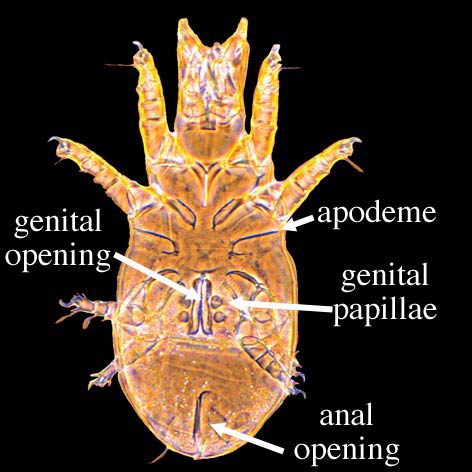
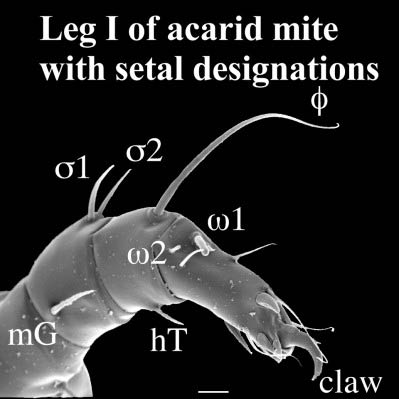
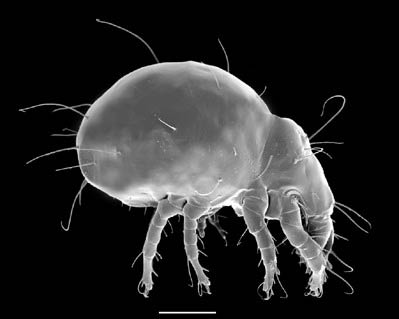
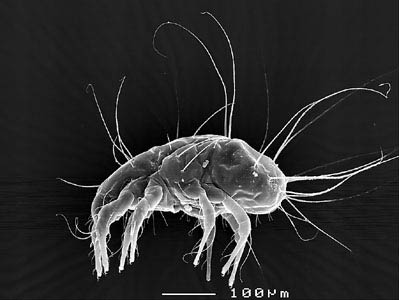
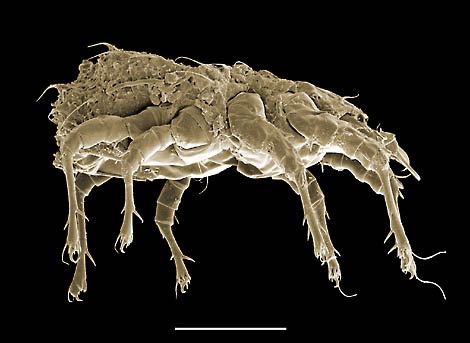
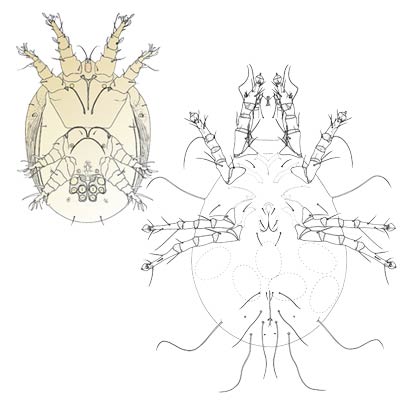
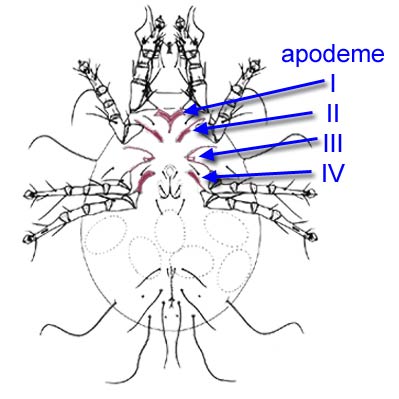
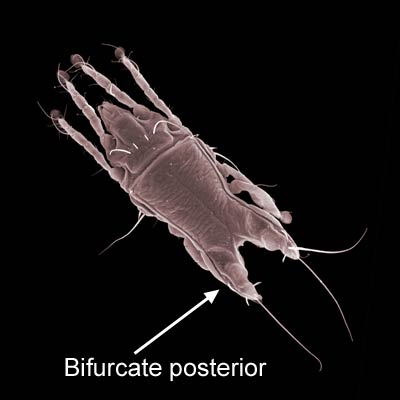
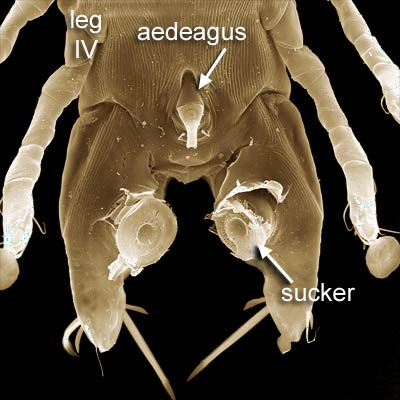
Very small (0.15 mm long) to large (2 mm) mites without stigmatal openings or peritremes; gnathosoma usually exposed, cheliceral bases not covered by sclerotized ring; palps with 1–2 free segments, without palp apotele; subcapitulum without median groove, rutella (pseudorutella) chisel-like to obscure; tritosternum absent; coxae fused to body and reduced to internal sclerotized elements (apodemes); chelicerae 2-segmented; without prodorsal trichobothria; intercoxal region without sternal and genital shield elements; development: hexapod larva and 2–3 octopod nymphal stages (protonymph, +/- deutonymph, tritonymph); when present, the deutonymph is heteromorphic: usually non-feeding with a reduced gnathosoma and modified for phoresy, typically with a large ventral sucker plate or pair of claspers; genital opening develops gradually with 1 pair of genital papillae added in the protonymph and 2 pairs in the tritonymph and adult; males with a usually postcoxal aedeagus, chelicerae not modified for sperm transfer; female sperm receiving structure secondary, with bursa copulatrix.
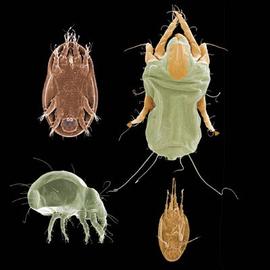
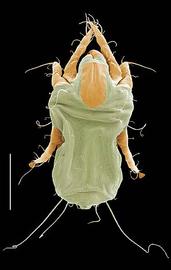
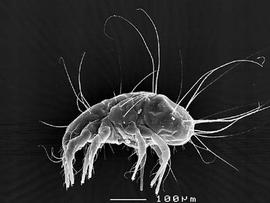
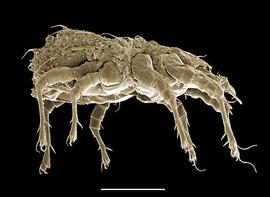
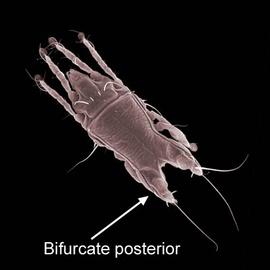
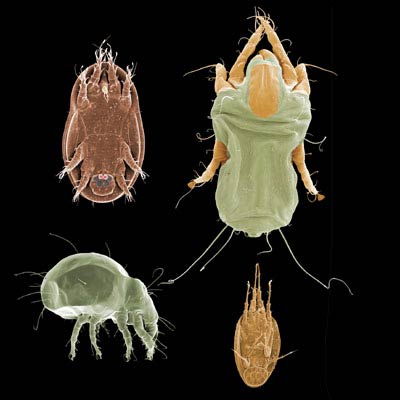
Most astigmatans are soft-bodied, white to brownish acariform mites without prodorsal sensilla; sometimes tan and well sclerotized. Opisthosomal glands present, usually well developed; prodorsal trichobothria and pteromorphs absent. Chelicerae usually chelate-dentate, rarely whip-like (Histiostomatidae). Rutellum present and chisel-like, or absent. Genital papillae present (2 pairs) or transformed into ring-like organs (Histiostomatidae). Ovipore of female usually with inverted-V arrangement of sclerites, rarely with parasitoid arrangement (Fusacarus); insemination through a terminal pore. Males with a sclerotized aedeagus (penis).
Similar soft-bodied acariform mites in the Supercohorts Palaeosomatides and Parhyposomatides have prodorsal trichobothria.
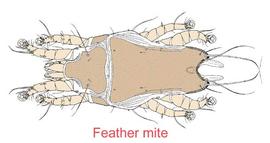
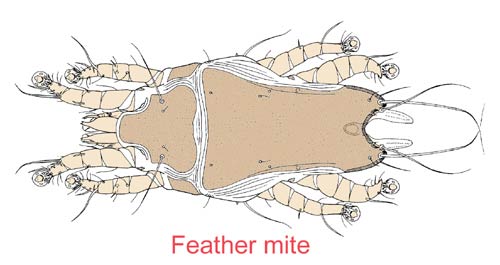
Astigmatina are primarily associated with nests, stored products, fungal sporocarps, and animals, but some families are free-living. Those associated with animals range from commensals (e.g., many feather mites) to severe parasites (e.g., mange mites), with at least a few taxa appearing to have mutualistic relationships to their hosts. Several families have representatives in wet, rotting vegetation, sap fluxes, and other aquatic habitats including treeholes, other phytoteles, and algal mats in freshwater and intertidal systems.

Using a dichotomous key to identify a mite specimen as Astigmata
Author: David E. Walter
Content last updated Sept. 2006, unless indicated otherwise
Lucid key player updated Sept. 2025
idtools.org