Nothrina

Major mite taxa

test

Taxonomy

updated 2025

Name

Nothrina van der Hammen, 1982

Classification

Superorder Acariformes » Order Sarcoptiformes » Suborder Oribatida » Infraorder Desmonomata » Hyporder Nothrina

Children

superfamily: Crotonioidea

Common names

nothroid oribatid mites

Probability of encounter

low

Quarantine importance

Members of the Cohort Nothrina are not of great quarantine importance. Some species are aquatic or subaquatic and may be found in aquaria, sphagnum, and similar products. Others are common in wet forest litter, mosses, and in lichens and other epiphytes on trees and shrubs.

Diagnosis

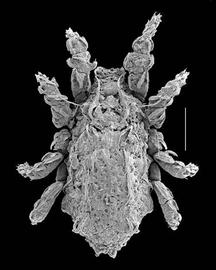
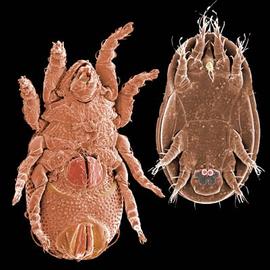
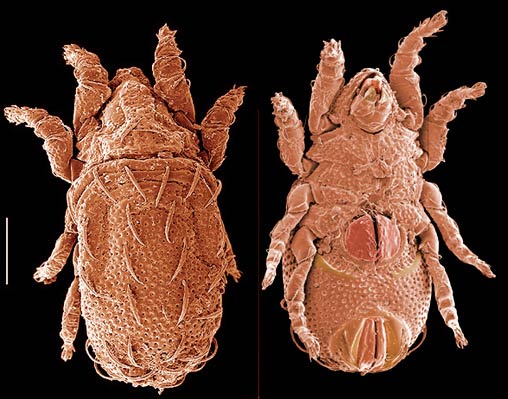
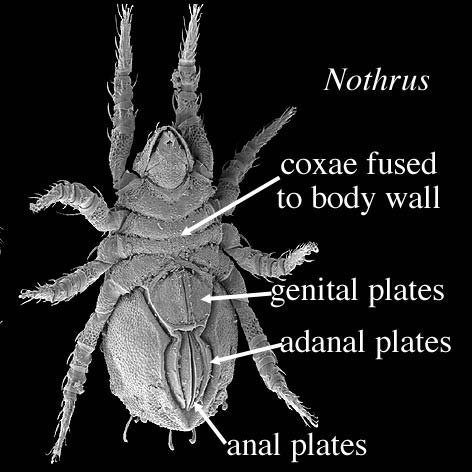
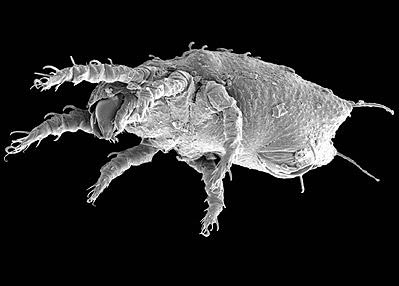
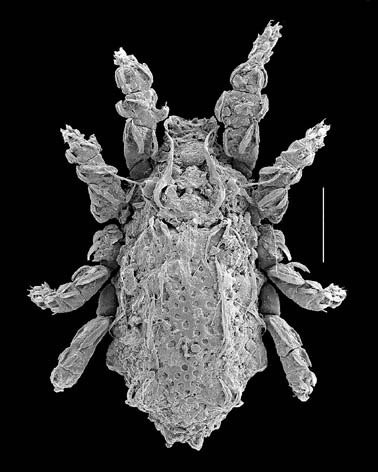
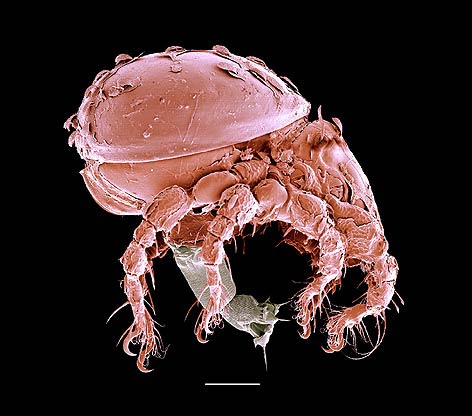
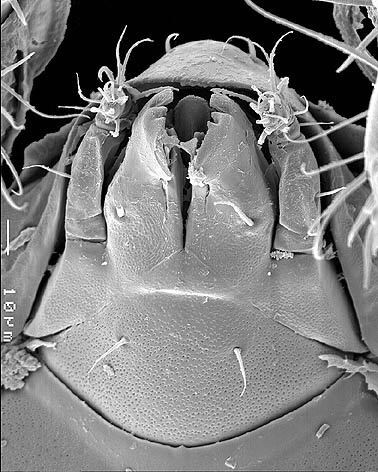
Black, brown, reddish, beige, yellowish to pale holoid oribatid mites with the capitulum withdrawn within a camerostome. Ventral plate sometimes incised (Nanhermanniidae); discrete aggenital and adanal plates sometimes present; 3 pairs of genital papillae. Palps with 2–5 free segments. Opisthosomal glands present.  Prodorsal trichobothria lost in some aquatic forms.

Similar taxa

see Mixonomatides

Ecology and distribution

Nothrids, nanhermanniids, and some camisiids (Platynothrus) are characteristic of fairly mesic to wet forest litter, mosses, and bogs. Other camisiids (Camisia) and crotonioids are more characteristic of dry litter, bark and other arboreal habitats. Tryhypochthoniids can be found in dry (Tryhypochthonius, Archegozetes) or wet litter, and in fully aquatic habitats (Mucronothrus). Malaconothrids tend to be found in wet litter, moss and streams. Except in the Crotoniidae and Hermanniidae, most desmonomates are all female parthenogens. Hermanniids should probably be considered early derivative Brachypylina.

References

  • Colloff 1993Colloff 1993:
    Colloff M. 1993. A taxonomic revision of the oribatid mite genus Camisia (Acari: Oribatida). Journal of Natural History 27: 1325–1408.
  • Colloff and Halliday 1998Colloff and Halliday 1998:
    Colloff M, Halliday B. 1998. Oribatid mites: A catalogue of Australian genera and species. Monograph on Invertebrate Taxonomy, Vol. 6. CSIRO Publishing, Melbourne.
  • Gilyarov and Krivolutsky 1975Gilyarov and Krivolutsky 1975:
    Gilyarov MS, Krivolutsky DA, eds. 1975. Handbook for the identification of soil-inhabiting mites, Sarcoptiformes. Zoological Institute of the Academy of Sciences, Petrograd.
  • Hunt et al. 1998Hunt et al. 1998:
    Hunt GS, Norton RA, Kelly JPH, Colloff MJ, Lindsay SM, Dallwitz MJ, Walter DE. 1998. Oribatid Mites: An Interactive Glossary of Oribatid Mites, An Interactive Key to the Oribatid Mites of Australia [Intkey software and user guide on CD-ROM]. CSIRO Publishing, Collingwood.
  • Lee 1982Lee 1982:
    Lee DC. 1982. Sarcoptiformes (Acari) of South Australian soils. 3. Arthronotina (Cryptostigmata). Records of the South Australian Museum 18: 327–359.
  • Luxton 1985Luxton 1985:
    Luxton M. 1985. Cryptostigmata (Arachnida: Acari) - a concise review. Fauna of New Zealand 7: 1–106.
  • Luxton 1987Luxton 1987:
    Luxton M. 1987. New mites of the family Crotoniidae (Acari: Cryptostigmata) from northern Queensland. Acarologia 28: 381–388.
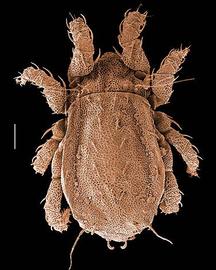
 Nothrus  (DEW)
Nothrus (DEW)
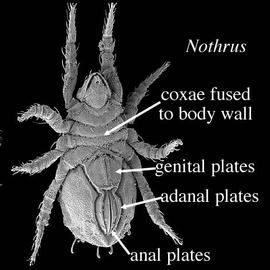
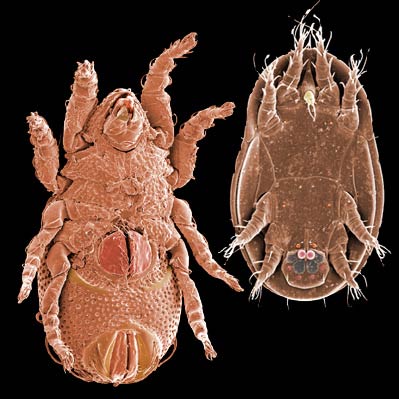
Adanal;  Nothrus  ventral (DEW)
Adanal; Nothrus ventral (DEW)
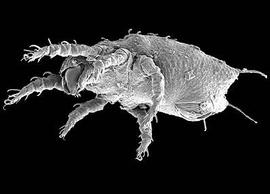
 Nothrus  larva (DEW)
Nothrus larva (DEW)
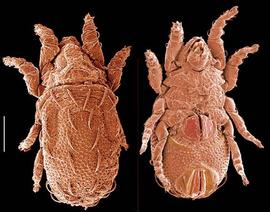
Holoid; Nanhermanniid (DEW)
 Masthermannia  (DEW)
Masthermannia (DEW)
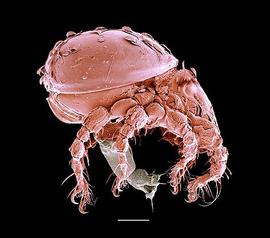
 Hermannia  with ovipositor (DEW)
Hermannia with ovipositor (DEW)
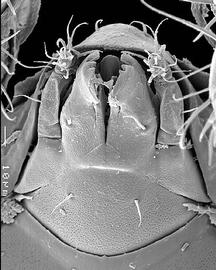
 Hermannia  stenarthic subcapitulum (DEW)
Hermannia stenarthic subcapitulum (DEW)
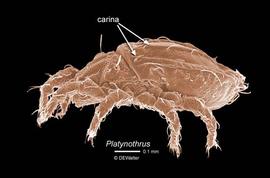
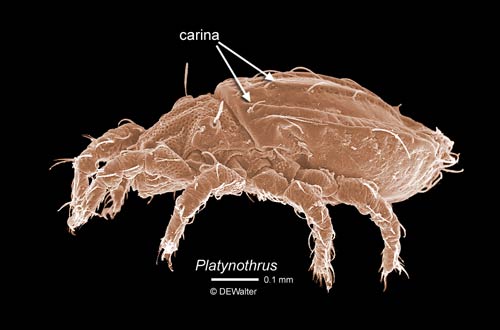
  Platynothrus  (DEW)
Platynothrus (DEW)
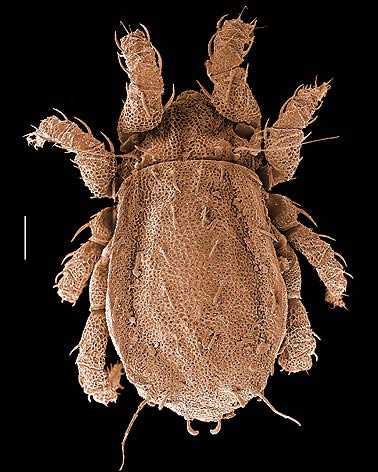
Holoid oribatid mites with the capitulum withdrawn within a camerostome