Major mite taxa
test
Taxonomy
Name
Enarthronota Grandjean, 1969
Children
superfamilies: Atopochthonioidea, Brachychthonioidea, Heterochthonioidea, Hypochthonioidea, Protoplophoroidea
Common names
enarthronote oribatid mites
Probability of encounter
low
Quarantine importance
No known quarantine importance. Most species are small to minute fungivores in mostly dry soils, including house dust and rarely stored products.
Diagnosis
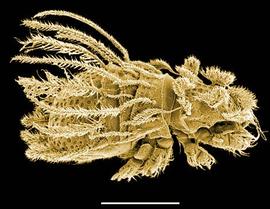
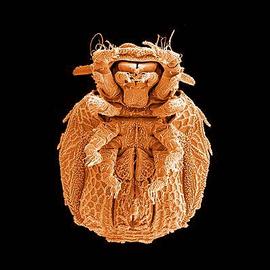
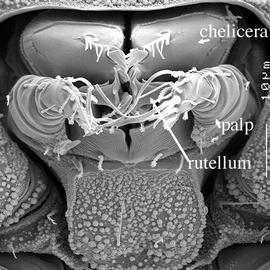
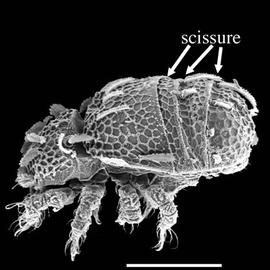
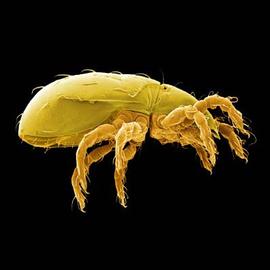
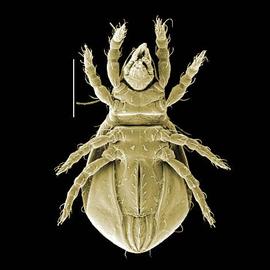
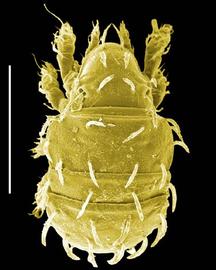
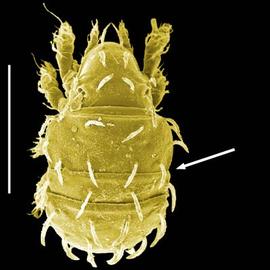
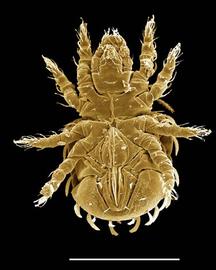
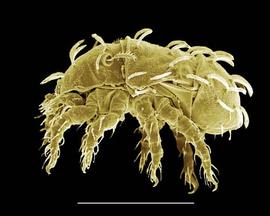
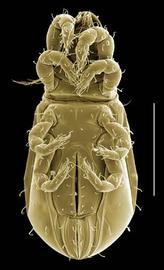
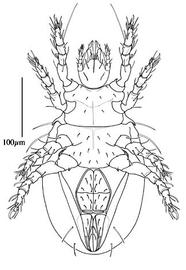
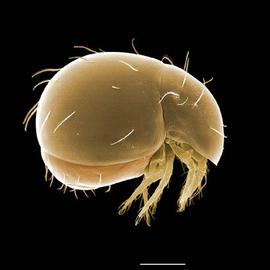
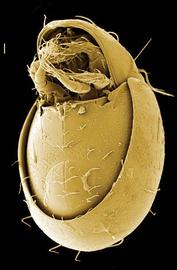
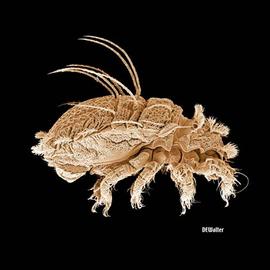
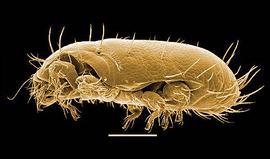
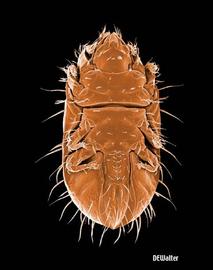
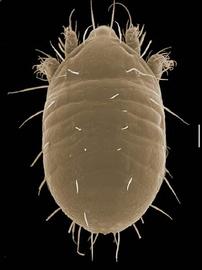
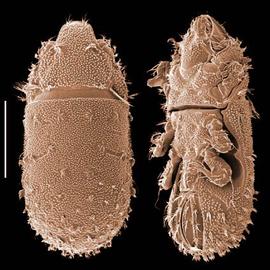
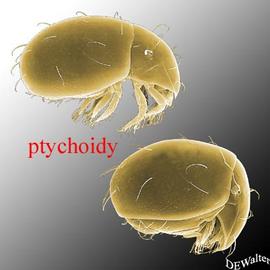
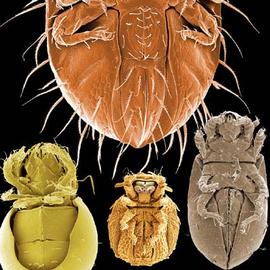
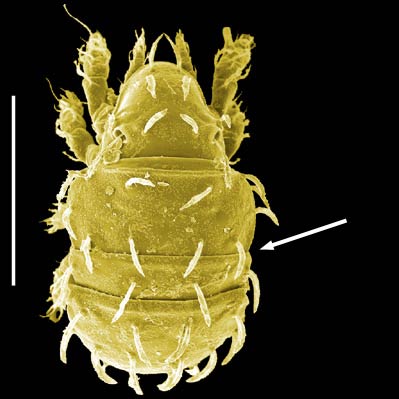
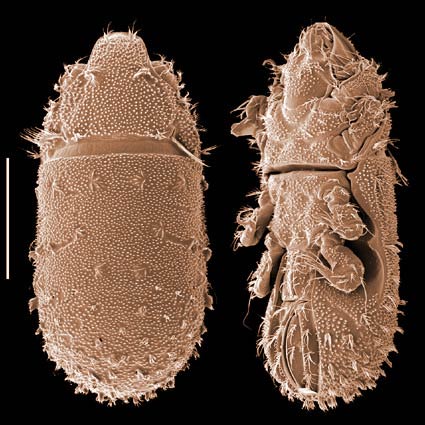
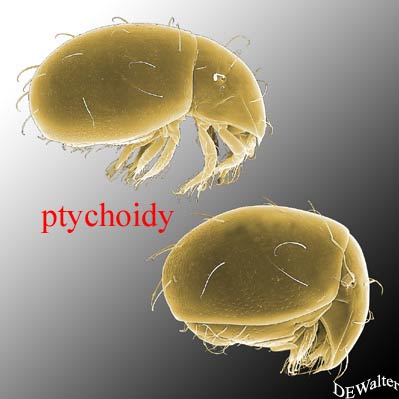
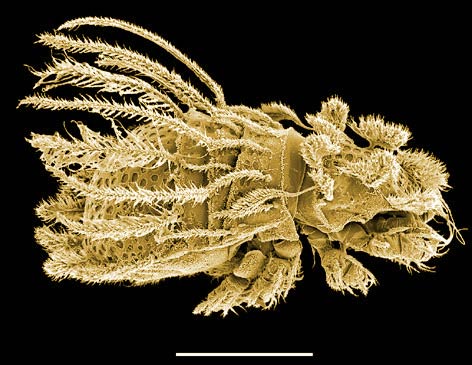
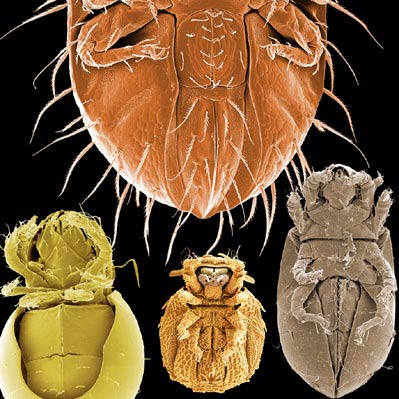
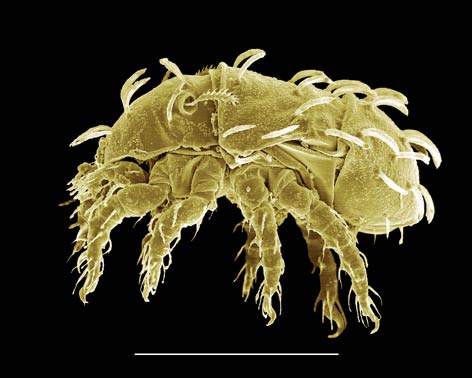
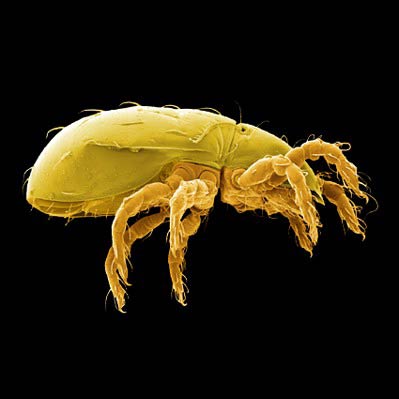
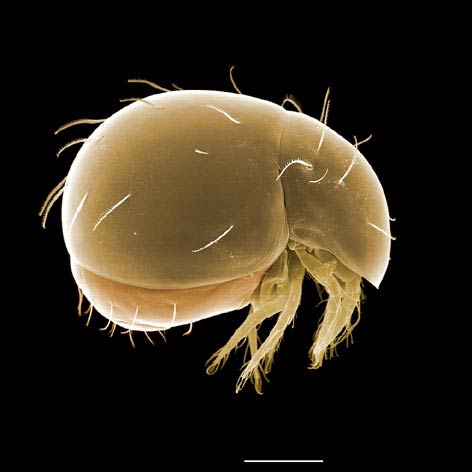
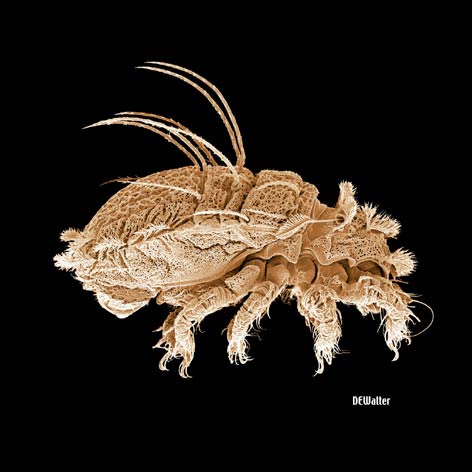
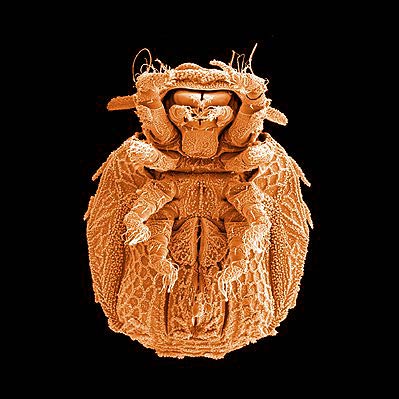
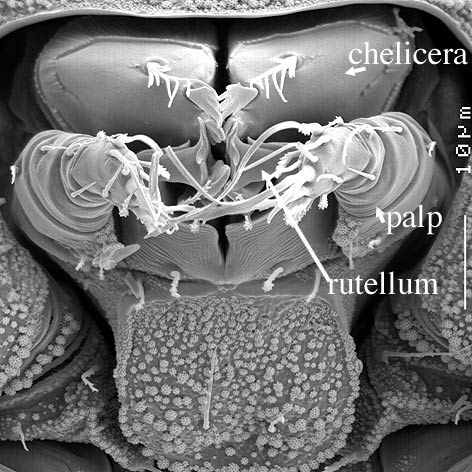
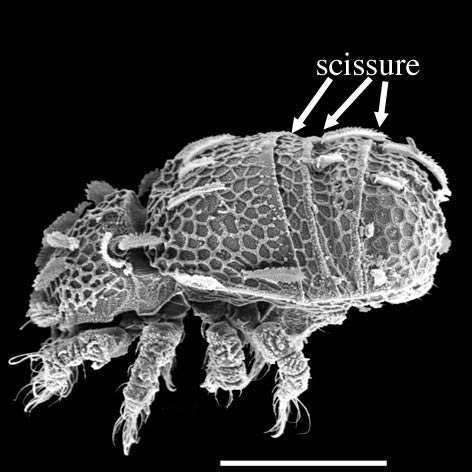
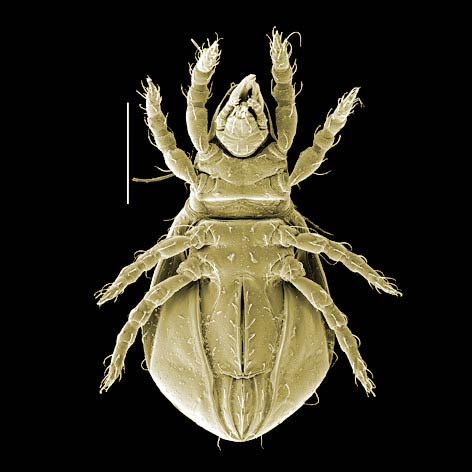
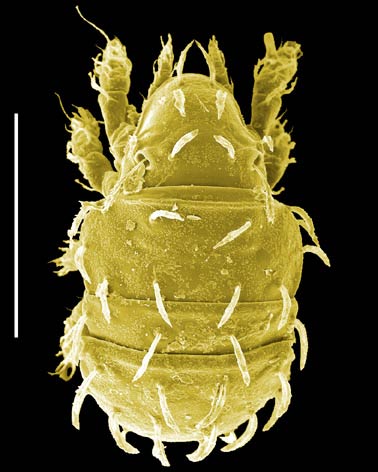
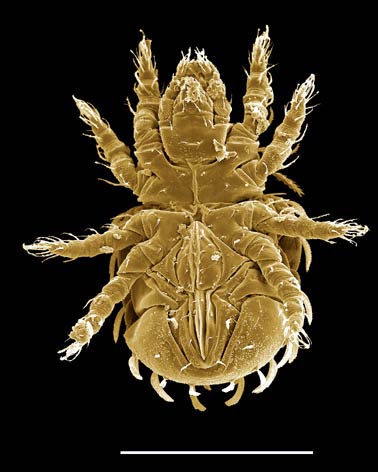
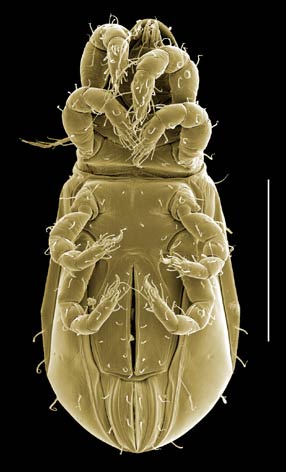
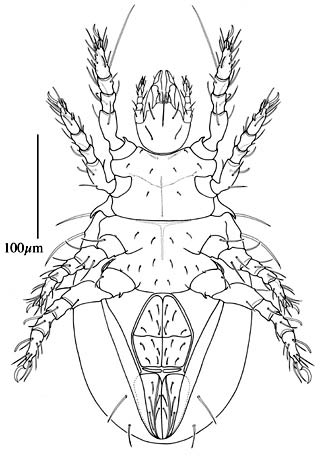
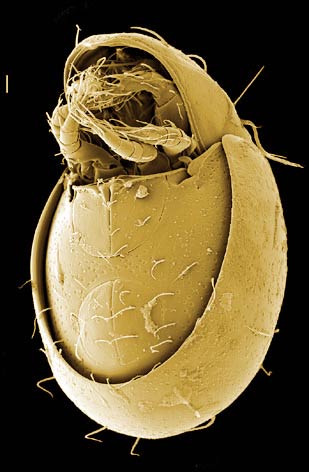
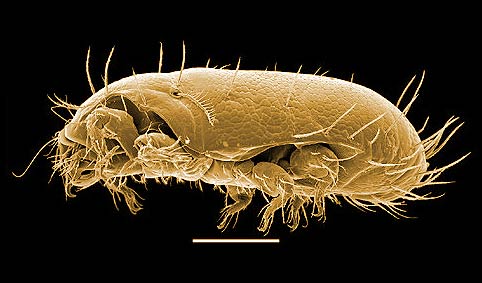
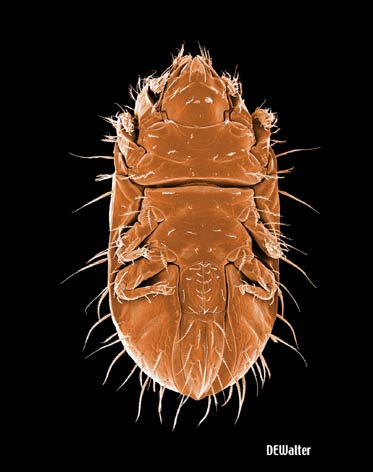
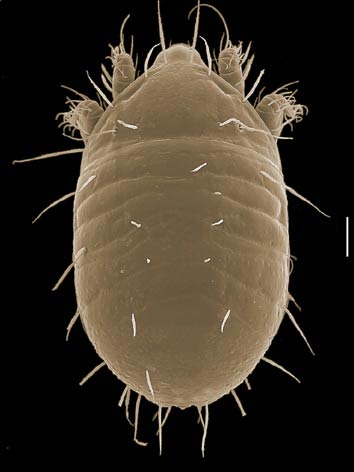
White to yellow, tan, brown, or rarely more brightly coloured armoured oribatid mites with 1–3 hysterosomal scissures, or their remnants, or pytchoidy. Pedofossae sometimes present. Bodies rectangular, elongate, oval or globular; opisthosomal glands absent. Setae ranging from setiform, to brush-like, to highly modified leaf-like shapes or ornate dendritic arrangements. Capitulum usually withdrawn into a camerostome; chelicerae sometimes visible from above; a pair of lateral eyes rarely present. Macropyline, 3 pairs of genital papillae.
Similar taxa
Some Endeostigmata somewhat resemble enarthronotes, but are soft-bodied and lack scissures (although remnants of primary segmentation may be present).
Ecology and distribution
Fossil enarthronotes are known from the Devonian. Extant taxa are found in most soil types, but are especially abundant in the drier soils and in mosses. Many species are all female parthenogens. The feeding ecology of this group is poorly understood, but many have highly modified chelicerae, cheliceral setae, and adoral setae. Brachychthonioids are found everywhere, usually in high diversity, feed on algae and other microbes, and are among the smallest of all oribatid mites. Hypochthonioids are generally dorsoventrally flattened, but Mesoplophoridae are globular, lack any scissures, and exhibit ptychoidy. Protoplophoroids range from poorly sclerotised endeostigmatan-like mites (e.g., Paralycus), to rather brachythonioid-like mites (e.g., Haplochthonius), to strongly ornamented mites with elongate erectile setae (e.g., Cosmochthonius), to light-bulb shaped sub-ptychoid mites (e.g., Sphaerochthonius), to fully ptychoid taxa (e.g., Protoplophora).
References
- Balogh and Balogh 1987bBalogh and Balogh 1987b:
Balogh J, Balogh P. 1987b. A new outline of the family Lohmanniidae Berlese, 1916 (Acari, Oribatei). Acta Zoologica Academiae Scientiarum Hungaricae 33: 327–398.
- Balogh and Mahunka 1983Balogh and Mahunka 1983:
Balogh J, Mahunka S. 1983. Primitive Oribatids of the Palaearctic Region. The Soil Mites of the World, Vol. 1. Elsevier, Amsterdam. 327 pp.
- Colloff and Halliday 1998Colloff and Halliday 1998:
Colloff M, Halliday B. 1998. Oribatid mites: A catalogue of Australian genera and species. Monograph on Invertebrate Taxonomy, Vol. 6. CSIRO Publishing, Melbourne.
- Gilyarov and Krivolutsky 1975Gilyarov and Krivolutsky 1975:
Gilyarov MS, Krivolutsky DA, eds. 1975. Handbook for the identification of soil-inhabiting mites, Sarcoptiformes. Zoological Institute of the Academy of Sciences, Petrograd.
- Hunt et al. 1998Hunt et al. 1998:
Hunt GS, Norton RA, Kelly JPH, Colloff MJ, Lindsay SM, Dallwitz MJ, Walter DE. 1998. Oribatid Mites: An Interactive Glossary of Oribatid Mites, An Interactive Key to the Oribatid Mites of Australia [Intkey software and user guide on CD-ROM]. CSIRO Publishing, Collingwood.
- Lee 1982Lee 1982:
Lee DC. 1982. Sarcoptiformes (Acari) of South Australian soils. 3. Arthronotina (Cryptostigmata). Records of the South Australian Museum 18: 327–359.
- Norton 1975Norton 1975:
Norton RA. 1975. Elliptochthoniidae, a new mite family (Acarina: Oribatei) from mineral soil in California. Journal of the New York Entomological Society 83: 209–216.
- Norton 1982Norton 1982:
Norton RA. 1982. Arborichthonius n. gen., an unusual enarthronote soil mite (Acarina: Oribatei) from Ontario. Proceedings of the Entomological Society of Washington 84: 85–96.
- Norton 1984Norton 1984:
Norton, RA. 1984. Monophyletic groups in the Enarthronota (Sarcoptiformes). pp. 233–240. In: Griffiths DA and Bowman CE, eds. Acarology VI, Vol. 1. Ellis Horwood, Chichester.
- Norton 2001Norton 2001:
Norton RA. 2001. Systematic relationships of Nothrolohmanniidae, and the evolutionary plasticity of body form in Enarthronota (Acari: Oribatida). pp. 58–75. In: Halliday RB, Walter DE, Proctor HC, Norton RA, Colloff MJ, eds. Acarology: Proceedings of the 10th International Congress, Canberra. CSIRO Publishing, Melbourne.
- Schatz 2003Schatz 2003:
Schatz H. 2003. New Sphaerochthonius species from the Neotropical region (Acari: Oribatida). Revue Suisse de Zoologie 110: 111–124.