Palaeosomatides

Major mite taxa

test

Taxonomy

Name

Palaeosomata Grandjean, 1969

Classification

Superorder Acariformes » Order Sarcoptiformes » Suborder Oribatida » Infraorder Palaeosomata

Children

superfamilies: Archeonothroidea, Palaeacaroidea, Ctenacaroidea

Common names

palaeosomate oribatid mites

Probability of encounter

low

Quarantine importance

No known quarantine importance

Diagnosis

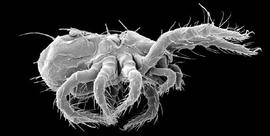
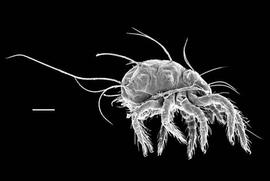
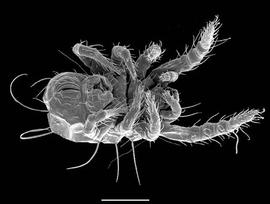
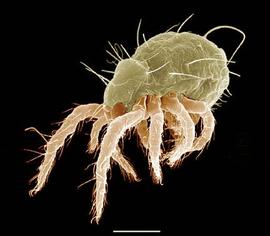
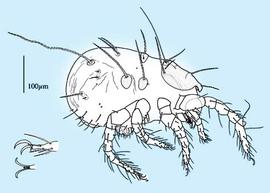
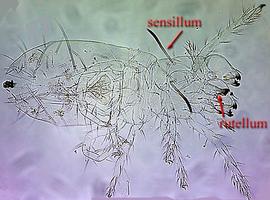
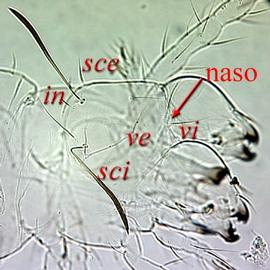
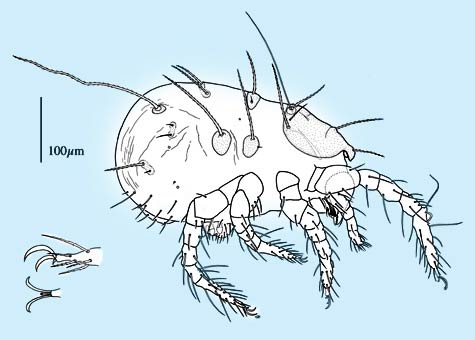
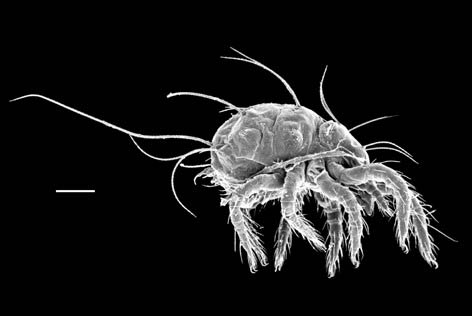
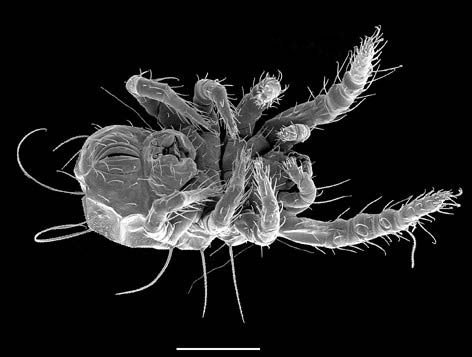
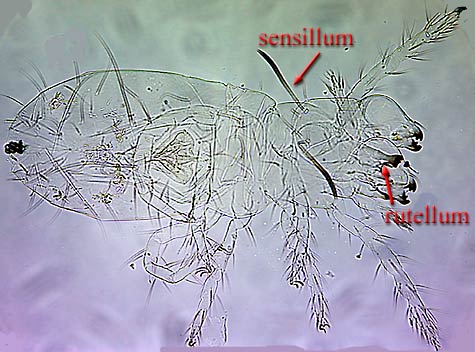
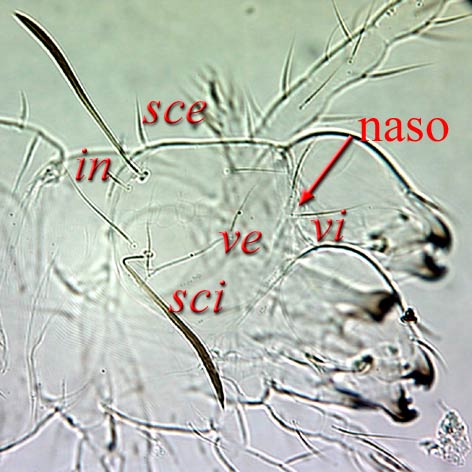
White to tan, sack-like oribatid mites usually with long black setae and weakly expressed plates. Chelicerae visible from above; usually with small naso, rarely bearing median eye(s) on its underside. Subcapitulum with 3 pairs of adoral and 4 pairs of subcapitular setae; rutella simple. Femora I–IV of tritonymphs and adults divided; tarsi bidactyl or tridactyl in immatures and adults. Opisthosomal glands absent. Macropyline; with 3 pairs of genital papillae, often on segmented stalks.

Similar taxa

Astigmata, Parhyposomatides, and juveniles of other groups of Oribatida often have sac-like bodies, but these mites usually have opisthosomal glands, never have median eyes, and do not have divided femora.

Ecology and distribution

Palaeosomatans are found worldwide in many soil types, but seem to be especially characteristic of dry soils. Species of Aphelacarus also are found in house dust. They are thought to be the most primitive extant Oribatida. Although relatively common in grassland, open forest and sandy soils, these mites are usually missed or misidentified because of their small size, lack of sclerotization, slender setae, and general similarity to immature oribatids or astigmatids. The genera found in forest soils (e.g., Stomacarus, Loftacarus, Palaeacarus), however, are larger and have long, black, erectile setae and are more noticeable.

References

  • Balogh and Mahunka 1983Balogh and Mahunka 1983:
    Balogh J, Mahunka S. 1983. Primitive Oribatids of the Palaearctic Region. The Soil Mites of the World, Vol. 1. Elsevier, Amsterdam. 327 pp.
  • Bulanova-Zachvatkina 1980Bulanova-Zachvatkina 1980:
    Bulanova-Zachvatkina EM. 1980. On the Palaeosomata (Acariformes, Oribatei) of the U.S.S.R. Entomologitsheskoe Obozrenie 59: 679–688.
  • Colloff and Halliday 1998Colloff and Halliday 1998:
    Colloff M, Halliday B. 1998. Oribatid mites: A catalogue of Australian genera and species. Monograph on Invertebrate Taxonomy, Vol. 6. CSIRO Publishing, Melbourne.
  • Gilyarov and Krivolutsky 1975Gilyarov and Krivolutsky 1975:
    Gilyarov MS, Krivolutsky DA, eds. 1975. Handbook for the identification of soil-inhabiting mites, Sarcoptiformes. Zoological Institute of the Academy of Sciences, Petrograd.
  • Hunt et al. 1998Hunt et al. 1998:
    Hunt GS, Norton RA, Kelly JPH, Colloff MJ, Lindsay SM, Dallwitz MJ, Walter DE. 1998. Oribatid Mites: An Interactive Glossary of Oribatid Mites, An Interactive Key to the Oribatid Mites of Australia [Intkey software and user guide on CD-ROM]. CSIRO Publishing, Collingwood.
  • Krantz 1978Krantz 1978:
    Krantz GW. 1978. A manual of acarology [2nd ed.]. Oregon State University Book Stores, Corvallis.
  • Lee 1981Lee 1981:
    Lee DC. 1981. Sarcoptiformes (Acari) of South Australian soils. 1. Notation. 2. Bifemorata and Ptyctima (Cryptostigmata). Records of the South Australian Museum 18: 199–222.
  • Norton 1990Norton 1990:
    Norton RN. 1990. Oribatida. pp. 779–803. In: Dindal DL, ed. Soil biology guide. John Wiley & Sons, Brisbane.
 Loftacarus  lateral (DEW)
Loftacarus lateral (DEW)
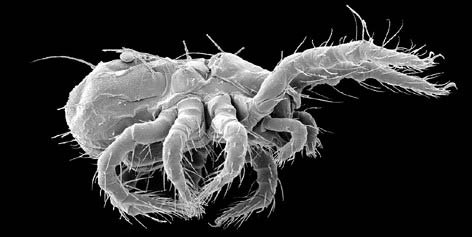
 Stomacarus  lateral (DEW)
Stomacarus lateral (DEW)
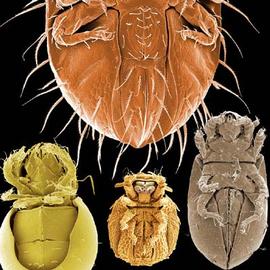
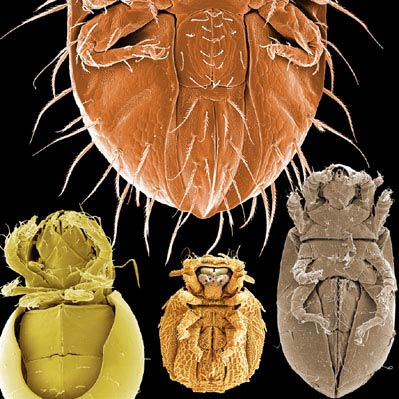
 Loftacarus  ventral view (DEW)
Loftacarus ventral view (DEW)
Naso;  Loftacarus  (DEW)
Naso; Loftacarus (DEW)
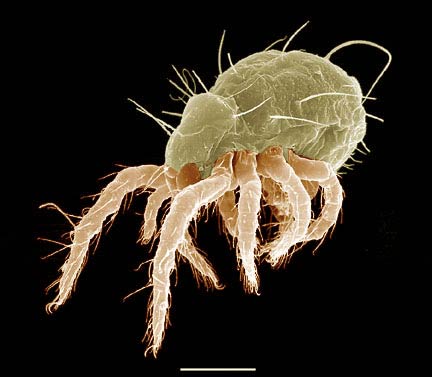
Sack-like oribatid mites;  Loftacarus  habitus (CH, DEW)
Sack-like oribatid mites; Loftacarus habitus (CH, DEW)
 Adelphacarus  (HCP, DEW)
Adelphacarus (HCP, DEW)
 Adephacarus  prodorsum (HCP, DEW)
Adephacarus prodorsum (HCP, DEW)
Macropyline; 3 pairs of genital papillae