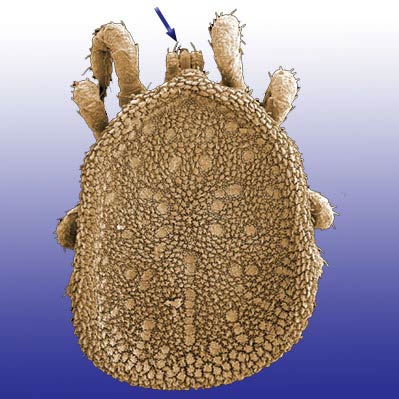
test
Ixodida Leach, 1815
Superorder Parasitiformes » Order Ixodida
hard ticks, soft ticks
medium
Very high. Ticks are the most important group of disease vectors after the mosquitoes.
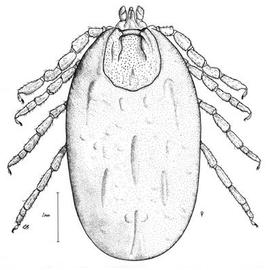
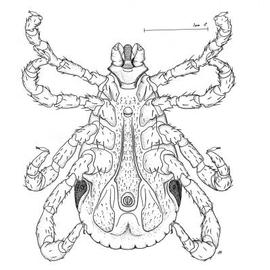
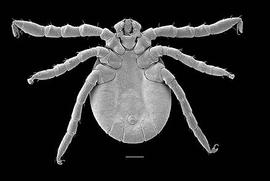
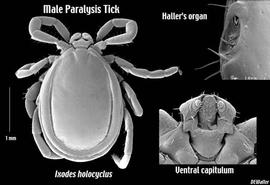
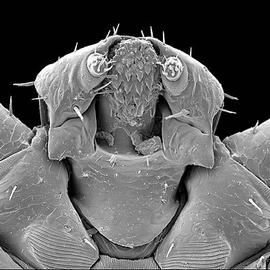
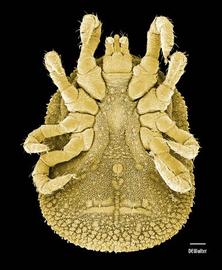
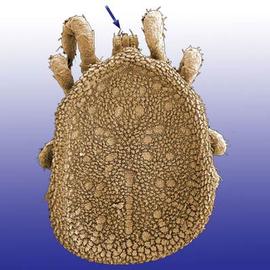
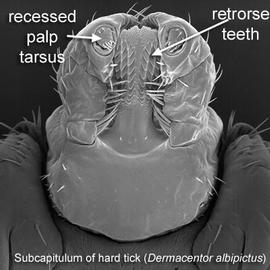
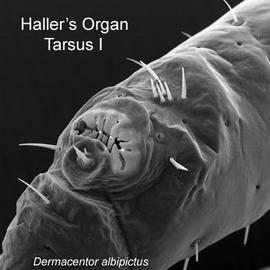
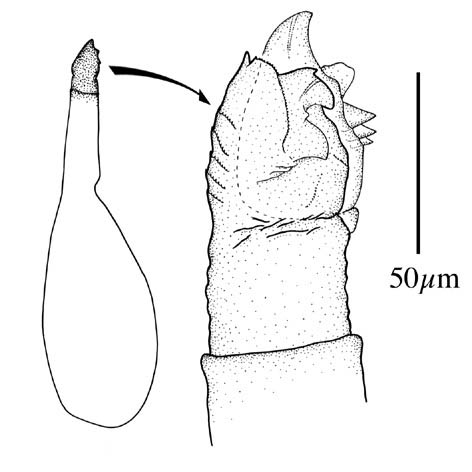
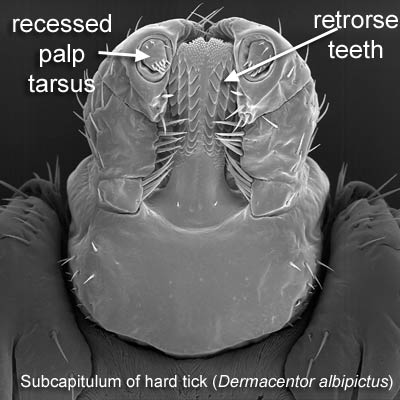
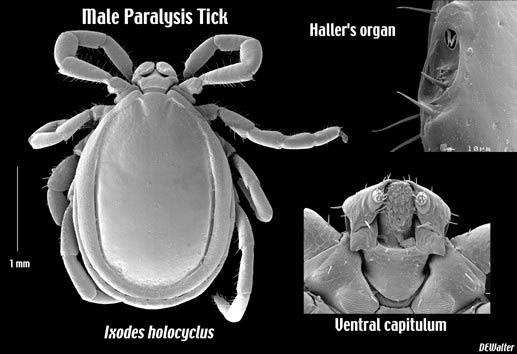
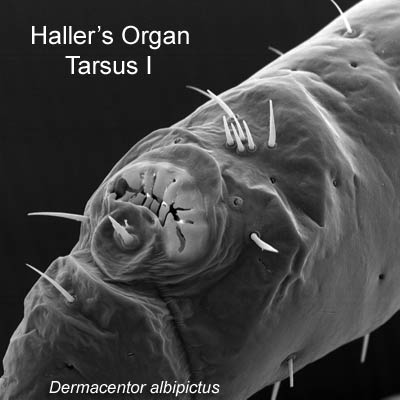
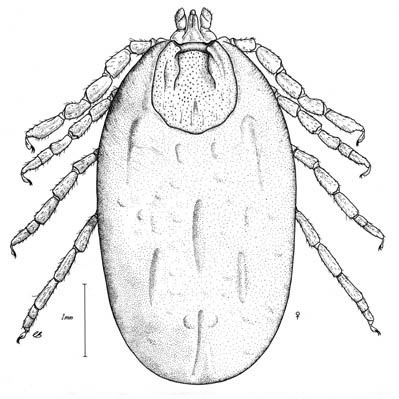
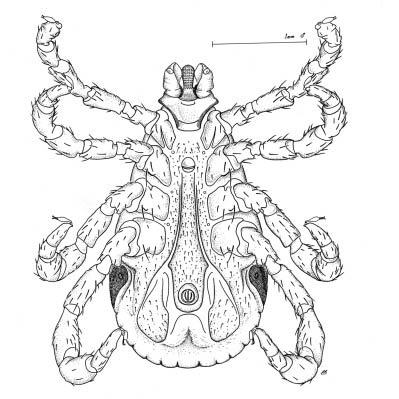
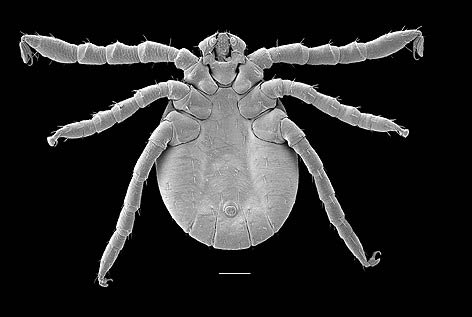
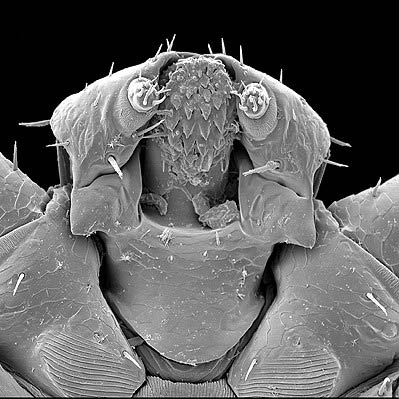
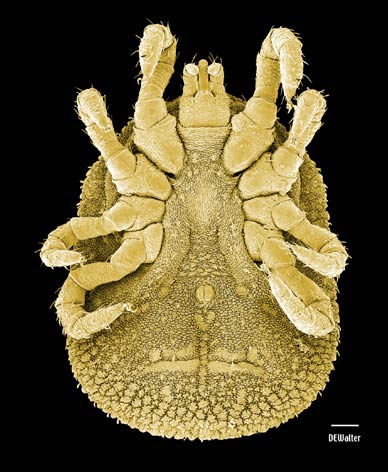
Large parasitiform mites (to 6 mm unfed, 3 cm when engorged) with slicing mouthparts and a denticulate hypostome produced anteriorly. Integument leathery to papillate, dorsum with or without a prodorsal scutum (covering most of dorsum in males) and with or without one pair of ocelli. Stigmatal openings on sieve plates behind coxae IV or lateral to coxae III-IV. Palps 3–4 segmented without apotele. Tarsus I with Haller's organ well developed.
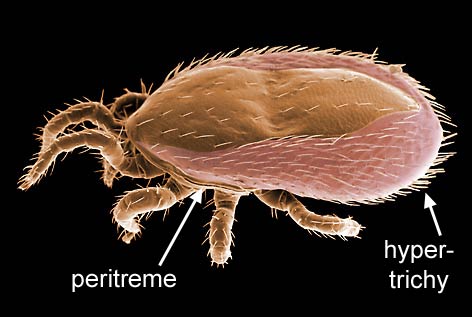
Macronyssidae (Mesostigmata) are superficially tick-like mites that feed on the blood of reptiles (Ophionyssus), birds and mammals (Ornithonyssus), but unlike ticks, have a well developed tritosternum, palp apotele, etc.
Obligate blood-sucking parasites of vertebrates. Living in nests, in soil, on vegetation, and on animals. Nuttalliellidae is poorly known and restricted to southern Africa; the other two families occur worldwide. The paralysis tick (Ixodes holocyclus) is a common ixodid tick in eastern Australia.
Author: David E. Walter
Content last updated Sept. 2006, unless indicated otherwise
Lucid key player updated Sept. 2025
idtools.org