t
Sphaerolichidae Grandjean
Sphaerolichus Berlese, 1904
Superorder Acariformes » Order Trombidiformes » Suborder Sphaerolichida » Superfamily Sphaerolichoidea » Family Sphaerolichidae » Genus Sphaerolichus
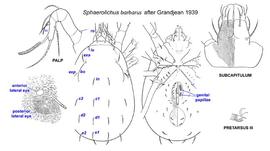
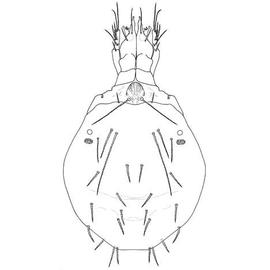
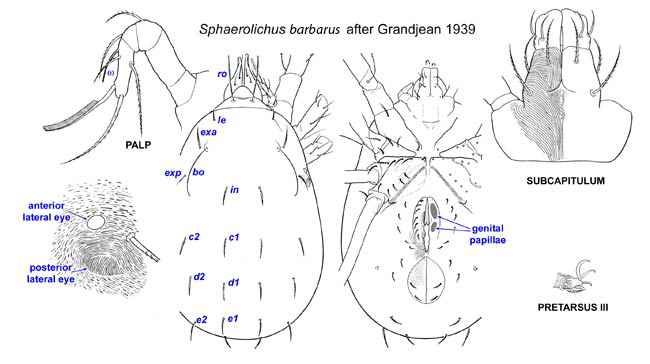
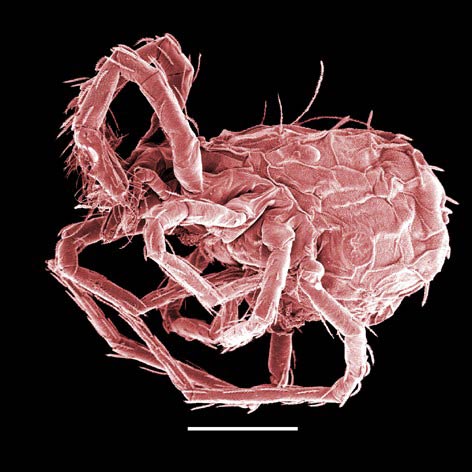
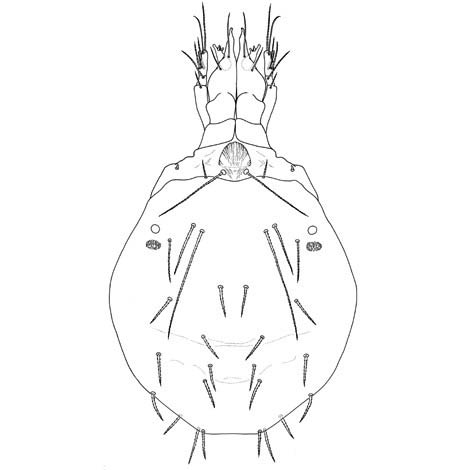
Prodorsum with 2 pairs of filamentous trichobothria, 4 pairs of setae, well developed naso (often with median eye on its underside), and usually a pair of lateral eyes +/- a pair of posterior 'ocular tubercles'. Subcapitulum with 5 pairs of setae; chelicerae chelate, with 2 pairs of setae, fixed digit with median process, movable digit bearing two lobe-like teeth; palps with 5 free segments. Body globular, with 8 pairs of dorsal setae, c3–4, f3 absent; 5–7 pairs of genital setae; 2 pairs of genital papillae; eugenital setae absent; 2–3 pairs of anal setae; coxal bases continuous. Coxal fields I–IV contiguous; all pretarsi with paired claws, empodia claw-like (II–III–IV), but absent from tarsus I; front legs used as antennae and often bizarrely modified; tibiae I with trichobothria.
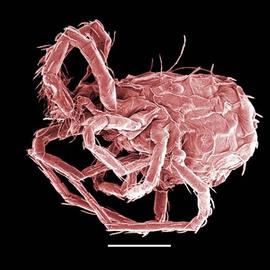
This genus is distinctive and common in many types of litter worldwide. Australian species of Sphaerolichus are a bright pink in colour in life and move slowly while waving the highly modified front legs. They climb readily and may be ambush predators (Walter unpublished), although South African species have been reported to contain fungal material (Theron 1979Theron 1979:
Theron PD. 1979. The functional morphology of the gnathosoma of some liquid and solid feeders in the Trombidiformes, Cryptostigmata and Astigmata (Acarina). pp. 575–579. In: Piffl E, ed. Proceedings of the 4th International Congress of Acarology. Akadémiai Kiadó, Budapest.).
Author: David E. Walter
Content last updated Sept. 2006, unless indicated otherwise
Lucid key player updated Sept. 2025
idtools.org