t
Alycidae Canestrini & Fanzago 1877 (=Pachygnathidae Kramer 1877, Bimichaeliidae Womersley 1944Womersley 1944:
Womersley H. 1944. Australian Acarina, families Alycidae and Nanorchestidae. Transactions of the Royal Society of South Australia 68: 133–143.)
Petralycus Grandjean, 1943Grandjean, 1943:
Grandjean F. 1943. Queques genres d’Acariens appartenant au groupe des Endeostigmata, 2e Série. Deuxiéme partie. Annales des Sciences Naturelles, Zoologie 11 (ser. 5): 1–59.: 1–59
Petralycus unicornis Grandjean, 1943—Europe
Superorder Acariformes » Order Sarcoptiformes » Suborder Endeostigmata » Infraorder Bimichaliida » Superfamily Alycoidea » Family Alycidae » Genus Petralycus
Petralycus longicornis Theron, 1977—acacia soil in South Africa; Petralycus brevicornis Theron, 1977—pasture soil in South Africa; Petralycus caryapecaus McDaniel & Bolen; Petralycus celtisacinus McDaniel & Bolen
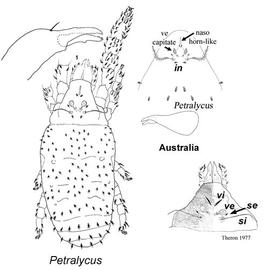
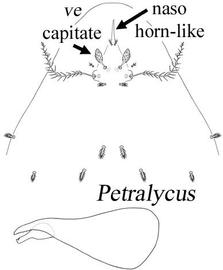
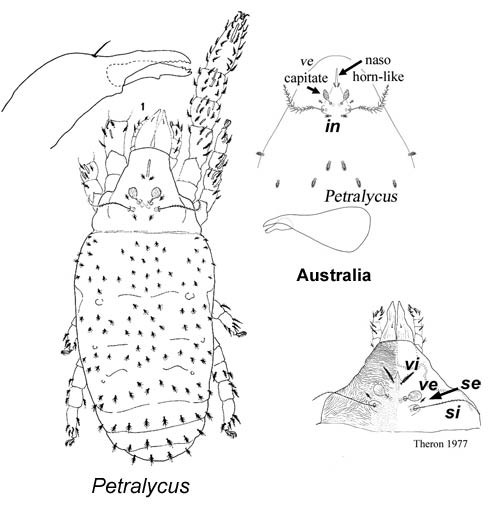
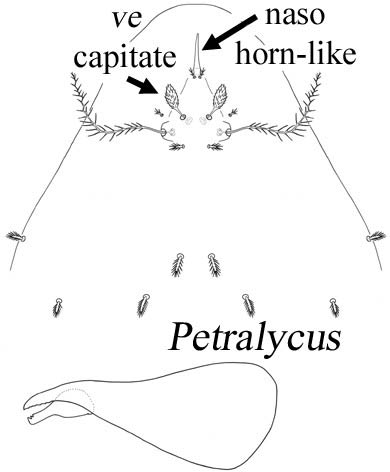
Prodorsum with of 2 pairs of trichobothria, posterior pair (si) filiform, anterior pair (ve) globose to capitate; other prodorsal setae reduced to 2–3 pairs of setae (exp absent; in, se present or absent); naso produced as spine-like process; eyes usually absent. Chelicerae chelate-dentate, each with 0–1 seta; rutella with teeth and usually a spine. Opisthosoma hypertrichous or holotrichous; 3 pairs of genital papillae.
Members of the genus Petralycus are distinctive because of their acuminate, tubercle-like naso and the capitate form of the anterior pair of bothridial sensilla (ve). Species of Bimichaelia also have a capitate sensillum, but it is the posterior pair (si), and they lack a naso, but retain the median eye.
Author: David E. Walter
Content last updated Sept. 2006, unless indicated otherwise
Lucid key player updated Sept. 2025
idtools.org