t
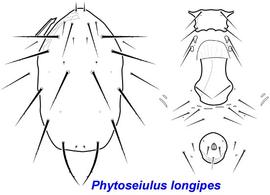
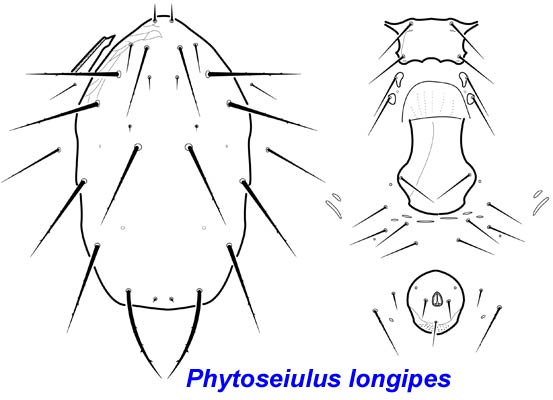
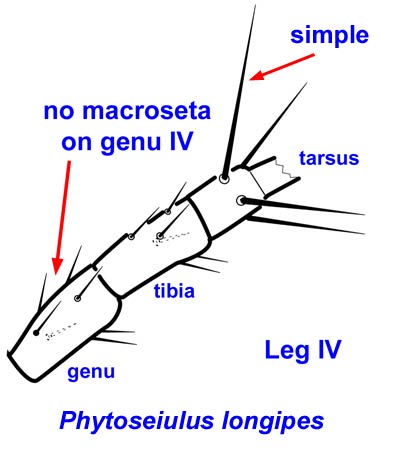
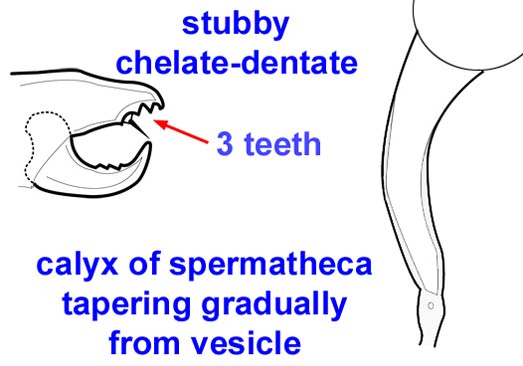
Phytoseiulus longipes Evans
Superorder Parasitiformes » Order Mesostigmata » Suborder Monogynaspida » Infraorder Gamasina » Hyporder Dermanyssiae » Superfamily Dermanyssoidea » Family Laelapidae » Subfamily Amblyseiinae » Genus Phytoseiulus » Species Phytoseiulus longipes
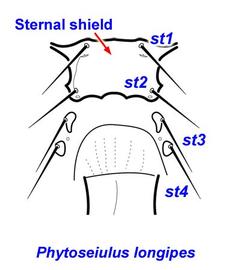
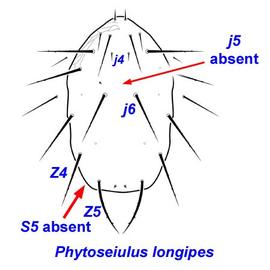
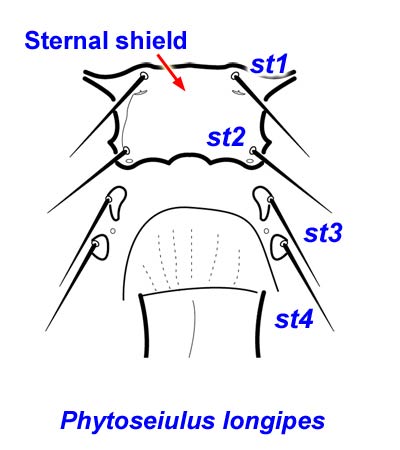
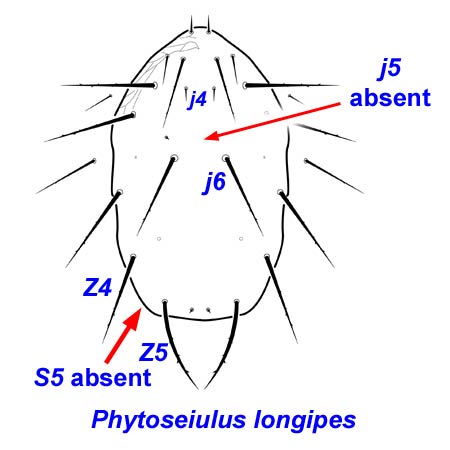
Other species of Phytoseiulus have a sternal shield with 3 pairs of setae (st1–2) and have dorsal shield setae j5 and S5.
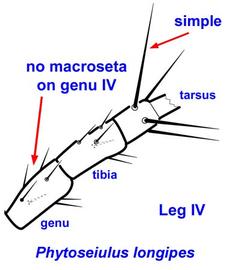
Phytoseiulus longipes is the most morphologically aberrant member of the genus. It was described from southern Africa and is also known from southern South America.
Author: David E. Walter
Content last updated Sept. 2006, unless indicated otherwise
Lucid key player updated Sept. 2025
idtools.org