Tetranychinae
t
Taxonomy
Common names
two-spotted mite, fourspotted mite, carmine spider mite, red bean spider mite, desert spider mite, McDaniel spider mite, Pacific spider mite, Schoene spider mite, strawberry spider mite, tumid spider mite
Probability of encounter
very high
Quarantine importance
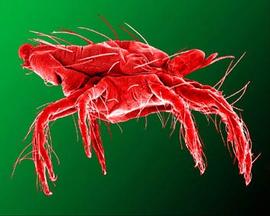
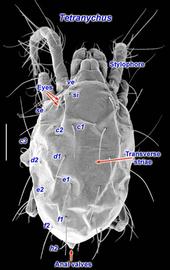
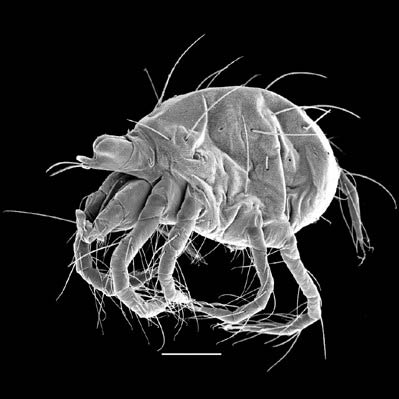
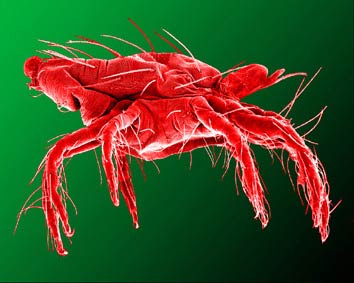
Very high. Tetranychus is probably the most economically important genus of mites, with member of the two-spotted mite complex, such as T. urticae (Koch) and T. cinnabarinus (Boisduval), attacking an extraordinary diversity of economically important plants throughout the world. About 140 species of Tetranychus have been described and distributed across a variety of subgenera. Species identifications invariably require a good lateral mount of the male aedeagus, and even then only a specialist with extensive experience is likely to feel confident of the identification. Exotic species that are a potential threat to US agriculture include:
- Tetranychus lombardinii Baker & Pritchard attacks banana, beans, cassava, cotton, cucumber, melons, papaya, passion fruit, potato, soybean, castor bean, sweet potato, tomato, tobacco, alfalfa, sorghum and a variety of other plants in Asia, Africa, Indonesia, and Australia.
- Tetranychus macfarlanei Baker & Pritchard attacks bananas, beans, cotton, cucumber, eggplant, melons, okra, papaya, peanut, watermelon, and ornamentals in India, Madagascar, Mauritius, and the Canary Islands.
- Tetranychus lambi Pritchard & Baker attacks banana, cassava, beans, clover, cotton, cucumber, eggplant, fruit trees, okra, peanut, soybean, squash, tobacco, grasses and ornamentals in Iran, Asia, and most Pacific islands including Australia and New Zealand.
- Tetranychus fijiensis Hirst (the only species known with only 2 pairs of proximoventral hairs) attacks citrus and other fruit trees and ornamentals in India, Southeast Asia, and many Pacific islands, including Australia.
- Tetranychus piercei McGergor is a pest of banana, beans, cassava, eggplant, mulberry, papaya, passion fruit, peach, sweet potato, and a diversity of ornamentals primarily in Asia and has recently been found in the US.
- Tetranychus truncatus Ehara attacks banana, cassava, beans, maize, cucumber, eggplant, fruit trees, okra, onions, orchids, rice, soybean, sweet potato, and a variety of ornamentals in Asia and on Pacific islands.
- Tetranychus amicus Meyer & Rodrigues attacks banana, cassava, beans, cotton, eggplant, peanut, soybean, sweet potato and ornamentals in South Africa and on Indian Ocean islands.
Diagnosis
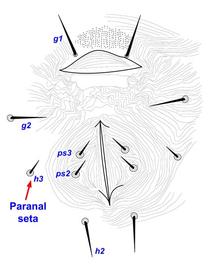
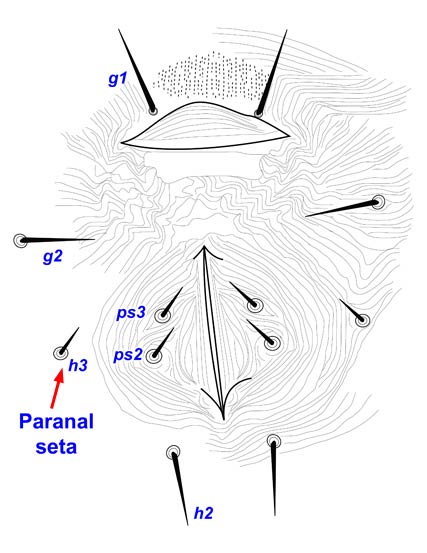
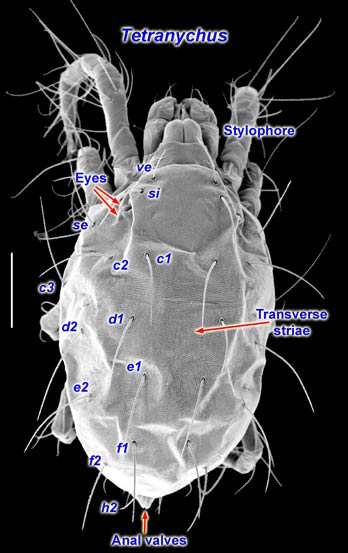
- With 1 pair of paranal setae (h3); setae h2 terminal, not in paranal position; seta h1 absent.
- Empodium split into 2–3 pairs of proximoventral hairs
- Mediodorsal empodial spur generally present, sometimes well developed
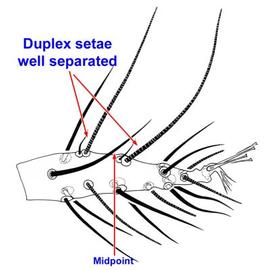
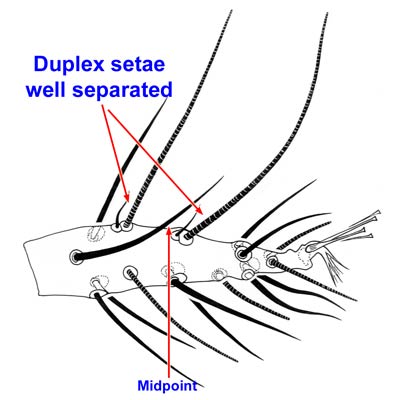
- Duplex setae of tarsus I well separated
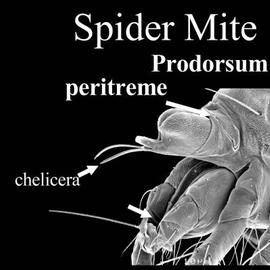
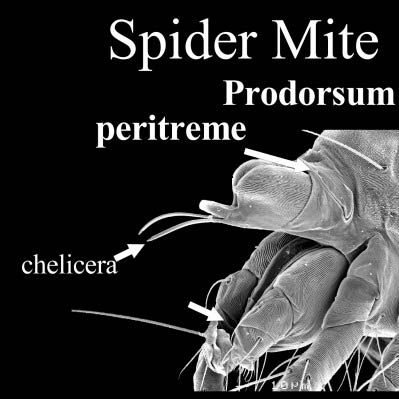
- Peritremes recurved distally, simple
Similar taxa
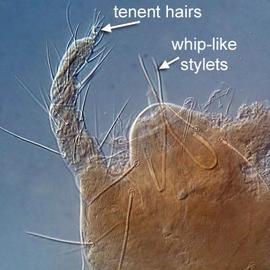
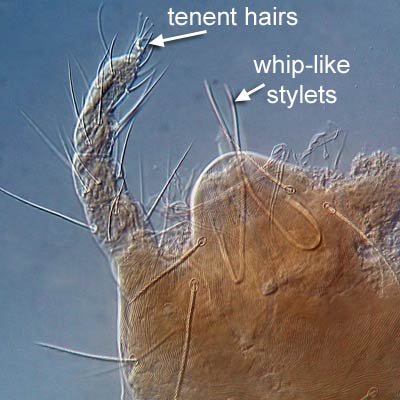
The empodia have tenent hairs in the Bryobiinae. Eutetranychini (e.g., species of Eutetranychus) have a claw-like or highly regressed empodium. Other Tetranychini have either 2 pairs of paranal setae (e.g., Allonychus, Panonychus ) or have hooked empodia with proximoventral hairs and the duplex setae of tarsus I distal and adjacent (e.g., Oligonychus) or have an empodial spur and have peritremes recurved distally (Tetranychus).
References
- Baker and Pritchard 1960Baker and Pritchard 1960:
Baker EW, Pritchard AE. 1960. The tetranychoid mites of Africa. Hilgardia 29 (11): 455–574.
- Baker and Tuttle 1994Baker and Tuttle 1994:
Baker EW, Tuttle DM. 1994. A guide to the spider mites (Tetranychidae) of the United States. Indira Publishing House, West Bloomfield, Michigan. 347 pp.
- Beard et al. 2003Beard et al. 2003:
Beard JJ, Walter DE, Allsopp P. 2003. Spider mites of sugarcane in Australia: A review of grass-feeding Oligonychus Berlese (Acari: Prostigmata: Tetranychidae) with the description of four new species. Australian Journal of Entomology 42: 51–78.
- Bolland et al. 1998Bolland et al. 1998:
Bolland HR, Gutierrez J, Flechtmann CHW. 1998. World catalogue of the spider mite family (Acari: Tetranychidae). Brill, Leiden.
- Flechtmann and Knihinicki 2002Flechtmann and Knihinicki 2002:
Flechtmann CHW, Knihinicki DK. 2002. New species and new record of Tetranychus Dufour from Australia, with a key to the major groups in this genus based on adult females (Acari: Postigmata: Tetranychidae). Australian Journal of Entomology 41: 118–127.
- Helle and Sabelis 1985Helle and Sabelis 1985:
Helle W and Sabelis MW, eds. 1985. Spider mites: Their biology, natural enemies, and control. World Crop Pests, Vol. 1A. Elsevier, New York.
- Jeppson et al. 1975Jeppson et al. 1975:
Jeppson LR, Keifer HH, Baker EW. 1975. Mites injurious to economic plants. University of California Press, Berkeley.
- Meyer 1974Meyer 1974:
Meyer MKPS. 1974. A revision of the Tetranychidae of Africa (Acari) with a key to the genera of the world. Republic of South Africa, Department of Agricultural Technical Services, Entomology Memoir No. 36: 291 pp.
- Meyer 1987Meyer 1987:
Meyer MKPS. 1987. African Tetranychidae (Acari: Prostigmata) - with reference to the world genera. Republic of South Africa, Department of Agriculture and Water Supply, Entomology Memoir No. 69: 175 pp.
- Migeon and Flechtmann 2004Migeon and Flechtmann 2004:
Migeon A, Flechtmann CHW. 2004. First additions and corrections to the World Catalogue of the Spider Mite Family (Acari: Tetranychidae). International Journal of Acarology 30 (2): 143–152.
- Navajas et al. 1997Navajas et al. 1997:
Navajas M, Gutierrez J, Gotoh T. 1997. Convergence of molecular and morphological data reveals phylogenetic information in Tetranychus species and allows the restoration of the genus Amphitetranychus (Acari: Tetranychidae). Bulletin of Entomological Research 87: 283–288.
- Ochoa et al. 1994Ochoa et al. 1994:
Ochoa R, Aguilar H, Vargas C. 1994. Phytophagous mites of Central America: An illustrated guide. CATIE, Turrialba, Costa Rica.
- Tseng 1990Tseng 1990:
Tseng Y-H. 1990. A monograph of the mite family Tetranychidae (Acarina: Trombidiformes) from Taiwan. Taiwan Museum Special Publication Series 9. 224 pp.
- Zhang 2003Zhang 2003:
Zhang Z-Q. 2003. Mites of greenhouses: Identification, biology and control. CABI Publishing, Wallingford. 244 pp.
- Zhang and Martin 2001Zhang and Martin 2001:
Zhang Z-Q, Martin NA. 2001. A review of Schizotetranychus-like mites from New Zealand. J. Roy. Soc. N.Z. 31: 307–325.
Videos
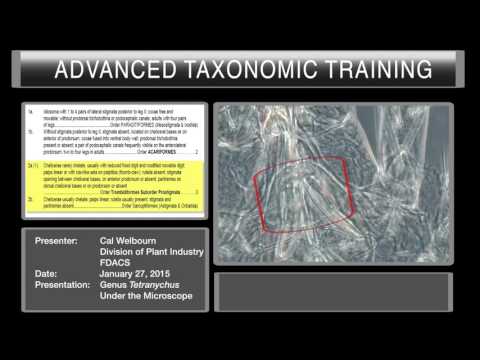
Tetranychus
Using a dichotomous key to identify a spider mite (Tetranychidae) to genus