t
Longoseius (Longoseius) Chant
Superorder Parasitiformes » Order Mesostigmata » Suborder Monogynaspida » Infraorder Gamasina » Hyporder Dermanyssiae » Superfamily Rhodacaroidea » Family Digamasellidae » Genus Longoseius » Subgenus Longoseius (Longoseius)
(NB—the deutonymphdeutonymph:
(also deuteronymph) the second nymphal stage or instar.
has been confused with adult female in several papers)
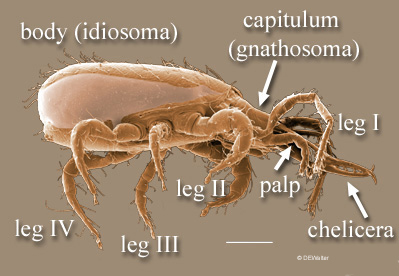 extremely narrow and elongate and with two dorsaldorsal:
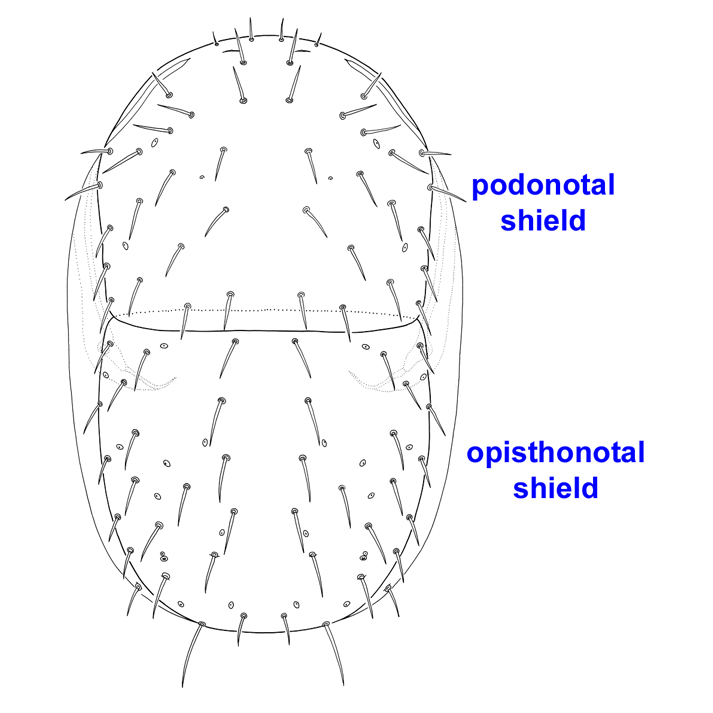 deeply incised with 12 pairs of setae; opisthonotalopisthonotal:
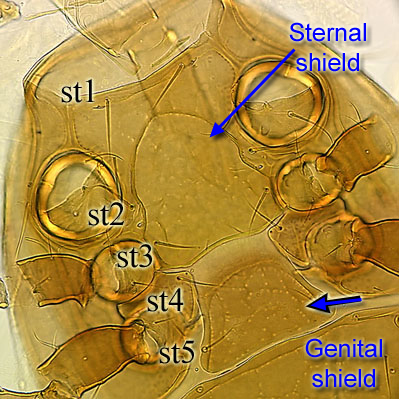 split medially by soft cuticle, st1–2 and st3–4 on separate halves
 absent or vestigial between setae z5
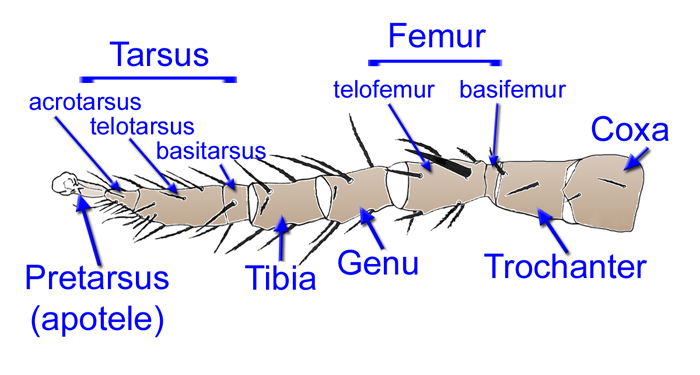 I with only 5 setae; trochantertrochanter: III with 4 setae; the palpgenu with only 5 setae.
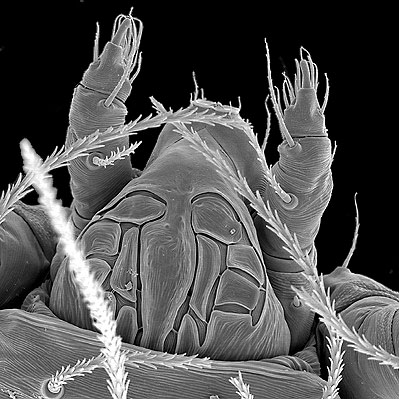 in adults very short (restricted to coxacoxa: IV region), but elongate (to seta z4) in deutonymphs
Other extremely narrow and elongate mesostigmatans are typically found in the pores of polypore fungi and have a holodorsal shieldholodorsal shield:
a shield that covers all of the dorsum. In Mesostigmata, the holodorsal shield is often interpreted as resulting from the fusion of podonotal and opisthonotal shields and a suture between these regions is often visible (see recurved and procurved).
, e.g., see Mycolaelaps and Hoploseius tenuis. Although less elongate, some species of Protogamasellus and Protogamasellopsis somewhat resemble Longoseius (Longoseius) but have fuller setation, including setaseta:
(pl. setae, from L. = bristle) cuticular process composed of a hollow shaft (sometimes filled with a refractive material) produced from a membranous socket (the alveolus); the hair-like, spine-like, branched or variously expanded structures on the surfaces of the legs and body. Most setae function as mechanoreceptors, but others (e.g., solenidia) are chemoreceptors or have unknown or ambiguous functions.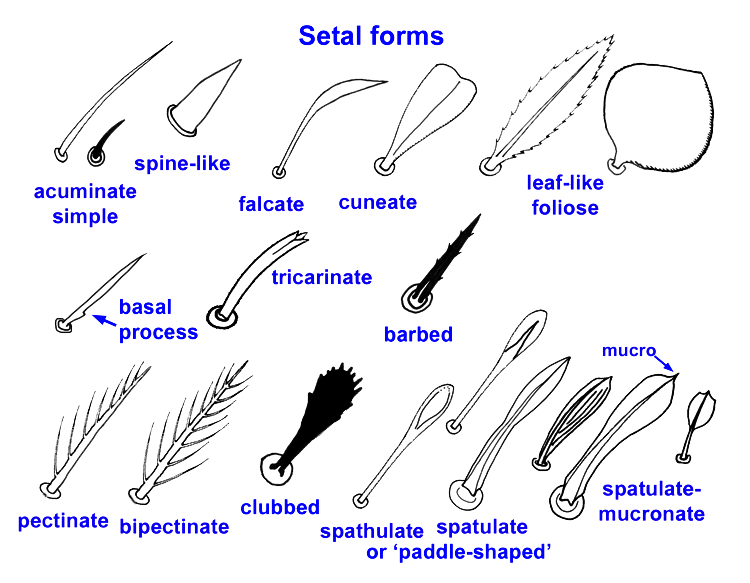 z1 and j2 aligned with j1 on the anterior margin of the podonotal shieldpodonotal shield:
the anterior shield in mesostigmatans with divided dorsal shields. . Species of Longoseius (Longoseiulus) are less narrow and have scleronoduliscleronoduli:
3-4 light refractile structures, sometimes comma-shaped, in the podonotal region of many Rhodacaroidea and the genus Protogamasellus (Ascidae) in the Mesostigmata. and podonotalpodonotal:
relating to the dorsal podosoma, the region of the idiosoma over the legs.
shields with full complements of j, z, and s setaeseta:
(pl. setae, from L. = bristle) cuticular process composed of a hollow shaft (sometimes filled with a refractive material) produced from a membranous socket (the alveolus); the hair-like, spine-like, branched or variously expanded structures on the surfaces of the legs and body. Most setae function as mechanoreceptors, but others (e.g., solenidia) are chemoreceptors or have unknown or ambiguous functions..
Bodybody:
the idiosoma of mites. extremely narrow and elongate, length 2.5–4 times width; trochantertrochanter:
the leg segment between the coxa and the femur. III with 4 setaeseta:
(pl. setae, from L. = bristle) cuticular process composed of a hollow shaft (sometimes filled with a refractive material) produced from a membranous socket (the alveolus); the hair-like, spine-like, branched or variously expanded structures on the surfaces of the legs and body. Most setae function as mechanoreceptors, but others (e.g., solenidia) are chemoreceptors or have unknown or ambiguous functions............................... Longoseius
- Bodybody:
the idiosoma of mites. subrectangular to oval in shape; trochantertrochanter:
the leg segment between the coxa and the femur. III with 5 setaeseta:
(pl. setae, from L. = bristle) cuticular process composed of a hollow shaft (sometimes filled with a refractive material) produced from a membranous socket (the alveolus); the hair-like, spine-like, branched or variously expanded structures on the surfaces of the legs and body. Most setae function as mechanoreceptors, but others (e.g., solenidia) are chemoreceptors or have unknown or ambiguous functions............................... 2
Scleronoduliscleronoduli:
3-4 light refractile structures, sometimes comma-shaped, in the podonotal region of many Rhodacaroidea and the genus Protogamasellus (Ascidae) in the Mesostigmata. present under podonotal shieldpodonotal shield:
the anterior shield in mesostigmatans with divided dorsal shields. between setaeseta:
(pl. setae, from L. = bristle) cuticular process composed of a hollow shaft (sometimes filled with a refractive material) produced from a membranous socket (the alveolus); the hair-like, spine-like, branched or variously expanded structures on the surfaces of the legs and body. Most setae function as mechanoreceptors, but others (e.g., solenidia) are chemoreceptors or have unknown or ambiguous functions. z5; anal opening normal; setaseta:
(pl. setae, from L. = bristle) cuticular process composed of a hollow shaft (sometimes filled with a refractive material) produced from a membranous socket (the alveolus); the hair-like, spine-like, branched or variously expanded structures on the surfaces of the legs and body. Most setae function as mechanoreceptors, but others (e.g., solenidia) are chemoreceptors or have unknown or ambiguous functions. z3 present on podonotal shieldpodonotal shield:
the anterior shield in mesostigmatans with divided dorsal shields. .............................. 3
- Scleronoduliscleronoduli:
3-4 light refractile structures, sometimes comma-shaped, in the podonotal region of many Rhodacaroidea and the genus Protogamasellus (Ascidae) in the Mesostigmata. absent; anal opening large; setaseta:
(pl. setae, from L. = bristle) cuticular process composed of a hollow shaft (sometimes filled with a refractive material) produced from a membranous socket (the alveolus); the hair-like, spine-like, branched or variously expanded structures on the surfaces of the legs and body. Most setae function as mechanoreceptors, but others (e.g., solenidia) are chemoreceptors or have unknown or ambiguous functions. z3 absent from podonotal shieldpodonotal shield:
the anterior shield in mesostigmatans with divided dorsal shields. .............................. Digamasellus
Movable digit of female usually with 4 or more teeth; subcapitulumsubcapitulum:
(also infracapitulum) the venter of the capitulum; the ventral faces of the fused palpcoxae; apparently formed independently in the two superorders of mites.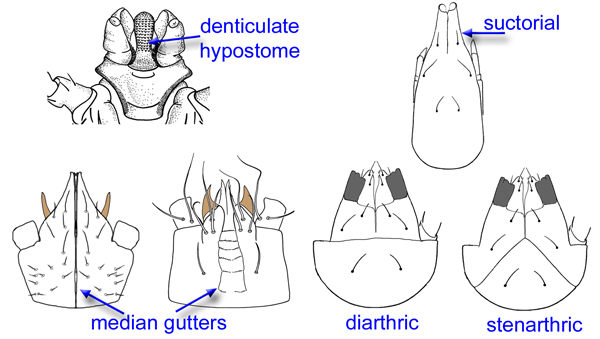 with 5 rows of denticlesdenticles:
small tooth-like processes, e.g., on the subcapitula of ticks and many mesostigmatans.
.............................. 4
- Movable digit of female with 3 teeth; subcapitulumsubcapitulum:
(also infracapitulum) the venter of the capitulum; the ventral faces of the fused palpcoxae; apparently formed independently in the two superorders of mites. with 6 rows of denticlesdenticles:
small tooth-like processes, e.g., on the subcapitula of ticks and many mesostigmatans.
.............................. Dendroseius
Opisthonotal shieldopisthonotal shield:
the posterior shield in mesostigmatans with divided dorsal shields. truncate or bilobed posteriorly and often with several pairs of spatulate setaeseta:
(pl. setae, from L. = bristle) cuticular process composed of a hollow shaft (sometimes filled with a refractive material) produced from a membranous socket (the alveolus); the hair-like, spine-like, branched or variously expanded structures on the surfaces of the legs and body. Most setae function as mechanoreceptors, but others (e.g., solenidia) are chemoreceptors or have unknown or ambiguous functions.; setaeseta:
(pl. setae, from L. = bristle) cuticular process composed of a hollow shaft (sometimes filled with a refractive material) produced from a membranous socket (the alveolus); the hair-like, spine-like, branched or variously expanded structures on the surfaces of the legs and body. Most setae function as mechanoreceptors, but others (e.g., solenidia) are chemoreceptors or have unknown or ambiguous functions. j2 inserted well behind setaeseta:
(pl. setae, from L. = bristle) cuticular process composed of a hollow shaft (sometimes filled with a refractive material) produced from a membranous socket (the alveolus); the hair-like, spine-like, branched or variously expanded structures on the surfaces of the legs and body. Most setae function as mechanoreceptors, but others (e.g., solenidia) are chemoreceptors or have unknown or ambiguous functions. j1–z1 on podonotal shieldpodonotal shield:
the anterior shield in mesostigmatans with divided dorsal shields. .............................. Dendrolaelaspis
- Opisthonotal shieldopisthonotal shield:
the posterior shield in mesostigmatans with divided dorsal shields. convex posteriorly and usually notched anteriorly; setaeseta:
(pl. setae, from L. = bristle) cuticular process composed of a hollow shaft (sometimes filled with a refractive material) produced from a membranous socket (the alveolus); the hair-like, spine-like, branched or variously expanded structures on the surfaces of the legs and body. Most setae function as mechanoreceptors, but others (e.g., solenidia) are chemoreceptors or have unknown or ambiguous functions. j2 more or less aligned with j1–z1 on podonotal shieldpodonotal shield:
the anterior shield in mesostigmatans with divided dorsal shields. .............................. Dendrolaelaps
The two described species of Longoseius (L. cuniculus Chant; L. longus (Hirschmann)) are found beneath bark in association with wood boring beetles.
Author: David E. Walter
Content last updated Sept. 2006, unless indicated otherwise
Lucid key player updated Sept. 2025
idtools.org